Parents looking for bold flavour
If you want a pronounced coffee taste on a busy morning, start with the flavour description and the brewer you use. A dark roast or high intensity number alone cannot tell you how much caffeine will be in your cup.


Choose ground coffee by your brewer and the kind of strength you mean: an intensity label describes flavour and body, not caffeine per cup. If caffeine intake matters during pregnancy or breastfeeding, consider your total intake from food and drink before choosing a blend promoted for extra caffeine; half-caffeinated or decaffeinated ground coffee offers another route.
If you want a pronounced coffee taste on a busy morning, start with the flavour description and the brewer you use. A dark roast or high intensity number alone cannot tell you how much caffeine will be in your cup.
For this choice, caffeine from other drinks and foods matters alongside coffee. NHS guidance sets out different daily advice for pregnancy and breastfeeding, so a blend promoted for extra caffeine needs more consideration than its flavour description suggests.
Half-caffeinated and decaffeinated ground coffees let you keep using a cafetière or filter brewer. Check the particular product’s preparation instructions and flavour description rather than assuming it will taste like an extra-dark blend.
Decide whether “strong” means a bolder taste or a preference about caffeine, then check the coffee against your brewer and how quickly you will use an opened pack.
| Priority | What to check | Your needs |
|---|---|---|
| Flavour strength | Read the roast and flavour description. Compare intensity numbers cautiously: Lavazza UK describes intensity in terms of aroma and body, not caffeine per cup. | I want a full-bodied cup, but a stronger-tasting coffee does not have to be my higher-caffeine choice. |
| Caffeine | Look for a statement about the exact blend rather than inferring caffeine from roast darkness. Taylors of Harrogate says Hot Lava Java contains robusta for an extra caffeine boost. NHS guidance considers caffeine from the whole diet. | If I am pregnant or breastfeeding, I need to consider coffee alongside other sources of caffeine. The NHS advises no more than 200mg a day during pregnancy; for breastfeeding, it advises people who drink caffeine to try not to exceed 300mg a day. |
| Brewer fit | Check whether the pack names your equipment and follow its preparation directions. illy UK positions Ground Espresso INTENSO for Italian espresso; Rombouts gives cafetière, filter-machine and filter-cone directions for its decaf ground coffee. | A coffee that suits the machine already in my kitchen is more useful than choosing by a strength label alone. |
| Pack and storage | Compare pack sizes with how often you brew. Check the exact pack’s resealing and post-opening storage instructions; vacuum packing before opening does not replace those directions. | If I make coffee irregularly, I would rather choose a pack I can use and store as directed after opening. |
A bold-tasting coffee may not answer a question about caffeine intake. Lavazza UK uses intensity to describe aroma and body, while Taylors of Harrogate makes a separate caffeine statement for Hot Lava Java.
Use intensity to narrow your flavour choice. For caffeine, look for information about the exact coffee and your prepared serving.
Taylors of Harrogate says Hot Lava Java includes robusta for an extra caffeine boost. That distinction matters when NHS advice on total caffeine during pregnancy or breastfeeding applies.
Consider caffeine from other foods and drinks as well as coffee. A half-caffeinated or decaffeinated ground option may better fit a plan to reduce intake.
illy UK positions Ground Espresso INTENSO for Italian espresso, whereas the Joybuy product information for Taylors Hot Lava Java identifies cafetière or filter use. A flavour description does not establish brewer suitability.
Check the exact pack’s brewing directions before comparing roast or intensity.
Rombouts describes vacuum packing for its ground-coffee range, which concerns the unopened pack. Once coffee is open, the pack’s own handling directions become relevant.
Choose a size that fits your brewing routine and follow the product’s instructions for resealing and storage.
These examples show why a named product and its brewing directions are more informative than a brand name alone.
Lavazza UK lists Espresso Barista Intenso Ground as a 250g coffee with an intensity rating of 9/10.
illy UK lists Ground Espresso INTENSO in a 125g format, rated 7/9 and positioned for Italian espresso preparation.
Taylors describes Hot Lava Java as an extra-dark ground coffee and says it includes robusta for an extra caffeine boost.
Rombouts offers ground coffee including a decaffeinated product, and describes its ground-coffee range as vacuum-packed.
Tesco Groceries lists several 227g Finest ground coffees, including Peruvian, Colombian Supremo and Sumatra Mandheling products.
Sainsbury’s lists ground coffees including a strength-5 Italian Espresso and a Taste the Difference Half Caff labelled strength 3.
These ground coffees are options to consider when choosing a fuller-flavoured cup for new-parent mornings. Compare each one with your brewer and caffeine needs; their presence here is not a caffeine ranking.
 No image available
Consider this 200g coffee if you are looking for a darker flavour for cafetière or filter brewing. Check the pack identifies ground coffee before ordering: the product information also contains a conflicting description of a soft drink.
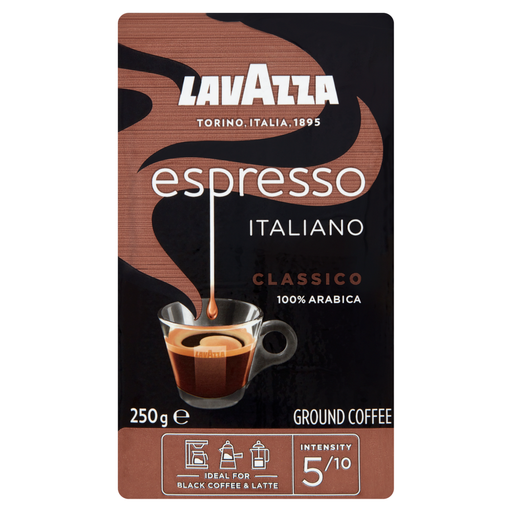 No image available
This 250g ground coffee is worth checking if you use a moka pot, filter machine or French press: confirm the preparation directions on the pack. Do not use its intensity description to calculate caffeine per serving.
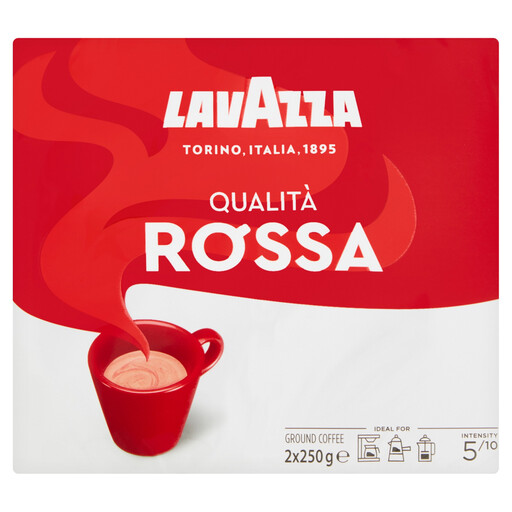 No image available
For a longer filter or French press coffee, check the preparation directions for the flavour you prefer; its description allows for different results depending on preparation. Consider whether a 500g pack fits how often your household makes coffee.
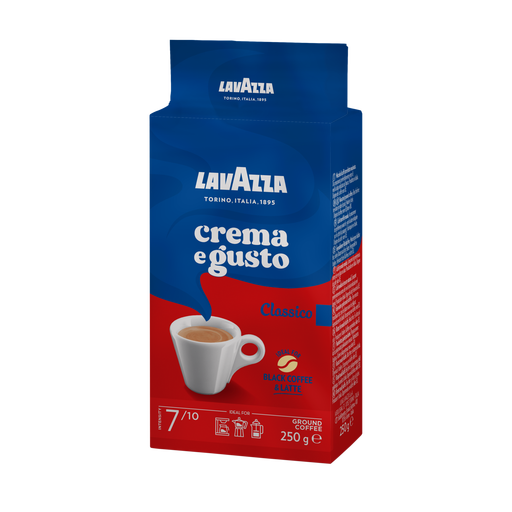 No image available
Consider this 250g coffee for a full-bodied flavour preference. Check the pack’s grind and brewing instructions against your equipment, and use serving-specific information rather than flavour wording if you are tracking caffeine.
 No image available
If a rich-tasting ground coffee appeals, compare this 200g pack’s brewing instructions with your usual method. Its flavour description should not stand in for a caffeine figure.
No: an intensity number is not a caffeine measurement. Lavazza UK describes intensity through aroma and body. Check for a separate statement about the exact product; Taylors of Harrogate, for example, says Hot Lava Java includes robusta for an extra caffeine boost.
Consider caffeine from your whole diet rather than judging coffee by its roast name. The NHS advises breastfeeding people who drink caffeine to try not to have more than 300mg a day and gives 140mg as an example for one mug of filter coffee. Half-caffeinated or decaffeinated ground coffee is an option when you want to reduce caffeine.
Yes. NHS pregnancy guidance says not to have more than 200mg of caffeine a day from all sources, including coffee and other foods and drinks. A ground coffee’s roast or intensity label cannot tell you how much caffeine is in your prepared cup.
For Sainsbury’s Taste the Difference Half Caff, Sainsbury’s gives one tablespoon of coffee per 200ml of off-the-boil water as its starting instruction. Follow the particular pack’s directions and your cafetière instructions for the remaining steps; another coffee may have different guidance.