Older adults who enjoy a bold morning coffee
A pronounced roast flavour may be the priority. Compare the stated taste profile and brewing method without treating a higher intensity label as a caffeine dose.


Choose a strong-tasting ground coffee if its flavour and recommended brewing method suit the person drinking it. An intensity score describes taste, not caffeine per cup or nutritional value; if caffeine affects sleep, consider when the coffee is served and whether a lower-caffeine blend would suit the routine better.
The useful distinction is between wanting a bolder-tasting cup and wanting more caffeine or nutritional support: a coffee strength label does not settle the latter two questions.
A pronounced roast flavour may be the priority. Compare the stated taste profile and brewing method without treating a higher intensity label as a caffeine dose.
Check what the person enjoys drinking, which brewer the household uses and how quickly it gets through an opened pack. Keep coffee choice separate from questions about food intake or individual nutrition needs.
A lower-caffeine ground blend or an earlier serving time may fit the routine better than selecting by roast intensity. The NHS notes that caffeine can disrupt sleep rhythms and that its effects can last up to 7 hours.
Start with the flavour the person likes and the brewer they use. Then consider caffeine timing and whether the pack size works for the household.
| Priority | What to check | Your needs |
|---|---|---|
| Flavour intensity | Read the roast description and the brand’s intensity scale. Lavazza lists Espresso Barista Intenso Ground at 9/10 and Crema e Gusto Classico Ground at 7/10; illy lists Ground Espresso INTENSO at 7/9. These are brand-specific taste scales, not comparable caffeine measures. | I enjoy a fuller-tasting coffee, but I do not want a strength number to stand in for information about caffeine or nutrition. |
| Caffeine and timing | Check whether the blend is regular, reduced-caffeine or decaffeinated, and consider other sources of caffeine during the day. Sainsbury’s describes its Taste the Difference Half Caff Ground Coffee as a 50:50 blend of coffee and decaffeinated coffee. The NHS says caffeine can disrupt sleep rhythms and its effects can last up to 7 hours. | If coffee affects my sleep, I would rather change when I drink it or consider a lower-caffeine blend than rely on a lighter-sounding roast name. |
| Brewing method | Match the product’s stated preparation to the brewer. illy describes Ground Espresso INTENSO for espresso, Lavazza describes Crema e Gusto Classico for moka pots or filtered coffee, and Rombouts lists Cachet d’Or for cafetières, filter machines and filter cones. | Our household uses a particular brewer, so I want ground coffee intended for that way of making it. |
| Pack and storage | Compare pack size with how often the household makes coffee. Check the specific pack’s instructions for storage after opening rather than assuming different products have the same guidance. | We make coffee only occasionally, so a pack we can use and store as directed matters more than buying a larger one. |
Lavazza’s 9/10 and illy’s 7/9 describe products on different brand scales. Neither figure tells you the caffeine in a prepared cup or whether coffee addresses an older person’s nutrition needs.
Use the labels to narrow down taste preferences. Check brewing guidance and any caffeine information relevant to the serving instead of choosing a stronger label to address tiredness or poor food intake.
The NHS says caffeine can disrupt usual sleep rhythms and its effects can last up to 7 hours. A late coffee may therefore be a poor fit when sleep is already affected.
Consider an earlier serving time or a lower-caffeine option, and remember that coffee is not the only possible source of caffeine in a daily routine.
The products named here have different stated uses: illy’s Ground Espresso INTENSO is described for espresso, Lavazza’s Crema e Gusto Classico for moka or filtered coffee, and Rombouts Cachet d’Or for cafetières and filters.
Check the preparation advice for the exact product before buying, especially if someone else will regularly make the coffee.
A pack that lasts a household a long time still needs to be stored according to its own instructions. Pack size is worth weighing against how often coffee is made.
Read the after-opening directions and choose a size the household can use while following them.
These brand examples illustrate different flavour labels and brewing uses; they do not form a common strength or caffeine ranking.
Lavazza UK lists ground coffees with different stated intensity levels and preparation methods.
illy UK describes Ground Espresso INTENSO as a 100% Arabica coffee for espresso preparation.
Joybuy lists Taylors of Harrogate Rich Italian Ground Roast Coffee in a 200 g pack.
Rombouts describes Cachet d’Or as 100% Arabica ground coffee.
Tesco lists Finest roast-and-ground coffees including Peruvian and Sumatra Mandheling 227 g varieties.
Sainsbury’s lists Fairtrade Intense Roast and Italian Espresso Strength 5 ground coffees, as well as a Taste the Difference Half Caff blend.
This ground-coffee option is relevant if the household wants to try a bolder-tasting cup and can use a 500 g pack. Its pack information should guide brewing and storage decisions.
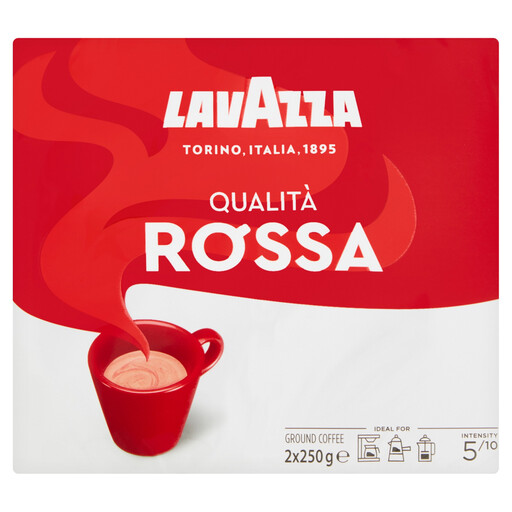 Image unavailable
If you are considering this coffee for a fuller-tasting cup, check the preparation directions against your brewer and taste preference. The 500 g pack also makes its after-opening storage instructions worth checking if coffee is made infrequently. Do not use the roast description to estimate caffeine per cup.
A higher intensity label does not establish more caffeine per cup. Lavazza and illy use their own scales to describe coffee intensity; to compare caffeine, you would need information that applies to the coffee as prepared and served.
No: choose ground coffee as a drink for its taste, not as a substitute for food or an individual nutrition plan. If poor food intake is a concern, discuss the person’s circumstances with an appropriate health professional rather than choosing a higher coffee intensity.
Consider moving caffeinated coffee earlier or choosing a lower-caffeine blend. The NHS says caffeine can disrupt sleep rhythms and its effects can last up to 7 hours; Sainsbury’s describes its Half Caff ground coffee as a 50:50 blend of coffee and decaffeinated coffee.
Check the method stated for the exact ground coffee against the brewer at home. illy describes Ground Espresso INTENSO for espresso, Lavazza describes Crema e Gusto Classico for moka or filtered coffee, and Rombouts lists Cachet d’Or for cafetières and filters.
Follow the instructions on the specific pack and choose a size that fits how often the household makes coffee. Do not assume that storage directions for one ground-coffee product apply to another.