Hosts stocking a shared drinks cupboard
An 80-bag peppermint box can cover repeated use, while a smaller mixed selection gives guests who do not want mint another choice. Keep the original packs accessible so each blend can be identified.


For guests asking for a strong mint flavour, consider a pure peppermint infusion: teapigs describes its peppermint as strong-tasting, while Twinings says its Pure Peppermint can be brewed longer for a stronger cup. In a shared cottage, a larger peppermint pack may suit repeat use, but a smaller non-mint option gives guests another flavour; check each blend’s ingredients, cautions and stated caffeine status rather than assuming all herbal teas are alike.
The useful choice depends on whether the cupboard needs a regularly used mint tea, an alternative flavour, or both.
An 80-bag peppermint box can cover repeated use, while a smaller mixed selection gives guests who do not want mint another choice. Keep the original packs accessible so each blend can be identified.
Look for a product that describes its mint flavour clearly or gives instructions for a longer infusion. teapigs describes its peppermint as strong-tasting; Twinings gives a longer-brew option for Pure Peppermint.
A floral blend may appeal to someone who does not want peppermint. Pukka’s Night Time range contains herbs including chamomile and lavender, but its name is not a reason to promise a sleep-related effect.
Start with the flavour guests are likely to use, then check the exact pack’s brewing directions, caffeine declaration and ingredients.
| Priority | What to check | Your needs |
|---|---|---|
| Mint intensity | Read the maker’s flavour description and brewing directions. teapigs calls its peppermint strong-tasting; Twinings says Pure Peppermint can steep for longer than 3 minutes for a stronger cup. These are not results from a common taste test. | I want guests who ask for a pronounced mint flavour to have a clear option, without assuming every peppermint tea tastes equally strong. |
| Caffeine status | Check the declaration for the exact blend. Twinings Pure Peppermint, teapigs Peppermint and Clipper Organic Peppermint are each described as naturally caffeine-free on their respective product pages. | For a guest avoiding caffeine, I need the selected pack to state its caffeine status, not just carry a herbal-tea label. |
| Pack and flavour choice | Compare the number of bags and flavours. Twinings lists 80 bags for Pure Peppermint and four blends in its 20-envelope Herbal Discovery Collection; Pukka lists an 8-sachet Night Time trial pack. | If guests have different tastes, I would rather offer a small alternative alongside mint than assume a large box of one flavour will suit everyone. |
| Ingredients and cautions | Read each blend’s ingredients and pack warnings. Twinings states that its Spiced Ginger blend contains liquorice and cautions people with hypertension against excessive consumption. | When I put out a mixed box, guests need to be able to tell which blend they are choosing and read its relevant cautions. |
teapigs describes its peppermint as strong-tasting, whereas Clipper describes its peppermint infusion as light and refreshing. Those descriptions do not put the teas on a standard intensity scale.
Choose using the flavour description and stated brew time, then try a smaller pack before relying on one tea for the whole cupboard.
Twinings’ 80-bag Pure Peppermint pack provides plenty of one flavour, but guests looking for floral or ginger notes will need another option.
If preferences are mixed, keep the peppermint and add a smaller alternative rather than assuming pack size alone settles the choice.
Ingredients and cautions can differ within one collection. Twinings’ Herbal Discovery Collection includes a liquorice-containing Spiced Ginger blend with a specific consumption caution.
Keep the original box or individual product information with the tea bags so guests can identify each blend and read its label.
These examples illustrate different pack and flavour choices; a brand name alone does not establish how every tea in its range will taste.
Its Pure Peppermint 80-bag pack suits repeated mint use, while the Herbal Discovery Collection offers four blends in 20 envelopes.
Its 15-temple Peppermint pack is an option for guests specifically requesting pure mint.
Its Organic Peppermint Infusion offers a peppermint-only choice with a stated 2–5 minute infusion time.
Its Night Time blend provides a floral alternative to peppermint, with 8-, 20- and 40-sachet formats listed by Pukka.
These two Twinings options offer an 80-pack of peppermint for repeat use and a 20-pack of lemon and ginger for guests who prefer a different flavour.
 No image available
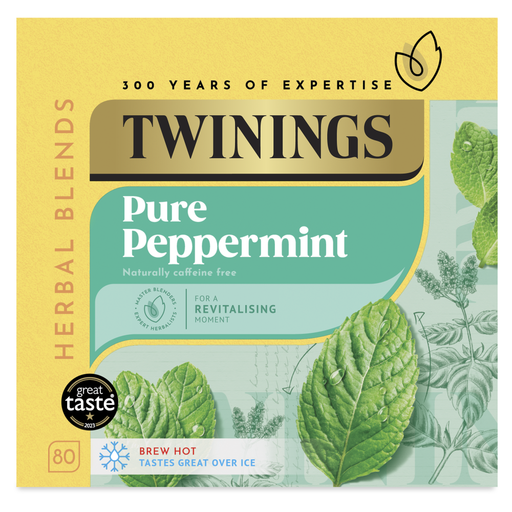
For a cottage where peppermint will be used regularly, this 80-bag, 160 g pack contains 100% peppermint. Twinings describes it as naturally caffeine-free and instructs users to brew one bag in 200 ml of freshly boiled water for 3 minutes, or longer for a stronger cup. Add another flavour if guests may not want mint.
 No image available
This 20-bag lemon and ginger option gives guests a non-mint flavour without adding another large box. Check the exact pack’s ingredients, caffeine declaration and brewing directions before putting it out, particularly for guests requesting a caffeine-free or distinctly strong cup.
Follow the chosen pack’s directions before changing the number of bags. Twinings says to steep its Pure Peppermint for 3 minutes, or longer for a stronger cup; teapigs advises at least 3 minutes for its Peppermint.
Check the exact product’s declaration rather than relying on the category name. Twinings Pure Peppermint, teapigs Peppermint and Clipper Organic Peppermint are each described as naturally caffeine-free on their product pages.
Read the ingredients and cautions for each blend. Twinings states that the Spiced Ginger blend in its Herbal Discovery Collection contains liquorice and that people with hypertension should avoid excessive consumption.
GOV.UK and Food Standards Agency guidance says retail and catering food businesses must provide allergen information for prepacked and non-prepacked food and drink. That guidance does not establish whether every self-catering host is a food business; keep original packs available, and seek local-authority advice if unsure how the requirement applies to the way tea is supplied.