Home workers seeking a darker cocoa taste
A percentage-labelled dark drinking chocolate or dark flakes give you a specific product attribute to check. The M&S and Tesco examples are prepared with hot milk, so they suit a break when you can heat it.


For a darker cocoa taste, start with a stated dark-chocolate percentage and the product’s flavour description, then check whether its hot-milk preparation fits your lunch break. Instant hot chocolate may involve fewer preparation steps, while cocoa or drinking chocolate powder lets you adjust how much you use; neither format name alone establishes how strong the finished drink will taste.
The useful distinction at lunchtime is whether you prioritise a documented dark-chocolate profile, a short preparation routine or control over the amount added to your mug.
A percentage-labelled dark drinking chocolate or dark flakes give you a specific product attribute to check. The M&S and Tesco examples are prepared with hot milk, so they suit a break when you can heat it.
An instant product is worth considering when a simpler preparation routine matters most. Check its own directions and flavour description rather than assuming that an instant mix has a dark-chocolate profile.
Cocoa or traditional drinking chocolate lets you vary the amount used. Follow the product’s directions as a starting point, particularly where they specify hot milk.
Choose when: you want a stated dark-chocolate percentage. Marks & Spencer describes its 72% drinking chocolate as bold and not overly sweet; Tesco labels its dark flakes as 70% pure cocoa dark chocolate.
Allow for: both examples specify hot milk, and Tesco’s flakes were out of stock when its listing was reviewed. Check current availability before planning around a particular product.
Choose when: you would rather adjust the amount in each mug. Cadbury describes Bournville cocoa as suitable for drinking with hot milk, while the Cadbury Original drinking chocolate directions specify three teaspoons with hot milk.
Keep in mind: those directions do not establish how either drink tastes alongside a percentage-labelled dark chocolate.
Choose when: a straightforward preparation routine is more important than selecting a stated dark-chocolate percentage.
Check first: instant describes the format, not the cocoa intensity. Read the particular product’s ingredients, flavour description and preparation directions.
Once you have a format in mind, compare the label and the preparation method for the products you are actually considering.
| Priority | What to check | Your needs |
|---|---|---|
| Cocoa profile | Look for a stated dark-chocolate percentage and read what that percentage describes. M&S labels one drinking chocolate 72% dark; Tesco describes its 70% flakes as pure cocoa dark chocolate. A percentage for cocoa powder in a mix is not automatically the same measure. | I want a darker-tasting lunch drink, so a clearly described dark-chocolate product is more useful to me than the word “strong” on its own. |
| Preparation | Check the liquid, amount and heating steps on the current pack. The M&S dark drinking chocolate is stirred into hot milk, while Tesco’s dark flakes are melted into hot milk. | If I only have time for a simple drink, I need directions that fit my break and the equipment in my kitchen. |
| Availability | Check the current listing before settling on a particular product. Tesco’s 70% dark flakes were marked out of stock when its product page was reviewed. | For an upcoming lunch break, I need to know that the specific product I choose can be ordered. |
| Ingredients | Read the current pack’s ingredients and allergen information, especially when changing products or buying a new pack. Sainsbury’s cautions that product ingredients can change. | When an ingredient or allergen matters to me, I need to check this pack rather than rely on an older online description. |
Instant tells you about the product format. Tesco and Sainsbury’s list Galaxy and Options instant varieties, but those listings do not establish a comparable dark-chocolate percentage for them.
If a darker profile is your priority, look for a stated dark-chocolate percentage or a specific flavour description on the product you intend to buy.
The M&S dark drinking chocolate and Tesco dark flakes specify hot milk. That matters if your lunch-break setup provides only a kettle and water.
Check the current directions before ordering, and choose a preparation method that works with what you have available.
Ingredients can change between purchases. Sainsbury’s advises shoppers to read the product label rather than rely solely on its online information.
Check the current pack’s ingredient and allergen information; contact the manufacturer if you need product-specific clarification.
These are examples of different product formats and descriptions, not a judgement about every hot chocolate made by each brand.
Marks & Spencer’s 72% Dark Drinking Chocolate is an example for shoppers seeking a stated dark-chocolate percentage.
Tesco Finest Belgian 70% Dark Hot Chocolate Flakes provide another stated dark-chocolate example.
Cadbury Bournville cocoa and Cadbury Original Drinking Hot Chocolate illustrate two ways to make a milk-based drink.
Galaxy appears in Tesco and Sainsbury’s instant hot-chocolate listings.
Options appears in supermarket listings with flavoured instant hot-chocolate varieties.
These Joybuy options are chocolate drink powders to consider for a working-from-home lunch. Compare each current label and preparation method with your preference for cocoa taste and the time you have available; the selection is not a comparison of dark chocolate flakes and instant products across the whole market.
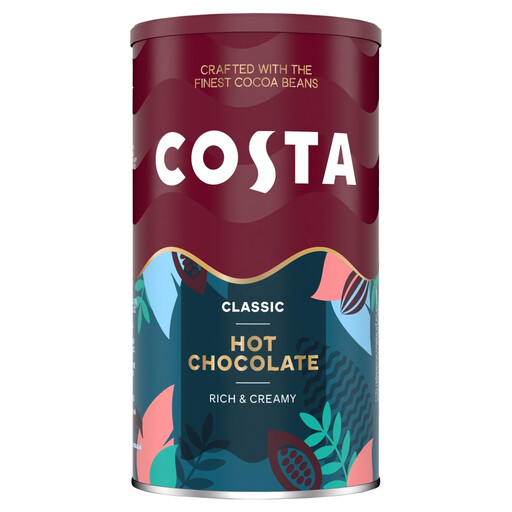 No image available
Consider this 300g hot chocolate when you can prepare a drink during your lunch break. Check the current cocoa information and mixing directions if flavour intensity or your choice of liquid will determine whether it suits you.
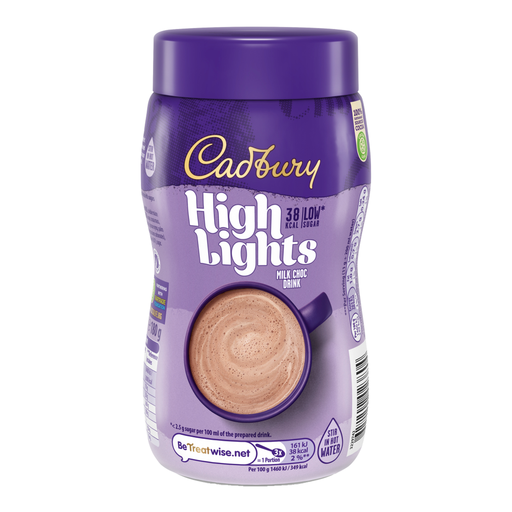 No image available
This 180g chocolate drink is an option to assess when preparation needs to fit a short break. Read its current pack directions before relying on a particular liquid, and check the ingredients and allergens if they affect your choice.
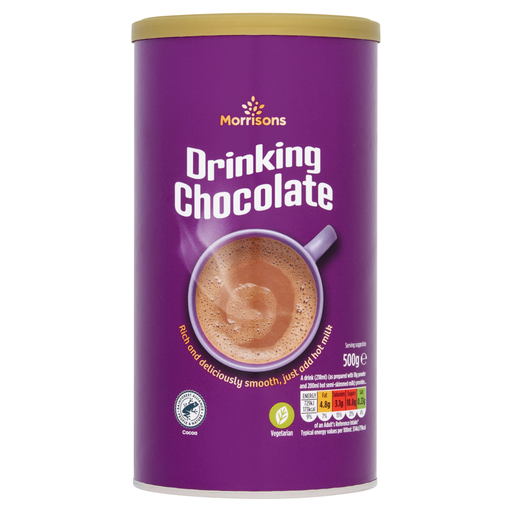 No image available
Consider this 500g drinking chocolate if you want to adjust how much powder goes into each mug. Check its current preparation directions and cocoa description rather than assuming the format guarantees a particularly dark taste.
On its own, “strong” does not give you a measure for comparing these drinks. For a darker-chocolate option, look at what a stated percentage describes: Marks & Spencer labels its Dark Drinking Chocolate 72%, while Tesco describes its dark flakes as 70% pure cocoa dark chocolate. The finished taste will also depend on how you prepare the drink.
It can if you have time and a way to heat milk. Marks & Spencer directs shoppers to stir its dark drinking chocolate into hot milk, and Tesco directs them to melt its dark flakes into hot milk. If those steps do not fit your break, check the directions for an instant product instead.
Their stated directions specify hot milk, so do not assume water is an equivalent preparation method. Check the current pack before choosing either product if you need to make your drink with water.
Yes. A vegetarian or vegan description does not replace checking the current product’s ingredients and allergen information. Sainsbury’s cautions that ingredients can change, so use the pack label for the particular product you buy.