Who is this choice for?
The key distinction is between wanting a pronounced coffee flavour and wanting the caffeine in a regular coffee: they are not the same buying requirement.
Evening coffee drinkers who like bold flavour
If coffee is part of your wind-down routine, look for a clearly labelled decaf with a flavour profile you would enjoy. NHS sleep guidance advises avoiding caffeine close to bedtime, while Nescafé describes its Original Decaf as bold and intense.
Shoppers switching from strong regular coffee
Decaf need not be treated as a single flavour style. Compare descriptions such as bold, rounded or rich, but read each brand’s intensity rating within its own range rather than as a common scale.
Households choosing an evening jar
Once you have found a decaf flavour you want to try, check the jar size and preparation directions against how often you make it. Product listings include different pack sizes, and a stated serving count depends on the suggested amount used per cup.
What should you check first?
Start with the decaf label for a drink near bedtime, then compare flavour descriptions and the way you would prepare a cup. Consider jar size after those requirements are met.
| Priority |
What to check |
Your needs |
| Bedtime choice |
Check that the particular jar is labelled decaffeinated instant coffee, not the regular version of a similarly named product. Doncaster and Bassetlaw Teaching Hospitals NHS Foundation Trust advises avoiding caffeine before bed and notes that it can remain in the body for up to six hours. |
I want a coffee hot drink near bedtime without choosing a regular caffeinated coffee. If I must avoid caffeine completely, I need to confirm whether the particular product meets that requirement rather than relying on the word “decaf”. |
| Flavour |
Read the product’s flavour description and any intensity cue. Nescafé calls Original Decaf bold and intense; Kenco rates its Decaf at intensity 7 and describes it as balanced. These descriptions are not results from a shared taste test. |
A rounded cup may suit me, or I may prefer a product described as bold. I would not treat different brands’ strength numbers as directly comparable or assume bold flavour tells me the caffeine content. |
| Preparation |
Check the suggested coffee quantity and water volume on the particular jar. Tesco gives one teaspoon (1.8g) and 200ml hot water for a mug of Nescafé Original Decaf 100g; directions for another product may differ. |
Before deciding a decaf tastes too mild, I want to make it using that product’s directions and a cup size that matches them. |
| Jar size |
Compare the stated pack weight and, where supplied, the serving estimate and its preparation basis. Sainsbury’s lists approximately 111 servings for its 200g Rich Roast Decaffeinated jar; an estimate is not a fixed number of cups for every household. |
For an occasional evening drink, I may want to try a smaller jar first. If several people make it regularly, the pack size matters more to my choice. |
Relevant brand references
These references describe particular decaf products or ranges; a brand name alone does not tell you how any jar will taste.
Nescafé
Nescafé Original Decaf is one route for shoppers seeking a stated bold flavour in an instant coffee.
- Nescafé describes Original Decaf as bold and intense and says most caffeine is removed using water.
- Its flavour description is the manufacturer’s, and “most caffeine removed” does not mean caffeine-free.
Kenco
Kenco Decaf offers an explicit intensity cue alongside a balanced flavour description.
- Kenco gives Decaf an intensity rating of 7 and describes its profile as balanced and rounded.
- The rating is a Kenco product cue, not a measure that can be directly compared with another brand’s scale.
Douwe Egberts
Decaffeinated instant coffee from Douwe Egberts appears in Sainsbury’s and Tesco category listings.
- The listings identify a decaf instant-coffee option to consider alongside other jars.
- Check the particular pack’s flavour description before treating it as a bold-tasting choice.
Sainsbury’s
Sainsbury’s Rich Roast Instant Coffee Granules, Decaffeinated is a 200g own-label option.
- Sainsbury’s describes it as rich and full flavoured and labels it medium strength 3.
- Its medium cue is not an independent comparison with another brand’s bold or intensity description.
Tesco
Tesco lists Decaff Gold and Decaffeinated Classic instant coffees in its own-label decaf range.
- These listings give shoppers own-label decaf options to examine.
- Check the current product details for the flavour and preparation information relevant to the jar you choose.
Decaf instant coffees on Joybuy
These jars are decaffeinated instant-coffee options for a bedtime hot drink. They offer different stated flavour styles and pack sizes; the product descriptions do not provide an independent taste comparison.
 No image available
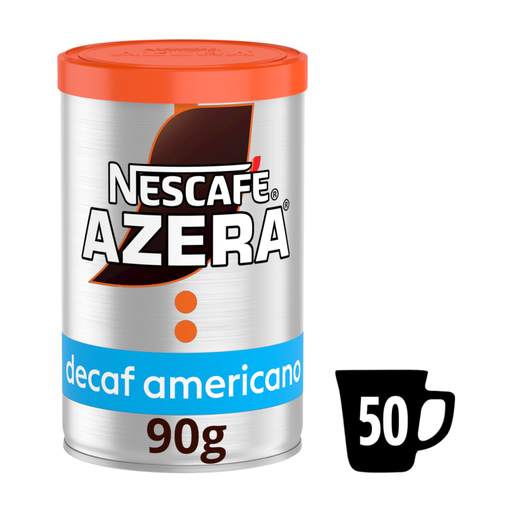
NESCAFÉ Azera Decaf Americano 90g
An instant Americano option if you want a decaf coffee for an evening hot drink. The product description calls its flavour bold and full-bodied; that is a product claim, not an independent taste result. Check the current pack if you need to limit caffeine strictly.
View on Joybuy
 No image available
Kenco Decaff Instant Coffee 100g
A decaf instant-coffee jar to consider if you prefer a product described as smooth rather than explicitly extra-bold. Its listing identifies decaffeinated instant coffee and gives directions of 1–2 teaspoons with hot water. Check the current pack if you need to limit caffeine strictly.
View on Joybuy
 No image available
NESCAFÉ Gold Blend Decaf Coffee 190g
A 190g jar of decaffeinated soluble coffee for someone considering a larger evening jar. Its product description calls the flavour rich and full-bodied; compare that claim with your own flavour preference rather than treating it as a tested comparison. Check the current pack if you need to limit caffeine strictly.
View on Joybuy
 No image available
NESCAFÉ Original Decaff Coffee 300g
A 300g jar of decaffeinated soluble coffee for a household that uses an evening jar regularly. Nescafé describes its Original Decaf range as bold, while this product description calls the flavour rich and full-bodied; neither is an independent taste comparison. Check the current pack if you need to limit caffeine strictly.
View on Joybuy
Frequently asked questions
Should I choose regular strong instant coffee just before bed?
If avoiding caffeine near bedtime is your priority, choose a decaffeinated option instead of a regular strong coffee. NHS Borders advises avoiding caffeine-containing drinks close to bed because they can increase alertness and disrupt sleep; Doncaster and Bassetlaw Teaching Hospitals NHS Foundation Trust notes that caffeine can remain in the body for up to six hours.
Does a strong-tasting coffee necessarily contain more caffeine?
No caffeine amount can be established from a flavour word or intensity rating alone. For a bedtime coffee, check that the particular product is labelled decaffeinated, then use its flavour description to decide whether its stated style appeals to you.
Can a decaf instant coffee be described as bold?
Yes. Nescafé describes Original Decaf as bold and intense; Kenco describes its Decaf as balanced and gives it an intensity rating of 7. These are the brands’ descriptions, not independent evidence that either coffee will taste stronger to you.
How do I avoid making instant decaf taste weaker than intended?
Follow the directions for the jar and check the amount of water you are using. Tesco gives one teaspoon (1.8g) with 200ml hot water for a mug of Nescafé Original Decaf 100g; that preparation basis should not be assumed for every decaf coffee.
Does decaf meet a requirement to avoid caffeine completely?
Do not assume that it does. Nescafé says most caffeine is removed from Original Decaf, which is not a statement that none remains. If complete avoidance is necessary for you, check the current product information and seek appropriate clinical advice.


