Workers who like bold black coffee
If you want a pronounced coffee flavour alongside a sweet or savoury snack, compare stated intensity and roast descriptions. Treat those as taste cues, not caffeine measurements.


For a quick night-shift break, choose by the flavour you want: Kenco Rich has a stated intensity of 9, while NESCAFÉ describes AZERA Americano Intense as full-bodied. Neither an intensity score nor the word “intense” tells you how much caffeine a serving contains. If you plan to sleep soon after your break, caffeine timing may matter more than bold flavour; NHS Borders advises avoiding caffeine-containing drinks close to bed.
If you want a pronounced coffee flavour alongside a sweet or savoury snack, compare stated intensity and roast descriptions. Treat those as taste cues, not caffeine measurements.
An instant coffee that needs hot water and stirring can fit a break without coffee-making equipment. Check the preparation directions for the particular jar or tin, as well as where you can store it at work.
If sleep follows your shift soon, a decaffeinated option may be worth considering instead of another caffeinated cup. During pregnancy, account for caffeine from all sources: the NHS advises no more than 200 mg a day.
Start with the taste and preparation you want for the break, then consider caffeine separately—especially if you expect to sleep soon afterwards.
| Priority | What to check | Your needs |
|---|---|---|
| Bold flavour | Read the roast and flavour description. Kenco rates Rich at intensity 9 and Gold Indulgence at 8; those are ratings within Kenco’s range, not caffeine figures. | I want coffee with a pronounced flavour alongside my snack, rather than choosing a jar solely because its name says “strong”. |
| Quick preparation | Check the exact product’s water and serving directions, plus whether a jar or tin suits your storage space. Do not assume every similarly named coffee has the same preparation method. | My break is short, so I want to know what I need to make a cup before bringing the coffee to work. |
| Caffeine timing | Do not use flavour intensity to estimate caffeine: NESCAFÉ says strength scales tend to describe flavour. NHS Borders advises avoiding caffeine-containing drinks close to bed because they can disrupt sleep. | If I will sleep soon after my shift, I would rather consider the timing of a caffeinated cup or choose a decaffeinated option. |
| Caffeine during pregnancy | Count caffeine from coffee and other sources across the day. The NHS advises no more than 200 mg a day during pregnancy and estimates 100 mg in a cup of instant coffee. | When pregnant, I need to consider my total daily caffeine, not infer it from how strong the coffee tastes. |
A bold flavour label does not establish the caffeine in your prepared cup. NESCAFÉ says strength scales tend to reflect flavour intensity rather than caffeine content, while NHS Borders cautions that caffeine-containing drinks can disrupt sleep.
Choose an intensity description for taste. If caffeine matters before planned sleep, consider when you drink it and check information for the exact product and serving.
Kenco’s ratings of 9 for Rich and 8 for Gold Indulgence distinguish those two products within its range. They do not give an equivalent score for an unnumbered coffee from another brand.
Across brands, compare the stated roast and flavour descriptions and the preparation you prefer; do not turn separate labelling systems into a single scale.
These examples describe particular ranges or listings, not every coffee made by each brand or the Joybuy selection below.
Kenco labels Rich at intensity 9 and Gold Indulgence at intensity 8.
NESCAFÉ describes AZERA Americano Intense as having a full-bodied taste and intense aroma.
Sainsbury’s describes Carte Noire Intense as a dark-roast Arabica-and-Robusta blend.
UK retailer listings include Douwe Egberts instant coffee, including Pure Gold and decaffeinated options.
Tesco lists Finest Intenso Barista Style Instant Coffee in a 100 g format.
Sainsbury’s lists own-brand Rich Roast, Gold Roast and decaffeinated Gold Roast instant coffees.
These options include coffees labelled for intense or dark-roast flavour, a Kenco jar with a stated flavour-intensity rating, and a decaffeinated Americano for breaks when caffeine timing matters.
 No image available
Consider this 100 g instant coffee if a dark-roast flavour is what you want alongside a shift snack. “Intense” describes the flavour positioning, not the caffeine in a prepared cup.
 No image available
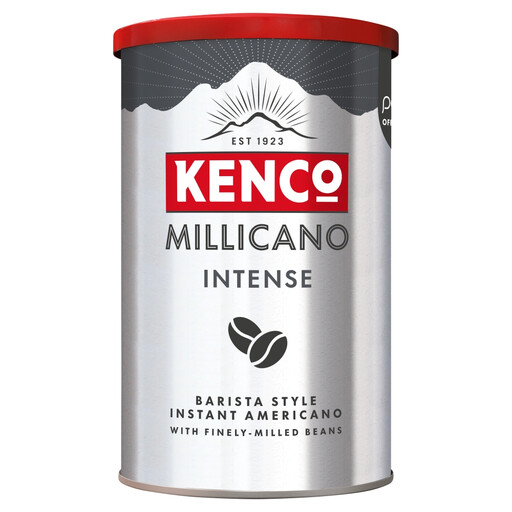
This 95 g tin is an option if you are looking for an Americano labelled “Intense”. Check its preparation directions if making a cup during a short break is decisive; the name does not establish caffeine per serving.
 No image available
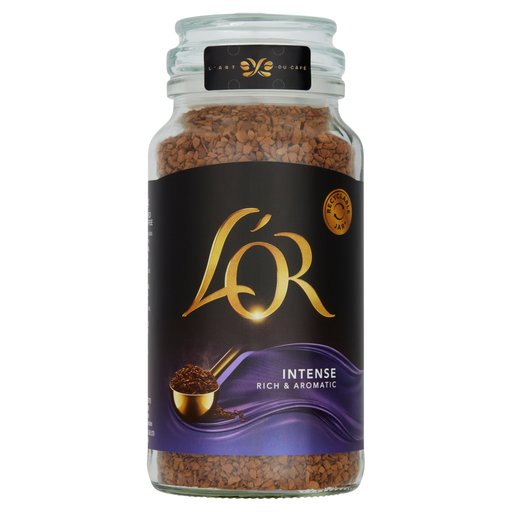
The 150 g pack is worth examining if you want a coffee labelled “Intense” with a snack. Check the pack’s preparation directions for your break; its name alone does not specify a caffeine amount.
 No image available
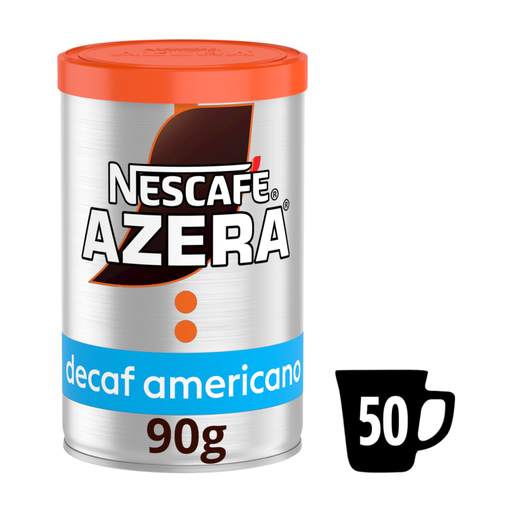
This 90 g decaffeinated Americano offers a different route when you want coffee during a break but are considering caffeine before planned sleep. Do not assume decaf means caffeine-free; check the exact pack if the amount matters.
 No image available
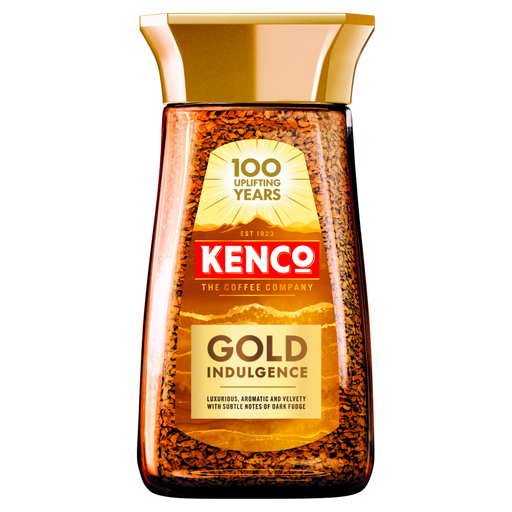
For a jar with a stated flavour rating, Kenco gives Gold Indulgence an intensity of 8. This 195 g instant-coffee variant should be chosen for that flavour description, not an assumed caffeine amount; check the pack for preparation directions.
No. NESCAFÉ says strength scales tend to indicate flavour intensity rather than caffeine content. Use caffeine information for the exact product and serving if the amount affects your choice.
Kenco Rich offers a clearly stated flavour intensity of 9, while NESCAFÉ describes AZERA Americano Intense as full-bodied. Choose between those flavour descriptions and check the exact product’s preparation directions; neither description establishes its caffeine content.
Consider avoiding a caffeinated cup close to planned sleep or choosing a decaffeinated alternative. NHS Borders advises avoiding caffeine-containing drinks close to bed because they can make you feel more awake and disrupt sleep.
Count caffeine from coffee and other sources across the day. The NHS advises no more than 200 mg of caffeine a day during pregnancy and estimates 100 mg in a cup of instant coffee; flavour intensity is not a way to calculate that total.