For a bold weekend-breakfast cup made with conventional instant coffee, Kenco Rich offers a clearly stated intensity rating of 9 on Kenco’s own scale. If you would rather have ground coffee in the blend, Nescafé Azera Americano Intense and Kenco Millicano Intense offer that format. Choose by flavour and format, not by assuming that an intensity label tells you how much caffeine is in the cup.
Who is this choice for?
The useful distinction for a weekend breakfast is whether you want a robust conventional instant coffee, a blend containing ground coffee, or a flavour choice made with caffeine intake in mind.
Breakfast drinkers who want a bold cup quickly
If you want to make coffee without a brewer, look at the product’s roast description and its own intensity wording. Kenco Rich, for example, has a stated intensity of 9 on Kenco’s scale; a dark-roast description offers a different kind of flavour cue.
Black-coffee drinkers interested in blend format
Nescafé Azera Americano Intense combines instant and finely ground coffee, according to Nescafé UK & IE. Kenco describes Millicano Intense as a blend of instant coffee and finely milled Arabica beans. These are options to consider if that format appeals to you, rather than a promise that either will suit every taste.
Drinkers keeping track of caffeine
Choose roast and intensity wording for the flavour you want, but check caffeine separately. This distinction matters particularly in pregnancy: NHS guidance says to have no more than 200mg of caffeine a day from all sources and estimates 100mg in a cup of instant coffee.
What should you check?
Start with the flavour description, then decide whether you want conventional soluble coffee or a blend containing ground coffee. Check the preparation directions and caffeine information separately.
| Priority |
What to check |
Your needs |
| Bold flavour |
Read the exact product’s roast and flavour description. Kenco GB rates Kenco Rich at intensity 9; Tesco lists Douwe Egberts Pure Indulgence as dark roast and strength 4. Those brand scales are not directly comparable. |
I want a robust cup with breakfast, so the roast description matters more to me than which pack carries the larger number. |
| Coffee format |
Check whether the product is conventional soluble coffee or also contains ground coffee. Nescafé says Azera Americano Intense contains both; Kenco says Millicano Intense combines instant coffee with finely milled Arabica beans. |
For a straightforward familiar cup, I would choose a conventional instant coffee. If the blend itself interests me, I would consider an instant-and-ground option. |
| Preparation |
Follow the directions on the particular jar, including its suggested amount of coffee and water. Adjust the amount to your taste rather than treating a product’s name as a serving instruction. |
I want a quick breakfast cup that tastes right to me, whether I drink it black or add milk. |
| Caffeine |
Do not use roast darkness or an intensity rating as a caffeine figure. Nescafé UK & IE explains that strength scales tend to describe flavour intensity. Check the pack for caffeine information where available. |
If I am tracking caffeine, I need to consider what is in my prepared cup and any other caffeine I consume, not just whether the coffee tastes strong. |
Mistakes to avoid
A strong-tasting instant coffee is a flavour choice, but its label may not answer questions about caffeine or tell you which coffee format is inside.
-
Reading intensity as a caffeine ranking
A darker or more intense flavour does not establish the caffeine content. Nescafé UK & IE says coffee-strength numbers tend to reflect flavour intensity rather than caffeine.
Use intensity wording to narrow down taste preferences; check caffeine information separately if it affects your choice.
-
Comparing different brands’ strength numbers directly
Kenco GB gives Kenco Rich an intensity rating of 9, while Tesco lists Douwe Egberts Pure Indulgence at strength 4. These figures come from different brands’ scales, so the numbers alone do not establish how the coffees compare in the cup.
Compare each product’s roast and flavour description, then use its number as a cue within that brand’s range.
-
Overlooking ground coffee in an instant blend
Nescafé Azera Americano Intense and Kenco Millicano Intense include ground or finely milled coffee as well as instant coffee. That is a meaningful format distinction if you expected a conventional soluble-only product.
Read the product description or ingredients before choosing between the two styles.
Relevant brand references
These product lines illustrate different ways of describing a bold instant coffee; the descriptions do not create a common strength or caffeine scale across brands.
Kenco
Kenco GB rates Rich at intensity 9 and describes Millicano Intense as a blend of instant coffee and finely milled Arabica beans.
- Rich provides a stated, brand-specific intensity cue for shoppers seeking a robust conventional instant coffee.
- Its rating cannot be used as a caffeine figure or directly compared with another brand’s strength number.
Nescafé
Nescafé UK & IE describes Azera Americano Intense as containing both instant coffee and finely roasted ground coffee.
- The stated blend format helps distinguish this Americano-style product from conventional soluble coffee.
- Nescafé’s descriptions of body and aroma express its intended flavour style, not a measured caffeine advantage.
Carte Noire
Sainsbury’s describes Carte Noire Intense 100g as a dark-roast Arabica-and-Robusta blend with a robust flavour profile.
- The stated roast and bean blend give shoppers specific flavour information to consider.
- Check the current retailer listing before planning a purchase around this particular variety.
Douwe Egberts
Tesco lists Pure Indulgence as dark roast with a strength rating of 4 and describes its flavour as full-bodied.
- Its roast description offers a way to consider a darker-tasting instant coffee.
- Strength 4 is not directly comparable with Kenco’s intensity 9.
Tesco
Tesco’s premium instant-coffee category lists a Tesco Finest Intenso Barista Style option alongside branded products.
- It gives shoppers an own-label product to examine alongside the named brands.
- Check that product’s own ingredients and preparation directions before comparing it with a specific branded blend.
Instant coffee options on Joybuy
These options cover instant-and-ground blends, dark-roast and other intense-flavour varieties for a quick breakfast cup. One listed Azera variant is decaffeinated, so check that distinction if you are choosing between similar names.
 No image available
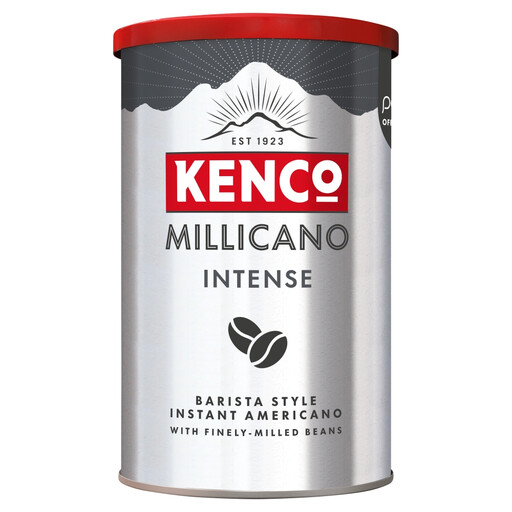
Kenco Millicano Americano Intense 95g tin
Consider this for an Americano-style breakfast cup when you want an instant-and-ground blend rather than conventional soluble coffee. The tin contains 95g; check the pack for preparation and caffeine information relevant to your serving.
View on Joybuy
 No image available
Costa Instant Intense Dark Roast 100g
The dark-roast description makes this a flavour-led option to consider for breakfast. It is described as an instant-and-ground blend rather than soluble coffee alone; check the pack if its caffeine content matters to you.
View on Joybuy
 No image available
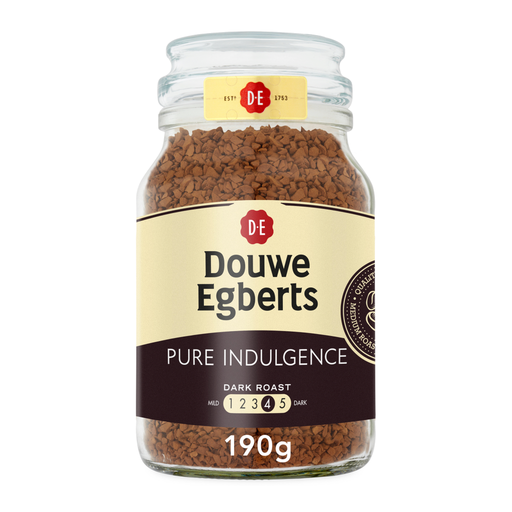
Douwe Egberts Pure Indulgence 190g
This dark-roast instant coffee suits a choice based on roast description rather than the largest intensity number. Tesco lists Pure Indulgence at strength 4, a brand-specific flavour cue; follow the caffeine and serving information on the particular pack.
View on Joybuy
 No image available
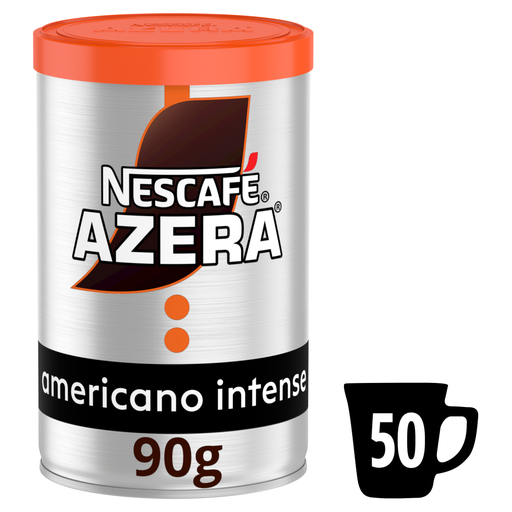
NESCAFÉ Azera Americano Intense 90g — decaffeinated variant
This listed variant is described as decaffeinated, an important distinction if you are comparing Americano Intense products. It is an instant coffee with some roast-and-ground coffee in the blend; check the pack if the amount of residual caffeine matters to you.
View on Joybuy
 No image available
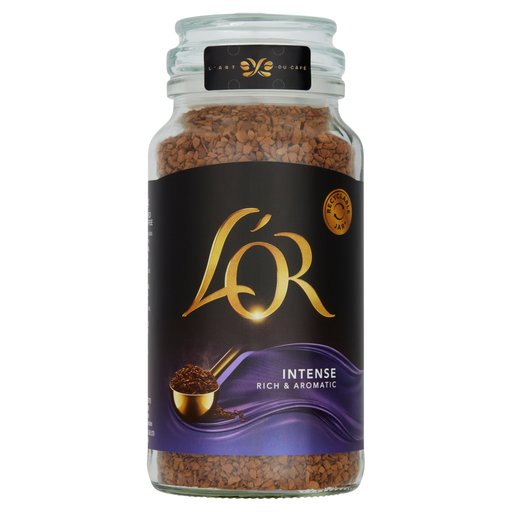
L'OR Intense Coffee 150g
Consider this if an intense-flavour instant coffee appeals to you. Its directions specify one or two teaspoons with hot water; start with the preparation guidance on the pack and adjust the cup to your taste.
View on Joybuy
Common questions
Does a higher instant-coffee intensity number mean more caffeine?
No: an intensity number does not establish a cross-brand caffeine comparison. Nescafé UK & IE explains that coffee-strength scales tend to describe flavour intensity; check caffeine information separately where it is provided.
How can I adjust a strong instant coffee to my taste?
Start with the serving directions on its jar, then adjust the amount of coffee if the cup tastes too mild or too strong for you. Do not assume that two products described as “intense” use the same preparation amount.
Can I add milk to a strong instant coffee at breakfast?
Yes, if you prefer it that way. Taste the coffee prepared according to its directions, then add milk to suit your preference rather than treating “strong” as a requirement to drink it black.
How should I store an opened jar?
Follow the storage directions and best-before information on the particular jar. Keep its lid closed as the pack directs.
What caffeine guidance applies during pregnancy in the UK?
The NHS says pregnant people should have no more than 200mg of caffeine a day from all sources and estimates 100mg in a cup of instant coffee. An intensity label is not a caffeine measure, so include other drinks and foods containing caffeine when considering the daily total.


