Black-coffee drinkers who want a robust desk cup
If you make coffee with hot water during a short lunch break, dark-roast and full-bodied descriptions can help you narrow down the flavour you want without adding a brewing step.


For a quick desk lunch, choose a conventional instant coffee described as dark-roasted or full-bodied if a robust black cup is your priority. An instant-and-ground blend offers a different format: Kenco describes Millicano Intense as instant coffee mixed with finely milled Arabica, but neither format nor a strength label establishes caffeine content. If you are pregnant, the NHS advises no more than 200 mg of caffeine a day from all sources.
If you make coffee with hot water during a short lunch break, dark-roast and full-bodied descriptions can help you narrow down the flavour you want without adding a brewing step.
If a conventional instant jar is not the flavour format you want, Kenco describes Millicano Intense as a blend of instant coffee and finely milled Arabica. Its format is a reason to consider it, not proof of a stronger cup.
Roast and intensity wording cannot tell you how much caffeine is in your cup. During pregnancy, the NHS advises counting caffeine from all foods and drinks towards a daily maximum of 200 mg.
Start with the cup you want at lunch, then check the product format and preparation directions. Treat flavour intensity and caffeine as separate questions.
| Priority | What to check | Your needs |
|---|---|---|
| Robust flavour | Read the roast and flavour description. Kenco calls Rich intensity 9; NESCAFÉ describes Gold Blend Intense as dark-roasted and full-bodied. | I want a pronounced black-coffee flavour without a separate brewing step. |
| Coffee format | Check whether the product is conventional instant coffee or an instant-and-ground blend. Kenco says Millicano Intense contains instant coffee and finely milled Arabica. | A different coffee format appeals to me, provided I still have a quick way to make a desk cup. |
| Cup preparation | Follow the directions for the exact product. Where the pack allows a choice of coffee quantity, consider how that changes the cup you make. | Some days I want a black cup; on others, I may prefer a different coffee quantity or add milk. |
| Strength labels | Use a brand’s intensity number as a flavour cue, not a cross-brand measurement. Kenco Rich is labelled intensity 9, while Sainsbury’s lists Douwe Egberts Pure Indulgence as strength 4. | I do not want two different brands’ numbers to decide for me when their scales may not be comparable. |
| Caffeine intake | Check product-specific information where available and account for other caffeine sources. The NHS estimates 100 mg in a cup of instant coffee and advises a maximum of 200 mg a day during pregnancy. | If I am pregnant, I need to count more than my desk coffee towards the NHS daily limit; a dark-roast label does not give me a caffeine figure. |
Kenco Rich’s intensity 9 and Douwe Egberts Pure Indulgence’s strength 4 come from different product labels. Those numbers do not establish a like-for-like flavour or caffeine comparison.
Compare each product’s roast and flavour description, then use its preparation directions to make the cup you prefer.
Dark-roast and intensity descriptions concern the cup’s stated flavour; they do not provide a product-specific caffeine measurement. This distinction matters when you are monitoring total intake.
Use product-specific caffeine information where available rather than relying on flavour wording. During pregnancy, count caffeine from other foods and drinks as well as coffee, in line with NHS guidance.
A coffee you have seen listed may not be available when you next need to order it.
Check the live listing for the exact pack before ordering for an upcoming desk lunch.
These references describe particular coffees and their labels, not a ranking of the brands or a statement about what is currently available.
NESCAFÉ describes Gold Blend Intense as a dark-roasted instant coffee with a full-bodied taste.
Kenco offers Rich as a conventional instant option and describes Millicano Intense as a blend of instant coffee and finely milled Arabica.
Sainsbury’s describes Carte Noire Intense as a dark-roast blend of Arabica and Robusta.
UK supermarket listings describe Pure Indulgence as dark-roasted, with a rich and velvety flavour.
These options include instant coffees described for a robust desk cup, alongside products whose names or descriptions identify an Americano-style or intense format. Choose by the exact product and pack details rather than assuming every option has the same roast, flavour or caffeine content.
 No image available
An Americano-style instant option for a quick desk cup. Check the pack’s preparation directions for the cup you want, and product-specific caffeine information if you monitor intake.
 No image available
A 100g instant coffee labelled Intense Dark Roast for shoppers considering a dark-roast desk cup. Check the preparation directions and caffeine information for the exact pack if either affects your choice.
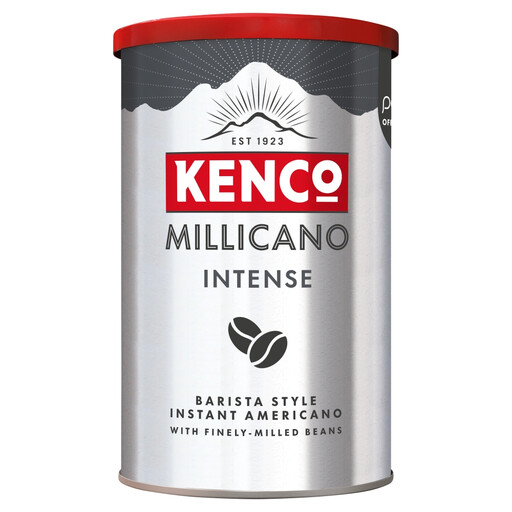 No image available
A 95g tin in Kenco’s Millicano Americano Intense range for a quick desk cup. Check the directions for this exact variant rather than using another Millicano product’s preparation guidance.
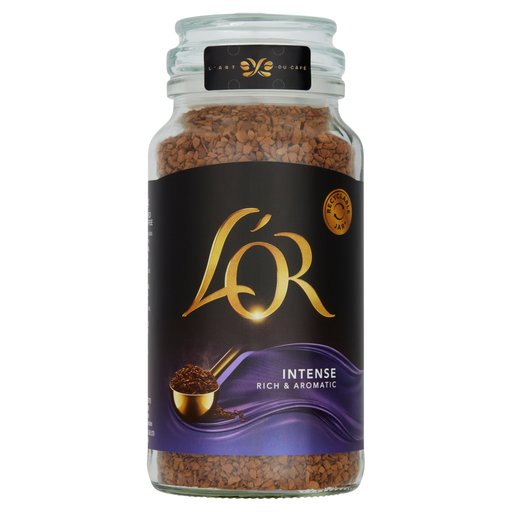 No image available
An Intense-labelled 150g coffee for shoppers seeking a pronounced desk cup. Use the exact pack’s preparation directions; its name alone does not establish caffeine content or a measured strength.
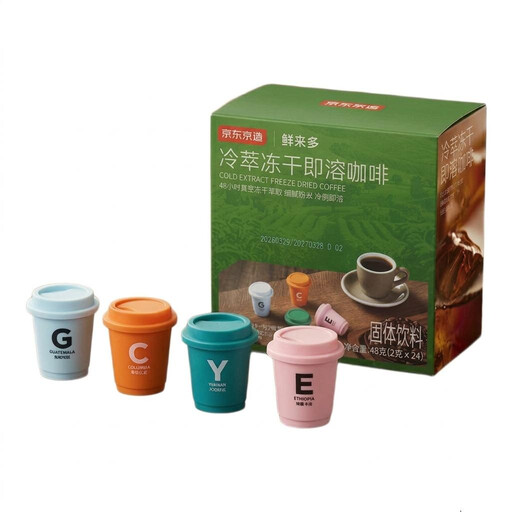 No image available
The 2g × 24 portion format may suit a desk where storing a larger jar is inconvenient. The product name identifies Arabica coffee and hot- or cold-water preparation; check the exact flavour variant before ordering.
No caffeine comparison follows from a strength label alone. Kenco uses an intensity number for Rich, while other products use their own strength or roast descriptions; check product-specific caffeine information if intake matters to you.
Start with the directions for the exact product, then use any preparation choices the pack provides. Carte Noire Intense, for example, gives a choice of one or two teaspoons per cup; changing the amount of coffee may also change the caffeine in that cup.
Yes, if you prefer your coffee that way. A splash of milk changes the cup you drink, so use the preparation and ingredient information for the exact products you choose if those details matter to you.
The NHS advises no more than 200 mg of caffeine a day during pregnancy, counting coffee alongside other foods and drinks that contain caffeine. It estimates 100 mg for a cup of instant coffee; that is a general estimate rather than a figure for every product or serving.
Follow the storage and best-before directions on the exact pack. The Carte Noire Intense and Douwe Egberts Pure Indulgence listings specify cool, dry storage, but the pack remains the place to check the instructions for the coffee you buy.