Who is each option for?
The choice depends on whether you want to reduce caffeine, retain the taste of black tea, or avoid trace caffeine altogether.
Evening black-tea drinkers reducing caffeine
If you want a traditional cup near bedtime but find caffeine affects your sleep, look at decaffeinated loose black tea before a regular breakfast blend. NHS Borders advises avoiding caffeinated hot drinks close to bed because they can increase wakefulness and disrupt sleep.
Loose-leaf drinkers who want bold flavour
If you use a teapot or infuser and want a pronounced black-tea flavour, compare decaf and conventional blends as well as the maker’s preparation directions. Whittard of Chelsea describes its decaf English Breakfast loose tea as full-bodied; Ringtons describes its conventional Breakfast Loose Tea as strong and malty.
People avoiding trace caffeine
If reduced caffeine is not enough for you, do not treat “decaf” as another word for “caffeine-free”. Ringtons says a small trace can remain in decaf tea. Check the individual label and ingredients of an infusion explicitly identified as caffeine-free.
What should you check before choosing?
Choose the type of drink first, then check its format, flavour description and pack size.
Decaf loose black tea
Choose it when: You want a traditional, full-bodied black-tea cup near bedtime while reducing caffeine.
Bear in mind: Decaf can retain trace caffeine, and packs range from Whittard’s 100 g loose tea to Bettys’ 1 kg Taylors pack.
Caffeine-free infusion
Choose it when: Avoiding trace caffeine matters more than keeping a traditional black-tea flavour.
Bear in mind: A fruit or herbal infusion will taste different from a malty breakfast tea; check the individual ingredients and caffeine wording.
Conventional strong black tea
Choose it when: You want a robust black tea earlier in the day rather than close to sleep.
Bear in mind: Fortnum & Mason puts a typical cup of black tea at 40–50 mg of caffeine, depending on brew strength; NHS Borders advises avoiding caffeinated hot drinks close to bed.
| Priority |
What to check |
Your needs |
| Bedtime caffeine |
Check whether the tea is conventional black tea, decaf or explicitly caffeine-free. Consider when you will drink it. |
I want a hot drink close to bed without choosing a caffeinated blend that may keep me awake. |
| Black-tea flavour |
Look for the maker’s description of the blend and follow its leaf-quantity and infusion directions. Whittard describes its decaf English Breakfast as full-bodied. |
A classic, pronounced black-tea cup matters more to me than trying to reproduce it with a fruit or herbal infusion. |
| Trace caffeine |
Read the specific product’s caffeine wording and ingredients; “decaf” alone does not establish zero caffeine. |
If I need to avoid even traces, I would look for an infusion explicitly labelled caffeine-free rather than rely on a decaf name. |
| Format and pack size |
Confirm loose leaves rather than pyramid bags or teabags. Compare the pack size with how often you will use it and the storage instructions. |
I use a teapot or infuser, and I want a pack size that suits how regularly I make tea. |
Relevant tea brands
These brand examples help distinguish loose decaf black tea, other decaf formats and conventional strong blends; check the individual product rather than assuming a brand’s whole range has the same format.
Whittard of Chelsea
Its Decaffeinated English Breakfast is a 100 g loose black tea described by Whittard as full-bodied.
- A traditional black-tea option for shoppers who want to reduce caffeine without changing to an infusion.
- Decaffeinated does not necessarily mean free of trace caffeine.
Bettys / Taylors of Harrogate
Bettys sells Taylors Decaffeinated Leaf Tea as a 1 kg pack and describes it as a rich blend of African teas.
- A loose-leaf decaf black-tea format for people who use it regularly.
- Consider whether you will use a 1 kg pack and can store it as directed.
Twinings
Twinings describes its All Day Decaf loose-leaf pyramid as bold and brisk.
- The pyramid format offers a way to brew without measuring loose leaves.
- A loose-leaf pyramid is not the same format as unpackaged leaves for a teapot.
Yorkshire Tea
Yorkshire Tea presents its decaf blend as an option for bedtime drinking.
- Its decaf range is relevant if you want the character of a familiar black tea with reduced caffeine.
- Check the exact pack format before choosing it for loose-leaf preparation.
Fortnum & Mason
Its Assam TGFOP is a 125 g loose black tea described by the brand as robust and full-bodied.
- A conventional loose black tea to consider when a robust Assam flavour is the priority.
- It is not a decaf choice: Fortnum & Mason says a typical cup of black tea contains caffeine, with the amount depending on brew strength.
Ringtons
Ringtons describes its 250 g Breakfast Loose Tea as a strong, malty black tea.
- A conventional loose-leaf option if you want that flavour earlier in the day.
- Do not assume this strong breakfast tea is decaf; Ringtons also notes that its decaf tea can retain trace caffeine.
Joybuy tea option
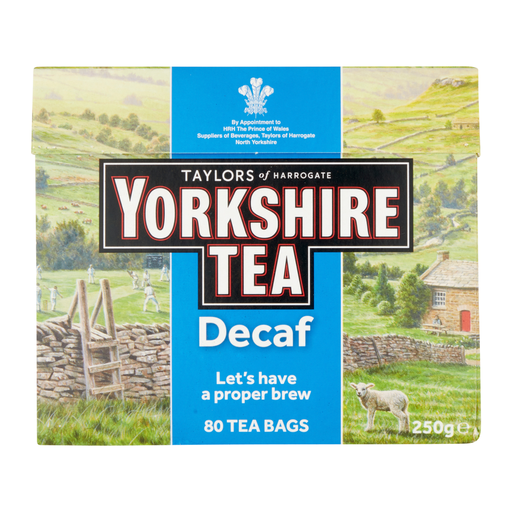
This Yorkshire Tea Decaf listing is a black-tea option for an evening cup. Check whether the 250 g pack contains loose leaves if you plan to use a teapot or infuser.
 No image available
Taylors of Harrogate Yorkshire Tea Decaf 250 g
A decaffeinated black tea to consider if you want to reduce caffeine in an evening cup. The pack is labelled 250 g; confirm whether it contains loose leaves or teabags before buying it for loose-leaf preparation. Check the product’s caffeine wording if traces matter to you.
View on Joybuy
Questions about evening tea
Can I drink regular strong breakfast tea close to bedtime?
If caffeine affects your sleep, a conventional strong black tea is better kept for earlier drinking. Fortnum & Mason puts a typical cup of black tea at 40–50 mg of caffeine, depending on brew strength, and NHS Borders advises avoiding caffeinated hot drinks close to bed.
Does decaf loose tea contain no caffeine?
No: decaf does not necessarily mean caffeine-free. Ringtons says a small trace can remain in decaf tea, so check the individual product wording or choose an infusion explicitly labelled caffeine-free if avoiding traces matters to you.
How do I choose a stronger-tasting decaf loose tea?
Start with a decaf black tea whose maker describes it as full-bodied, then follow that product’s preparation directions rather than assuming a conventional caffeinated blend is needed. Whittard of Chelsea describes its Decaffeinated English Breakfast loose tea as full-bodied, while Bettys describes Taylors Decaffeinated Leaf Tea as a rich blend.
What should I consider before buying a large pack of decaf leaves?
Consider how often you will use it and follow the pack’s storage directions after opening. Bettys sells Taylors Decaffeinated Leaf Tea in a 1 kg format, so trying a smaller pack first may make sense if you do not yet know whether you like the flavour.


