What should you check before choosing?
Start with how you will serve the matcha, then compare the exact powder’s ingredients, preparation directions and serving information.
Latte-oriented matcha
Choose it when: Matcha will usually be mixed with milk. JING describes its latte powder’s vegetal notes as combining with milk.
Consider: That milk-focused description does not establish how you will find its flavour when whisked with water alone.
Versatile premium matcha
Choose it when: The same powder needs to work in a drink and in breakfast food. Clearspring describes these uses for its Premium Grade.
Consider: Its suitability for several recipes is not a measure of how it will taste in a plain cup.
Ceremonial matcha
Choose it when: You mainly want a water-whisked cup and are choosing by the flavour described for that preparation.
Consider: A ceremonial label does not establish that the powder’s flavour will remain pronounced after you add milk or other strong flavours.
| Priority |
What to check |
Your needs |
| Milk drinks |
Look for directions intended for lattes. JING instructs users of its latte matcha to mix 2g with 40ml water at 80°C. |
I usually add milk and want to choose a powder described for that kind of drink. |
| Plain matcha |
Compare flavour descriptions and the exact product’s dose and water temperature. JING specifies 1.5g per 160ml and 70°C water for its ceremonial matcha. |
A smaller, unflavoured cup matters more to me than making a latte. |
| Other breakfast uses |
Check whether the maker gives directions for smoothies or baking as well as drinks. Clearspring names both for its Premium Grade. |
I would like to use the same powder in a drink and occasionally in food. |
| Ingredients |
Read the ingredient list on the exact pack; a matcha product may be a pure powder or a flavoured preparation. |
I want to know what is in the powder before deciding how to prepare or flavour it. |
| Caffeine |
Compare caffeine figures only for the stated serving. Tesco lists 68mg per 2g serving for Perfect Ted Ceremonial Grade Matcha; check the current pack. |
I also drink other caffeinated drinks, so the serving I make matters to my daily total. |
Brand and product-line references
These examples illustrate different matcha uses; a brand’s flavour description is not an independent taste comparison.
Clearspring
Its ceremonial and Premium Grade powders offer two ways to shop by preparation style.
- Clearspring describes its ceremonial powder as slightly sweet and smooth and gives a 1g-to-30ml-water preparation.
- Its Premium Grade has stated uses in lattes and food; those uses do not establish which grade you will prefer plain.
JING
JING provides separate descriptions and directions for its latte and ceremonial matcha products.
- The latte product is described for milk; the ceremonial product is described with floral and vegetal notes for a plain cup.
- Those flavour descriptions come from JING, not an independent comparison of strength.
Perfect Ted
Tesco lists a 30g ceremonial-grade powder with directions for preparing it with water before adding milk.
- Tesco lists 100% matcha and 68mg caffeine per 2g serving for this specific product.
- Check the delivered pack for current ingredients, allergens and serving information.
Matcha options on Joybuy
These powders offer options for a plain breakfast cup or matcha used in drinks and food. Compare each listing and pack against the way you plan to serve it; their order is not a flavour-strength ranking.
 No image available
OMGTea AA Organic Matcha Gift Set, 30g
Consider this 30g option if you want to compare preparations for a plain cup and a milk drink. Check the listing for the gift set’s contents and the pack for serving directions before choosing it.
View on Joybuy
 No image available
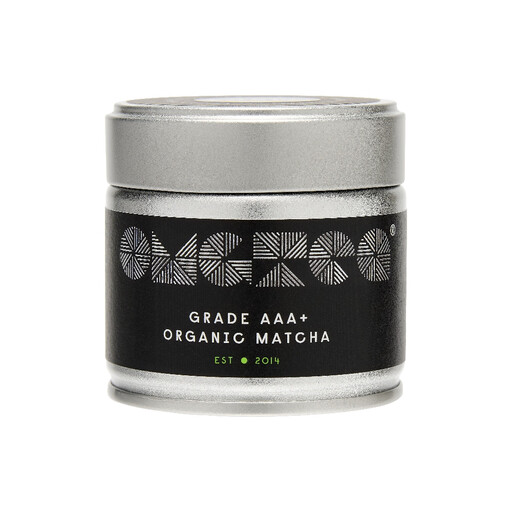
OMGTea Organic Matcha AAA+, 30g
Consider this 30g powder if you mainly prepare matcha as a plain drink. Its flavour description is a seller’s description, so use the pack’s directions as your starting point rather than treating the AAA+ name as a strength measure.
View on Joybuy
 No image available
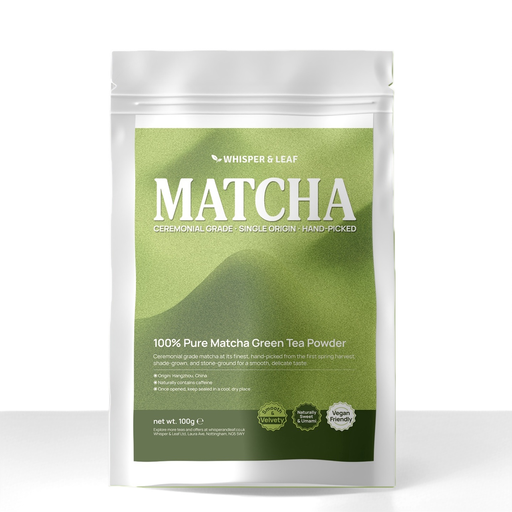
Whisper and Leaf Ceremonial Grade Matcha, 100g bag
The 100g bag is an option to examine if matcha is a regular part of your breakfast drinks. Check the pack’s preparation and caffeine information if either will affect the servings you make.
View on Joybuy
 No image available
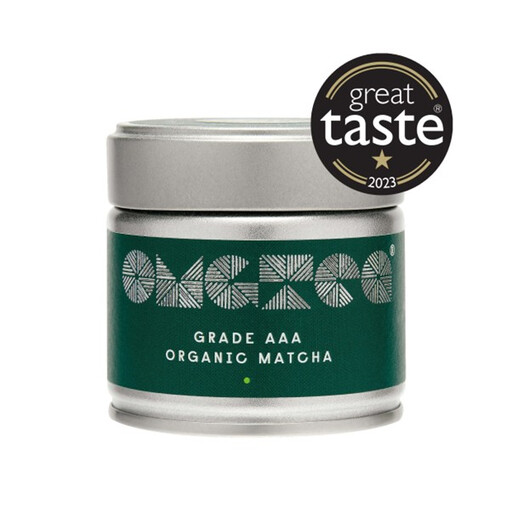
OMGTea AAA Organic Matcha, 30g
Consider this 30g powder if you want to compare a matcha for drinks with one you might also use in breakfast food. For a milk-based drink, check its preparation directions rather than assuming the AAA name describes its flavour in milk.
View on Joybuy
Matcha breakfast questions
What should “strong matcha” mean for a breakfast drink?
Choose according to the drink you are making, not the word “strong” alone. For milk, look for a powder described for lattes; for a plain cup, compare the maker’s flavour description and water-preparation directions.
How do I prepare matcha before adding milk?
Start with the directions for the exact product. JING specifies 2g of its latte matcha with 40ml water at 80°C, while Tesco directs users of Perfect Ted Ceremonial Grade Matcha to mix ½–1 teaspoon with 40ml water before pouring it over milk.
Can ceremonial matcha go into a breakfast latte?
Yes: Tesco gives milk-serving directions for Perfect Ted Ceremonial Grade Matcha. A ceremonial label does not, however, tell you how pronounced its flavour will be in milk, so check the particular powder’s directions and description.
How can I compare caffeine between matcha powders?
Compare figures for the same stated amount of powder and use the serving you actually prepare. Tesco lists 68mg per 2g serving for Perfect Ted Ceremonial Grade Matcha; that figure should not be applied to another product.
How should I store matcha after opening?
Follow the directions on your pack. Tesco’s listing for Perfect Ted Ceremonial Grade Matcha says to keep that product sealed in a cool, dry place once opened.


