What should you check before choosing?
Start with the caffeine information and portion you would actually use, then decide whether the preparation suits your break and planned sleep time.
| Priority |
What to check |
Your needs |
| Countable caffeine |
Look for caffeine per stated serving and the grams of powder that serving uses. Waitrose & Partners lists 68mg per 2g serving for PerfectTed plain matcha; Clearspring’s approximately 32mg per gram is a brand estimate for its matcha, not a figure for every product. |
I want to know how much caffeine my matcha contributes alongside other drinks, rather than judging strength by taste or grade. |
| Sleep timing |
Work back from your intended bedtime, not the end of a conventional working day. Oxford Health NHS Foundation Trust advises avoiding caffeinated drinks at least 5–6 hours before bed. |
If I plan to sleep soon after my shift, a stronger serving late in the shift may not fit that plan. |
| Preparation |
Check whether you can measure loose powder or would rather carry a pre-portioned sachet. Compare the powder amount per serving; a sachet’s weight alone does not establish its caffeine content. |
I need a drink I can make during my break, with a portion that suits how closely I want to track caffeine. |
| Plain or flavoured |
Read the ingredient list and serving weight. Waitrose & Partners lists 1.5g original sticks and 5g flavoured sticks in the PerfectTed variety pack; its vanilla, strawberry and blueberry versions contain coconut sugar. |
For a snack-style drink, I may prefer a flavoured stick, but I do not want to mistake its full weight for an equal amount of plain matcha. |
Which matcha brands provide useful points of comparison?
These brand and product-line details help distinguish stated servings, general caffeine guidance and flavoured formats; they are not a ranking of the brands.
Clearspring
Clearspring offers ceremonial and premium plain powders with a 1g preparation direction, as well as pre-portioned Matcha Shot sachets.
- Clearspring estimates approximately 32mg caffeine per gram of finely ground matcha on its powder pages, giving a qualified starting point for a measured serving.
- Its descriptions distinguish the grades by flavour and use; they do not establish that one grade has more caffeine than the other.
PerfectTed
Its plain powder and flavoured variety sticks serve different choices: a stated caffeine amount for the former and portioned, snack-style drinks for the latter.
- Waitrose & Partners lists 68mg caffeine per 2g serving for PerfectTed’s 100% matcha powder.
- In the variety pack listed by Waitrose & Partners, flavoured sticks contain coconut sugar and have different full-stick weights from the original sticks. The plain powder’s caffeine figure should not be applied to them.
JING
JING Tea discusses ceremonial and latte matcha, including how powder quantity and preparation affect comparisons between drinks.
- JING Tea’s general guidance puts a typical 1–2g matcha serving at roughly 60–70mg caffeine, while noting that the amount varies.
- That general guidance is not a caffeine declaration for a specific JING product or for another brand’s serving.
Joybuy matcha options for shift breaks
These Joybuy options include loose matcha powder and individual sachets for making a drink during a shift. Compare the stated portion and packaging for each product; do not apply one brand’s caffeine figure to another.
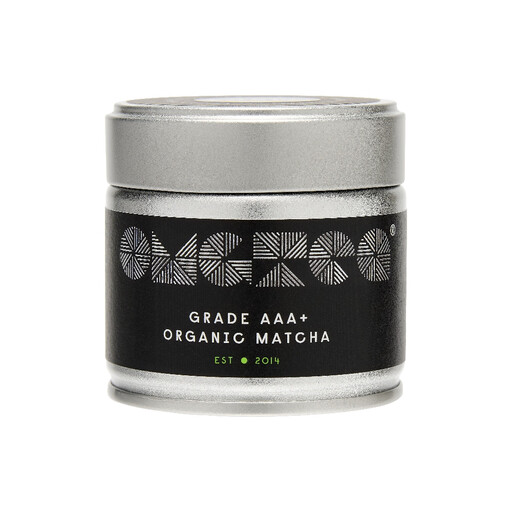 Image unavailable
OMGTea Organic Matcha AAA+ 30g
For a loose-powder shift drink, check the pack’s serving directions and caffeine information before counting a prepared portion alongside other drinks.
View on Joybuy
 Image unavailable
PerfectTed Matcha Powder Sachets, 7 × 1.5g
Individual 1.5g sachets avoid measuring loose powder during a break. Check the pack’s caffeine information if you need to count the amount in each sachet; do not transfer the figure for PerfectTed’s separate plain powder product to these sticks.
View on Joybuy
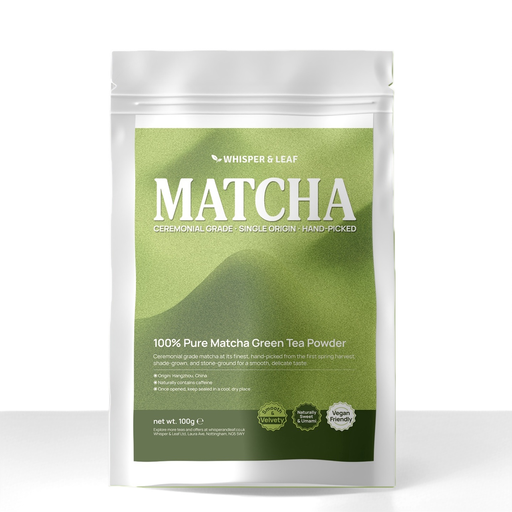 Image unavailable
Whisper and Leaf Ceremonial Grade Matcha Powder, 100g bag
The bag format leaves you to measure the powder for each drink. If a countable caffeine dose matters, check the serving directions and caffeine declaration for this product; the 100g pack size does not tell you the amount in one drink.
View on Joybuy
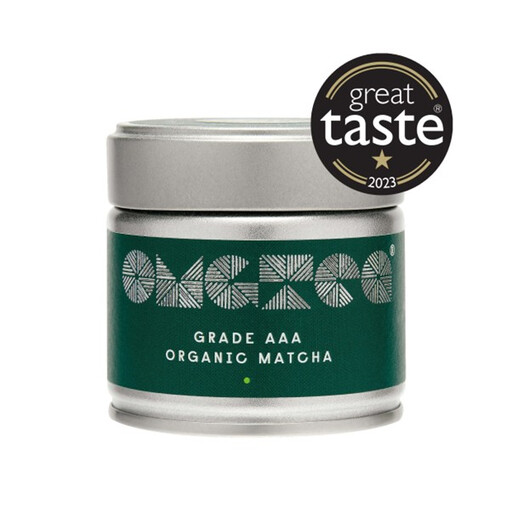 Image unavailable
OMGTea AAA High Grade Organic Matcha Green Tea 30g
This loose powder gives you a pack to portion for drinks or food preparation. Check its own serving directions and caffeine information when planning a shift drink; its grade description and 30g pack size do not establish caffeine per serving.
View on Joybuy
Questions about matcha on night shifts
What makes a matcha drink strong?
For counting caffeine on a night shift, use the amount stated for the serving you will prepare rather than flavour or grade as a proxy. Waitrose & Partners lists 68mg per 2g serving for PerfectTed plain powder; Clearspring’s approximately 32mg per gram is its own estimate for finely ground matcha, not a figure for every brand.
When should I stop drinking matcha before sleeping after work?
Work back from when you intend to sleep. Oxford Health NHS Foundation Trust advises avoiding caffeinated drinks at least 5–6 hours before bed, whether that bedtime falls in the day or evening.
Can I drink matcha and coffee during the same shift?
Count caffeine from both drinks and any other sources rather than considering the matcha serving alone. The European Food Safety Authority’s 2015 caffeine assessment gives reference points for healthy non-pregnant adults, but those figures do not tell you whether a drink is well timed for sleep after your shift.
Does ceremonial grade guarantee more caffeine than premium grade?
No: a grade label does not establish a higher caffeine amount for an exact product. Clearspring describes differences in flavour and intended use between its grades, while JING Tea notes that caffeine varies with powder quantity and preparation as well as grade. Check the product’s caffeine declaration or measure the serving you use.
Are flavoured matcha sticks interchangeable with plain powder?
Not without checking the ingredients and portion. Waitrose & Partners lists 1.5g original sticks and 5g flavoured sticks in the PerfectTed variety pack, with coconut sugar in the flavoured versions; those full-stick weights do not establish equivalent matcha or caffeine servings.


