Buy an extra-strong or strong breakfast tea for care-home dining when residents prefer a fuller black-tea flavour, but keep suitable alternatives available rather than serving one blend to everyone. A hard-water blend addresses a different brewing concern, while decaf offers another preference-led option. For residents following dietary advice about iron deficiency, take account of University Hospitals Coventry and Warwickshire NHS Trust guidance on the timing of tea around meals.
Who is this choice for?
Teams serving residents who prefer strong tea
A clearly labelled strong black tea gives staff a deliberate option for those who enjoy a fuller flavour. The Care Quality Commission says providers in England must take individual food-and-drink preferences into account, so other choices still matter.
Homes checking a hard-water brewing problem
Yorkshire Tea says minerals in hard water can make tea darker and thicker. A hard-water blend is worth comparing with the usual tea if that describes the home’s brewing conditions; it is not automatically an extra-strong option.
Teams planning drinks around individual needs
A tea range can include a strong brew and a decaf alternative. Staff also need to follow each resident’s drinking support and dietary plan, including any advice affecting when tea is served with meals.
What should you check before ordering?
Start with residents’ flavour preferences, then check whether the issue is the blend, the water or the way tea is served. Pack format and brewing instructions matter once those needs are clear.
| Priority | What to check | Your needs |
|---|
| Flavour choice |
Distinguish an extra-strong everyday blend from a strong English Breakfast tea. Check the ingredient declaration and offer another tea for residents who prefer a different flavour. |
I want a fuller black-tea brew for residents who ask for one, without making that flavour the only choice. |
| Individual drinks |
Check preferences, any support needed to drink and care-plan requirements. Keep a decaf option where residents want lower-caffeine or bedtime tea. |
Some residents want strong tea; others would choose decaf or a milder cup. The range needs to accommodate both. |
| Water and brewing |
Check whether hard water affects the usual brew before switching blends. Compare teas using the same preparation method; Ocado’s Tetley Extra Strong listing and Twinings’ Strong English Breakfast guidance each specify a two- to three-minute brew. |
If tea repeatedly turns out too dark or thick at this site, I want to establish whether the water is part of the problem. |
| Meal timing |
Follow individual dietary advice when planning tea rounds. University Hospitals Coventry and Warwickshire NHS Trust advises people following its iron-deficiency anaemia guidance not to drink tea within one hour before or after a meal. |
For residents with an iron-related dietary plan, I need the tea round to fit that plan rather than assuming tea belongs with every meal. |
| Pack and service format |
Compare bag count, net weight, storage needs and whether individual envelopes are useful for service. A catering-suitable pack does not establish extra-strong flavour. |
Our serving routine needs a workable pack format, but I do not want packaging to stand in for a resident taste check. |
Buying pitfalls
-
Buying one extra-strong blend for everyone
Residents may prefer different drinks. For CQC-regulated services in England, the Care Quality Commission says providers must meet individual nutrition and hydration needs and take preferences into account.
Offer strong tea as a choice, retain suitable alternatives and use resident feedback and care plans when setting the tea-round range.
-
Brewing longer to address a hard-water problem
Yorkshire Tea says minerals in hard water can make tea darker and thicker; a longer brew does not establish whether water is causing the result.
If hard water is suspected, prepare the usual tea and a hard-water blend in the same way and ask residents which they prefer before changing the order.
-
Serving tea with every iron-focused meal
University Hospitals Coventry and Warwickshire NHS Trust says tea with a meal can greatly reduce iron absorption for people following its iron-deficiency anaemia dietary guidance.
For affected residents, follow the clinician’s or dietitian’s plan when scheduling tea rather than removing a preferred drink without consultation.
-
Assuming an enveloped tea tastes stronger
Clipper describes its enveloped English Breakfast tea as suitable for catering, but its pack format and organic positioning do not establish an extra-strong flavour.
Choose the flavour profile first, then compare bag count, net weight and the practical value of envelopes for the home’s service routine.
Brand and blend references
These examples illustrate different blend and pack choices; a brand name alone does not tell you which tea residents will prefer.
Tetley
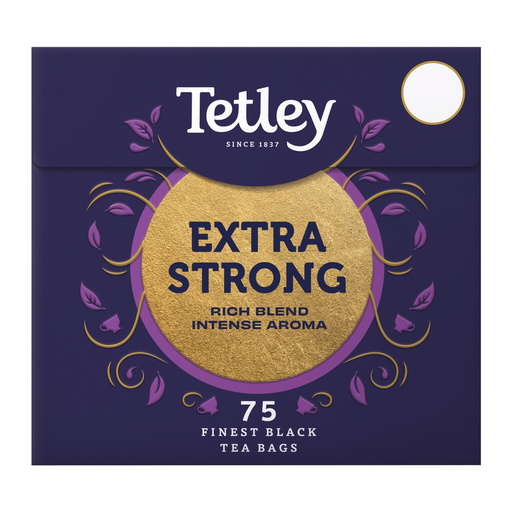
Tetley Extra Strong is a black tea labelled for drinkers seeking a fuller everyday brew.
- Ocado lists black tea as the ingredient and gives a two- to three-minute brewing recommendation.
- The Extra Strong label does not establish that every resident will like the result.
PG Tips
PG Tips Extra Strong 80 Teabags offers a pyramid-bag alternative.
- British Corner Shop describes it as a strong-tasting African-tea blend and lists black tea as the ingredient.
- Check the current supply and pack details before planning regular service.
Yorkshire Tea
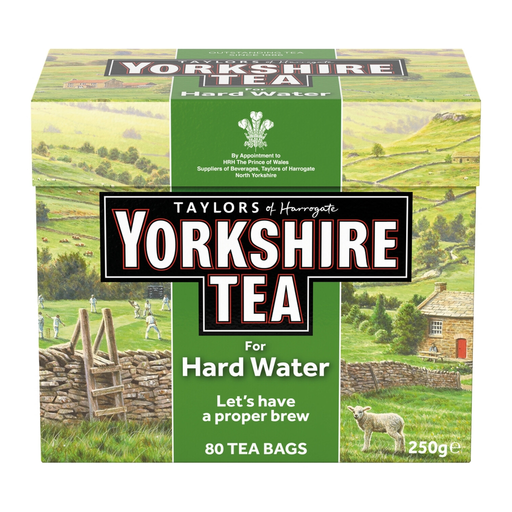
Its Hard Water and Decaf blends address different choices from extra-strong plain tea.
- Yorkshire Tea describes a blend adjusted for hard water and a Decaf option intended for lower-caffeine preferences.
- Check the home’s water conditions and resident preferences before choosing either blend.
Twinings
Strong English Breakfast is a breakfast-style black tea sold in a 120-bag format.
- Twinings lists 100% black tea and recommends brewing for two to three minutes.
- A strong breakfast-style flavour remains a preference-led choice, not a requirement for care-home service.
Clipper
Its 25-envelope English Breakfast product is a separate option for catering-style service.
- Clipper describes a blend of organic Assam and Ceylon teas and presents the enveloped format as suitable for catering.
- The product is not labelled extra strong; check its flavour with residents if strength is the main requirement.
Typhoo
Typhoo describes its current everyday blend as having a fuller flavour.
- Typhoo lists Premium, Gold and Decaf teas among its range.
- A fuller-flavour description should not be treated as an extra-strong specification for every Typhoo product.
Joybuy tea bag options
These two options address different care-home situations: Tetley Extra Strong for residents who prefer a fuller black-tea brew, and Yorkshire Tea for Hard Water where the site’s water affects preparation. Neither replaces the need to offer drinks that suit individual residents.
 No image available
Tetley Extra Strong 75 Tea Bags 237g
A labelled extra-strong black-tea choice for residents who prefer a fuller brew. The pack contains 75 tea bags and weighs 237g; Ocado’s guidance for this product recommends brewing for two to three minutes. Check resident acceptance before making it a regular communal option.
View on Joybuy
 No image available
Taylors of Harrogate Yorkshire Tea for Hard Water 80 Tea Bags 250g
A hard-water tea to consider if the home’s water is affecting the usual brew, rather than as an assumed substitute for extra-strong tea. The pack contains 80 tea bags and weighs 250g. Check the site’s water conditions and compare resident responses before changing the routine order.
View on Joybuy
Questions about serving strong tea
Does an English care home have to buy strong tea bags?
No particular tea strength is specified by Regulation 14 for CQC-regulated services in England. The Care Quality Commission says providers must meet people’s nutrition and hydration needs and take their preferences, cultural backgrounds and religious backgrounds into account. A strong blend can be one choice, but buying it does not itself meet those duties.
Can tea count as a drink for residents?
Yes. UK government healthy-eating guidance includes tea among drinks that count towards general fluid intake. In a care home, the amount and support a resident needs should follow their individual assessment and any clinical advice.
How can staff prepare strong tea consistently?
Follow the guidance for the chosen product and use an agreed preparation method. Ocado’s Tetley Extra Strong listing recommends two to three minutes before adding milk, and Twinings gives the same brewing time for its Strong English Breakfast tea. Ask residents whether the resulting cup suits their preferences.
What if a resident has dietary advice about iron deficiency?
Follow that resident’s clinician- or dietitian-led plan when arranging tea around meals. University Hospitals Coventry and Warwickshire NHS Trust advises in its iron-deficiency anaemia guidance that tea or coffee with a meal can greatly reduce iron absorption and recommends avoiding it within one hour before or after a meal.


