Friends who ask for a bold cup
An explicitly Extra Strong or Strong English Breakfast blend is a sensible starting point. Those names describe the products' intended style, not a guarantee that every guest will prefer the result.


When friends ask for a bold black tea, start with a blend labelled Extra Strong or Strong English Breakfast rather than relying on a longer brew to make an everyday tea taste stronger. Follow the time on the pack and offer milk separately; if tea regularly tastes unusually dark or thick at home, consider whether hard water is affecting the cup before changing blends.
The useful starting point is whether guests specifically want a bolder black tea, have mixed preferences, or are drinking tea made with hard water.
An explicitly Extra Strong or Strong English Breakfast blend is a sensible starting point. Those names describe the products' intended style, not a guarantee that every guest will prefer the result.
Keep a standard black tea as an option alongside a stronger blend, and let guests add milk to their own cups. That gives people a choice without assuming they all enjoy the same intensity.
If tea at home repeatedly tastes unusually dark or thick, a hard-water-specific blend is worth considering. Yorkshire Tea says minerals in hard water can affect those characteristics; a darker cup alone is not a reason to buy an extra-strong blend.
Choose the blend for the flavour your guests request, then check its brewing directions and your water conditions. A strength label, a longer brew and a hard-water blend address different parts of that decision.
| Priority | What to check | Your needs and surveyed preferences |
|---|---|---|
| Blend strength | Look for an explicit Extra Strong or Strong English Breakfast label if bold flavour is the request. Check the exact variant: a standard blend from the same brand is a different product. | My friends have asked for a distinctly bold black tea, so I want to choose the blend for that preference rather than judge it by colour alone. |
| Bitterness and milk | Follow the pack's brewing time instead of leaving the bag in indefinitely. Remove the bag before adding milk when brewing in a mug, as the UK Tea & Infusions Association advises. | Some guests want their tea without milk, while others prefer to add it themselves. Serving it separately lets each person decide. |
| Making several cups | Check the number of bags in the pack and allow the stated time for each brew. The UK Tea & Infusions Association recommends one bag per cup for individual servings. | I want a straightforward way to make separate cups for friends. In its 2025 Tea Census of more than 1,000 Britons, the UK Tea & Infusions Association reported that 93% preferred the convenience of a tea bag to preparing loose-leaf tea. |
| Water hardness | Notice whether tea made with your tap water repeatedly tastes unusually dark or thick. A blend labelled for hard water addresses that condition; it is not necessarily an extra-strong tea. | If the same tea tastes different at home, I want to consider the water before switching to a stronger blend. |
| Pack information | Read the current ingredients, any relevant allergen information and the brewing directions on the exact pack, particularly for flavoured or unfamiliar blends. | When serving someone who has told me about an allergy or intolerance, I need to check the tea I am actually using rather than rely on an older pack. |
Yorkshire Tea says hard-water minerals can make tea taste darker and thicker. Colour on its own therefore cannot tell you whether a blend will suit a guest who asks for bold flavour.
Follow the pack directions and make a trial cup. If the result repeatedly changes with your tap water, consider a hard-water blend before extending the brew time.
Brand names can cover both standard and stronger variants. A description of one does not establish how another variant will taste.
Check the full name on the pack. Tetley Extra Strong and Twinings Strong English Breakfast are labelled for a stronger style, while their standard counterparts should be considered separately.
A bold blend may suit the person who requested it without suiting every friend at the table. Brewing all the cups identically also leaves little room for different milk preferences.
Offer milk separately and, for a mixed group, keep a standard black tea available as another choice.
Pack information can change, which matters when a guest has an allergy or intolerance, particularly if you are serving a flavoured or unfamiliar tea.
Ask guests about relevant restrictions and check the current label of the exact product before serving it.
These are useful references for particular blends and serving conditions, not a comparison of every tea made by each brand.
Tetley Extra Strong is an explicitly stronger-positioned everyday black tea; the cited UK pack contains 75 bags.
PG Tips Original is an everyday option for a group that has not specifically requested an extra-strong variant.
The range includes standard tea and a separate Hard Water blend, making the exact variant important.
Twinings offers Strong English Breakfast tea bags for shoppers seeking that particular black-tea style.
Clipper Organic Fairtrade tea bags may interest hosts who want those stated sourcing credentials alongside an everyday black tea.
Typhoo's 80 Premium Tea Bags are positioned as an everyday, full-bodied Kenyan tea.
These options cover an explicitly Extra Strong tea, everyday black-tea blends and a blend intended for hard water. Choose between them according to the cup your friends want and the water you use.
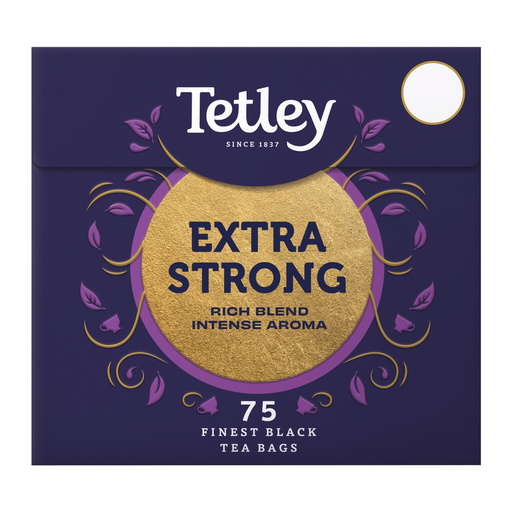 Image unavailable
An explicitly Extra Strong black-tea option when friends ask for a bold everyday cup. The pack contains 75 bags; the cited information for this 75-bag product advises brewing for 2–3 minutes before adding milk. The label describes its intended flavour, not a guarantee about individual taste.
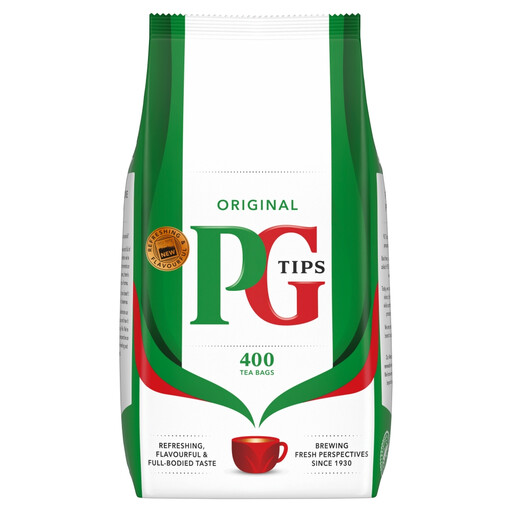 Image unavailable
An everyday black tea to consider when guests have mixed strength preferences rather than an explicit request for Extra Strong tea. The pack contains 400 bags, and the brand owner describes PG Tips Original as full-bodied. Check this pack's brewing directions before making several cups.
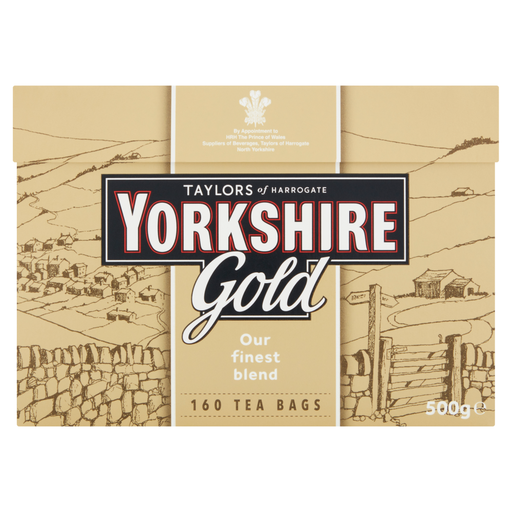 Image unavailable
A 160-bag black-tea option for serving repeated cups. Its product description calls the blend bold and robust, but those terms do not independently establish how its strength compares with an Extra Strong tea. Follow the directions on the current pack.
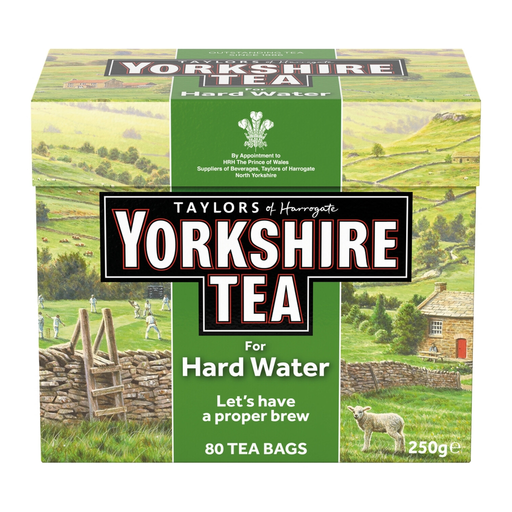 Image unavailable
Consider this 80-bag blend if hard tap water is affecting the tea you serve. Yorkshire Tea positions its Hard Water blend for that condition, rather than as a claim of maximum strength. Check the current pack for brewing directions.
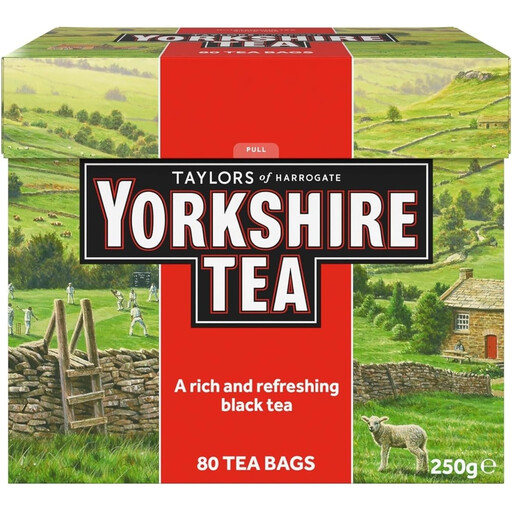 Image unavailable
This 80-bag everyday black tea is an option when guests want a standard blend rather than one labelled Extra Strong. Its product description uses full-bodied and robust wording; that is not an independent measure of comparative strength. It is a different variant from Yorkshire Tea for Hard Water.
Choose a blend labelled for a stronger style, then use the brewing time on its pack. The UK Tea & Infusions Association recommends one bag per cup and 90–98°C water for black tea; its general brewing guidance does not replace product-specific directions. For example, the cited Tetley Extra Strong 75-bag pack advises 2–3 minutes.
For a tea bag brewed in a mug, the UK Tea & Infusions Association suggests removing the bag after brewing and adding milk last. Serving milk separately also lets each guest decide whether to add it.
Hard water may be affecting the result: Yorkshire Tea says its minerals can make tea darker and thicker. If this keeps happening, consider your water conditions or a hard-water-specific blend before assuming you need a generally stronger tea.
Ask about the relevant allergy and read the current label on the exact tea you plan to serve, especially if it is flavoured or unfamiliar. GOV.UK guidance says that regulated allergens present in prepacked food or drink must be clearly identified in the ingredients list; do not rely on an older pack's details.
No. The UK Tea & Infusions Association notes that tea bags differ in their materials and that biodegradable does not necessarily mean suitable for garden composting. Check the exact pack's disposal guidance and your local collection rules.