Older adults who enjoy a bold brew
Strong black tea can suit a preference for pronounced flavour. Strength is a taste description, not a reason to expect the tea itself to provide substantial nutrition.


Choose a strong black tea bag for an older adult who enjoys a bold brew, but do not treat its flavour label as a sign of added nutrition. NHS guidance says tea counts towards fluid intake, while British Nutrition Foundation guidance notes that serving it with milk can add calories and protein. If caffeine aggravates symptoms, consider decaf; for someone managing iron-deficiency anaemia, University Hospitals Coventry and Warwickshire NHS Trust advises keeping tea away from meals.
Strong black tea can suit a preference for pronounced flavour. Strength is a taste description, not a reason to expect the tea itself to provide substantial nutrition.
Tea can be part of a regular drinking routine. British Nutrition Foundation guidance for older adults with poor appetites notes that serving hot drinks with plenty of milk can add calories and protein; the tea bag alone does not provide that contribution.
Decaffeinated black tea offers a familiar type of brew with less caffeine. NHS Tayside notes that caffeine can worsen some bladder and bowel symptoms, so flavour strength should not be the only consideration.
Start with the drinker’s flavour preference, then consider what the served drink contributes and whether caffeine or the timing of tea with meals matters.
| Priority | What to check | Your needs |
|---|---|---|
| Bold flavour | Look for an explicitly strong or extra-strong black tea, or a full-bodied description. Treat those words as product positioning, not a measured comparison between blends. | I enjoy a pronounced black tea taste, particularly in a daytime brew, without expecting a stronger flavour to add nutrition. |
| Fluids and appetite | NHS guidance counts tea towards fluid intake. For an older adult with a poor appetite, British Nutrition Foundation guidance notes that milk in a hot drink can add calories and protein. | Tea is a drink I enjoy regularly, but when appetite is poor I also need to consider what the whole drink and the rest of my food provide. |
| Caffeine | Check whether the tea is explicitly decaffeinated; a strong-flavour label says nothing about reduced caffeine. Check the pack if a precise caffeine limit matters. | If caffeine aggravates my symptoms, I would rather keep a black-tea routine with a lower-caffeine option. NHS Tayside notes that caffeine can worsen some bladder and bowel symptoms. |
| Tea with meals | For someone following dietary advice for iron-deficiency anaemia, check when tea is served. University Hospitals Coventry and Warwickshire NHS Trust advises avoiding tea within one hour before or after meals in this context. | I want to enjoy tea without having it alongside an iron-rich meal while managing iron-deficiency anaemia. |
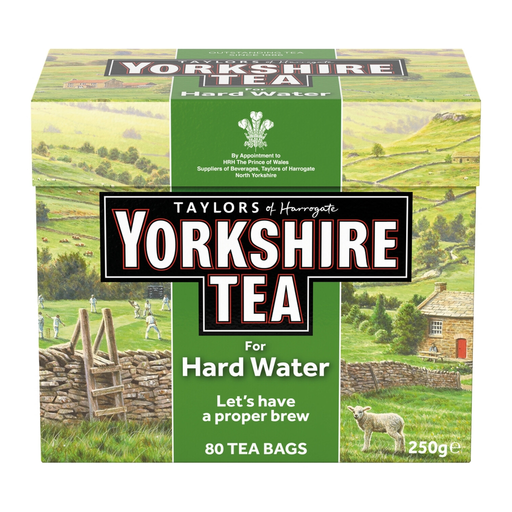
| Hard water | Consider a blend made for hard water if mineral-rich water affects the brew. Yorkshire Tea says its Hard Water blend is adjusted for the darker, thicker result such water can produce. | At home, the water changes how my usual tea looks or tastes; a water-specific blend is worth considering for that brewing issue, not for nutrition or caffeine reduction. |
A bold taste does not establish extra protein or energy. The nutrition information for Twinings Strong English Breakfast lists 1 kcal and 0g protein per 100ml of brewed black tea.
Choose strong tea for flavour. If poor appetite or weight loss is a concern, consider food and drinks more broadly rather than relying on a tea bag for nutritional support.
University Hospitals Coventry and Warwickshire NHS Trust says tea with a meal can greatly reduce iron absorption.
When following that trust’s dietary advice, keep tea at least one hour before or after meals unless a clinician or dietitian has given different individual advice.
Strong describes the intended taste, not caffeine suitability. NHS Tayside notes that caffeine can worsen some bladder and bowel symptoms.
If caffeine is a concern, compare the strong black tea with an explicitly decaffeinated option and check the individual product’s caffeine information where a precise limit matters.
Decaffeinated tea is a lower-caffeine route, but it should not be treated as having a single interchangeable caffeine amount across products.
Check the particular pack or ask its manufacturer if an exact figure is needed.
These examples help distinguish strong-flavour, decaf and brewing-water choices; they do not imply that every range is represented among the Joybuy products below.
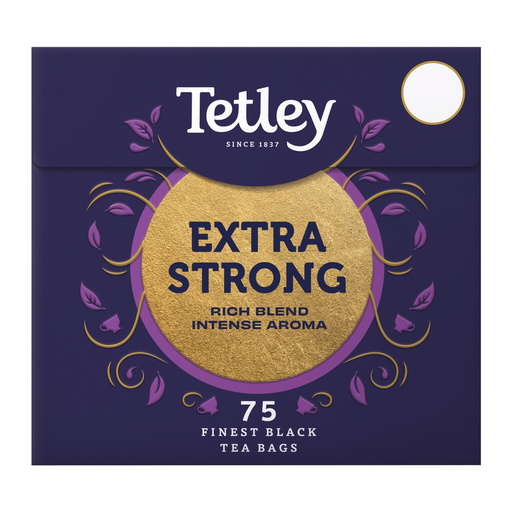
Tetley Extra Strong is an explicitly strong black-tea option.
PG Tips Extra Strong is another labelled strong black-tea option.
The Yorkshire Tea range includes options for different brewing preferences, including hard water and decaf.
Twinings offers a Strong English Breakfast tea and a separate English Breakfast Decaffeinated option.
Clipper Organic Fairtrade English Breakfast is a full-bodied black-tea route with a stated sourcing focus.
Typhoo lists Premium, Gold and Decaf tea-bag options.
These options cover a labelled extra-strong tea, full-bodied everyday black teas, a hard-water blend and a decaffeinated alternative. Choose the route that fits the drinker’s taste and caffeine considerations rather than treating all five as equivalent strong teas.
 No image available
For someone who wants an explicitly extra-strong tea for its flavour. The pack contains 75 tea bags and is labelled 237g; the strength wording is not a measured comparison with other teas.
 No image available
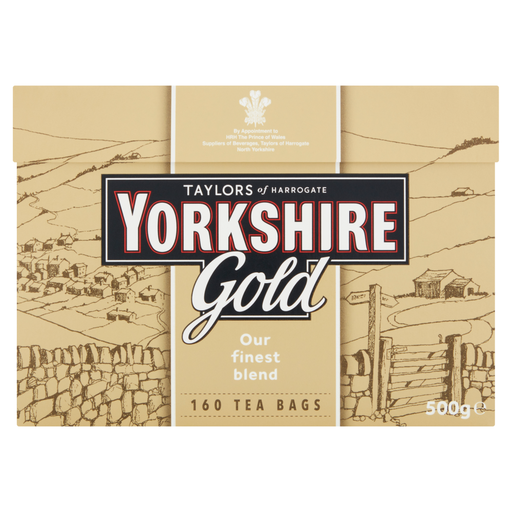
A black-tea option for someone considering a full-bodied everyday brew rather than a pack labelled extra strong. This Yorkshire Gold pack contains 160 tea bags and is labelled 500g; flavour descriptions do not establish a measured strength comparison.
 No image available
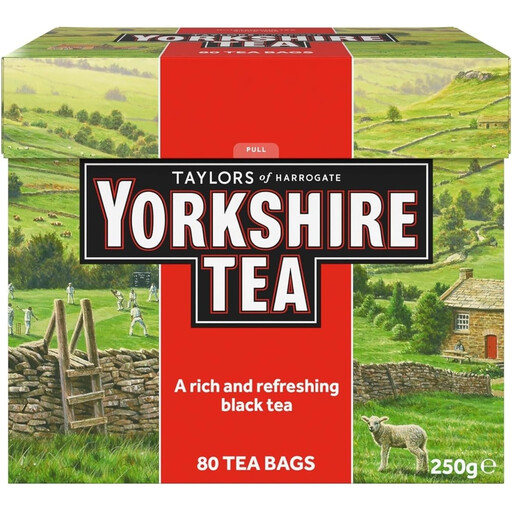
For an everyday black-tea routine where a full-bodied flavour is preferred, without requiring an extra-strong label. The pack contains 80 tea bags and is labelled 250g; individual caffeine suitability still matters.
 No image available
Consider this variant when hard water affects the household brew. The pack contains 80 tea bags and is labelled 250g; its hard-water purpose does not make it a decaf or nutritional alternative.
 No image available
A decaffeinated tea-bag alternative for someone reducing caffeine while keeping a tea routine. The pack contains 80 tea bags and is labelled 250g; check its caffeine information if an exact limit matters. It is not labelled extra strong.
No: strong describes flavour, not nutritional content. Twinings lists 1 kcal and 0g protein per 100ml of its brewed Strong English Breakfast black tea. British Nutrition Foundation guidance notes that milk added to a hot drink can provide calories and protein for an older adult with a poor appetite, but that comes from the milk rather than the tea bag.
Yes. NHS guidance includes tea and coffee among drinks that count towards daily fluid intake, and British Nutrition Foundation guidance for older adults with poor appetites also includes hot drinks. Tea can be one part of a varied drinking routine.
University Hospitals Coventry and Warwickshire NHS Trust advises against tea with meals when following its dietary advice for iron-deficiency anaemia, because tea can reduce iron absorption. Its guidance recommends keeping tea at least one hour before or after meals; follow any different individual advice from a clinician or dietitian.
Consider decaf when the drinker wants black tea with less caffeine, particularly if caffeine aggravates symptoms. NHS Tayside notes that caffeine can worsen some bladder and bowel symptoms. A strong-flavour label does not establish caffeine suitability, and the particular pack should be checked if an exact caffeine limit matters.