Buyers stocking a familiar strong brew
If customers ask for a bold black tea, an explicitly strong-labelled blend is a starting point. Check how the tea is normally prepared, particularly if it is served with milk.


Start with an explicitly strong black tea if customers regularly ask for a bold cup: Twinings Strong English Breakfast and Tetley Extra Strong are both described that way in their product information. Strength need not determine the whole range; consider a separate decaf choice for lower-caffeine preferences and a hard-water blend if local water affects the brew.
If customers ask for a bold black tea, an explicitly strong-labelled blend is a starting point. Check how the tea is normally prepared, particularly if it is served with milk.
Local water can affect the cup. Yorkshire Tea says hard-water minerals can make tea darker and thicker, so its dedicated hard-water blend addresses a different concern from a request for stronger flavour.
A separate decaf black tea gives customers who prefer lower-caffeine or later-day drinks a choice alongside the regular range. Yorkshire Tea positions its decaf blend for these occasions.
Decide whether the request is for a stronger-tasting cup, a tea that suits local water, or another choice for the range. Then compare the exact packs and brewing instructions.
| Priority | What to check | Your needs |
|---|---|---|
| Strong black tea | Look for an explicitly Strong or Extra Strong product, then follow its own brewing instructions. Twinings Strong English Breakfast and Tetley Extra Strong each give a 2–3 minute brewing guide. | I want a bold cup, including when tea is served with milk. A strength label helps narrow the choice, but it does not measure different brands on a shared scale. |
| Local water | Check the local water supply and trial the tea with the water used in the shop. Yorkshire Tea says hard-water minerals can make tea darker and thicker and offers a dedicated blend. | If our usual tea changes noticeably when brewed here, I want to check whether water, rather than the choice of strength label, is the issue. |
| Decaf choice | Identify decaf separately from regular black tea, and check that customers can distinguish the packs. Yorkshire Tea markets its decaf blend for lower-caffeine and bedtime use. | Some customers may prefer tea later in the day or ask for less caffeine; I do not want a strong regular blend to be their only choice. |
| Sourcing | Check the credentials of the exact pack. Clipper describes its Organic & Fairtrade Everyday tea as organically grown black tea traded in compliance with Fairtrade standards; it does not label that product Extra Strong. | Organic and Fairtrade credentials matter for this range, but I would assess the cup separately from an explicitly extra-strong blend. |
| Pack and preparation | Check bag count against expected use and prepare a trial cup at the intended cup size and brewing time. Tetley Extra Strong is listed in a 75-bag pack; Twinings Strong English Breakfast is offered in a 120-bag pack. | I need a pack size the shop can use and instructions that work with the way tea is served here. |
Product descriptions such as bold and extra strong do not give a common measure for comparing these blends. The prepared cup may also differ with the water, cup size and brewing time used in the shop.
Make trial cups under the same conditions, following each product’s instructions, before choosing a larger pack.
A strong black tea does not answer a request for decaf. Yorkshire Tea positions its decaf range for customers seeking a lower-caffeine or bedtime option.
Consider a clearly labelled decaf black tea alongside the regular range if those requests are relevant to the shop.
Yorkshire Tea says minerals in hard water can make tea darker and thicker. Choosing a stronger-labelled bag does not address that water condition in the same way as a dedicated hard-water blend.
Check the local water and trial a hard-water blend before changing the whole range.
The British Corner Shop listing for PG Tips Extra Strong was marked out of stock when described in the supplied product information. A listing alone cannot establish what the shop can order when it needs to replenish its range.
Confirm the exact pack and its availability before relying on it for regular stocking.
Twinings offers Strong English Breakfast in a 120-bag pack.
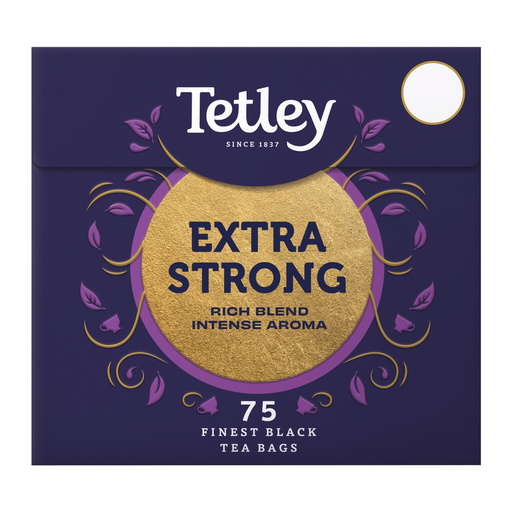
Tetley Extra Strong is an explicitly strength-labelled black tea; Tesco lists a 75-bag pack.
Yorkshire Tea has distinct Hard Water and Decaf options for needs beyond regular tea strength.
Clipper Organic & Fairtrade Everyday is a black-tea option for a range where stated sourcing credentials matter.
A British Corner Shop product record describes PG Tips Extra Strong as an 80-bag African-tea blend in pyramid bags.
Typhoo lists Premium, Gold and Decaf tea bags in its shop range.
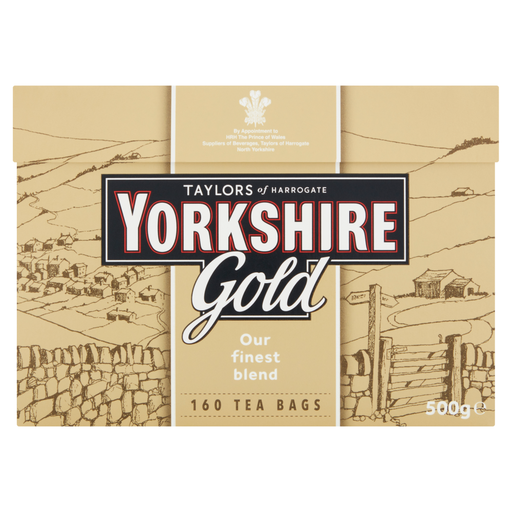
These tea-bag packs offer two ways to stock a regular range: one is labelled Extra Strong, while the other is Yorkshire Gold. Neither replaces a separate decaf choice.
 No image available
For customers asking for a tea labelled Extra Strong, this pack contains 75 tea bags (237g). Tesco’s instructions for the matching Tetley product say to brew for 2–3 minutes before adding milk. It is regular black tea, not decaf.
 No image available
For a regular tea range that does not require an Extra Strong label, this Yorkshire Gold pack contains 160 tea bags (500g). The pack name does not identify it as Yorkshire Tea for Hard Water or as a decaf option.
No. An explicitly strong blend addresses requests for a bold black tea, while decaf addresses a different caffeine preference and a hard-water blend addresses local brewing conditions. Twinings and Tetley provide product-specific strong-tea descriptions, but those descriptions do not establish a cross-brand strength ranking.
Prepare trial cups with the shop’s usual water, cup size and milk, following each product’s instructions. Twinings recommends 2–3 minutes for Strong English Breakfast, and Tesco gives a 2–3 minute instruction for Tetley Extra Strong before adding milk. Comparing cups prepared under the same conditions is more useful for this decision than comparing strength labels alone.
Consider a separate, clearly labelled decaf black tea if customers ask for lower-caffeine or later-day options. Yorkshire Tea positions its Decaf blend for those occasions; it serves a different request from an explicitly strong regular tea.