What to check before choosing
Decide whether plain, flavoured or decaf tea fits the cup you want, then check the particular product’s ingredients and brewing directions.
| Priority | What to check | Your needs |
|---|
| Bold, plain tea |
Look for an explicit strong or extra-strong description and check the ingredients. Twinings Strong English Breakfast is described by Twinings as 100% black tea; Tesco lists black tea for Tetley Extra Strong. Both give a two-to-three-minute brew guide. |
I want a robust morning cup with milk, without choosing a flavoured blend or using several bags. |
| Caffeine |
Check whether the tea is decaffeinated and read its current pack declaration if a precise caffeine amount matters. The NHS advises no more than 200mg of caffeine a day during pregnancy and advises breastfeeding parents who drink caffeine to try not to exceed 300mg a day. Count caffeine from other sources too. |
For pregnancy or breastfeeding, I want my tea choice to fit my overall caffeine intake. I would rather choose decaf than treat “strong” as a caffeine measurement. |
| Added flavour |
Check whether the blend is plain black tea or includes added flavour. Yorkshire Tea describes Toast & Jam Brew as extra strong with toasty, jammy flavouring. |
A breakfast-style flavour appeals to me; if I want conventional plain tea, I will choose a different blend. |
| Sourcing |
Read the ingredients and any stated sourcing credentials for the exact product. Clipper says its Organic & Fairtrade English Breakfast contains organically grown black tea traded in compliance with Fairtrade standards; it is not labelled extra strong. |
Organic and Fairtrade sourcing matter more to me than an explicit extra-strong description. |
Tea-bag options on Joybuy
These options cover a plain Extra Strong tea and two decaf alternatives. Choose between them by deciding whether bold flavour or a decaffeinated blend is the priority.
 No image available
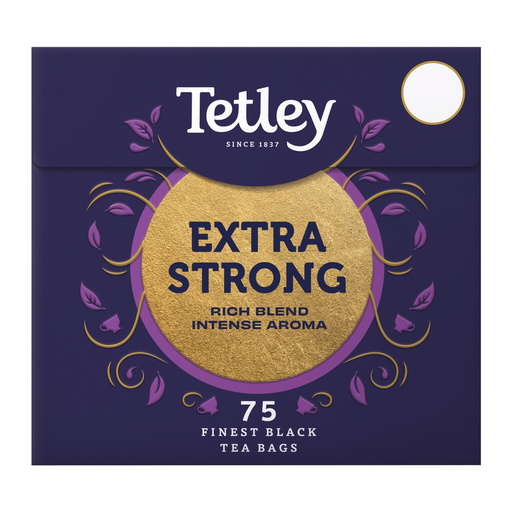
Tetley Extra Strong 75 Tea Bags 237g
A plain black-tea choice for a bold morning cup. The pack contains 75 tea bags and weighs 237g; Tetley’s guidance, shown by Tesco, is to brew for two to three minutes. Extra Strong does not specify caffeine per cup, so check current product information if you need to track it.
Joybuy
 No image available
Tetley 80 Decaffeinated Tea Bags 250g
A decaffeinated tea-bag option when lower caffeine takes priority over an Extra Strong label. The pack contains 80 bags and weighs 250g. Check the current pack declaration if the precise residual caffeine amount matters to you.
Joybuy
 No image available
Taylors of Harrogate Yorkshire Tea Decaf 250g
Another decaffeinated black-tea option for a lower-caffeine routine, rather than an explicitly extra-strong blend. The stated net quantity is 250g. Check the pack for its tea-bag count and caffeine declaration if either affects your choice.
Joybuy
Questions about strong tea and decaf
Are strong tea bags a sensible choice for a new parent?
They fit a preference for a bold, convenient cup when caffeine is not your limiting concern. Twinings Strong English Breakfast and Tetley Extra Strong are explicitly positioned as strong blends; neither name tells you the caffeine amount in your mug.
How can I brew a strong tea without using several bags?
Start with the directions for the blend you buy. Twinings suggests two to three minutes for Strong English Breakfast, while Tetley’s guidance shown by Tesco also gives two to three minutes for Extra Strong. A longer brew is not a reliable way to calculate caffeine intake.
What should I consider about tea during pregnancy?
Count tea as part of your total caffeine intake: NHS pregnancy guidance says not to have more than 200mg of caffeine a day and gives an estimate of 75mg for a cup of tea. That estimate is not a product-specific measurement for any of the strong blends here, so do not use their flavour descriptions to calculate a cup-by-cup amount.
Does tea caffeine matter when breastfeeding?
The NHS says caffeine can make a baby restless and advises breastfeeding parents who drink caffeine to try not to exceed 300mg a day. Consider caffeine from other drinks and foods as well as tea; a decaf option is available if you prefer to reduce your tea’s caffeine contribution.
Is decaf black tea caffeine-free?
Do not assume so. Twinings’ English Breakfast Decaffeinated page gives inconsistent caffeine-related percentages, so check the current pack declaration rather than treating either figure as a precise amount.


