Evening black-tea drinkers
If you want a decaf mug after dinner but still prefer the body of black tea, look for a blend with clear flavour and brewing guidance, particularly if you add milk.


For a strong-tasting decaf alongside winter food, start with a black-tea blend its maker describes as full-bodied, robust or flavour-packed. Twinings gives a four-minute brewing option for its English Breakfast Decaffeinated, while Clipper describes its Assam-containing Everyday Decaf as rich; neither description establishes which will taste stronger to you. Decaf tea can still contain traces of caffeine.
If you want a decaf mug after dinner but still prefer the body of black tea, look for a blend with clear flavour and brewing guidance, particularly if you add milk.
If tea accompanies breakfast, toast or biscuits, descriptions such as full-bodied or robust can help you shortlist black teas. Brew each one as directed before judging how it tastes with food.
If several people use the same tea, consider the pack quantity alongside the flavour profile. Organic or Fairtrade preferences may also narrow the choice, but they do not establish how strong a cup will taste.
Start with the flavour you want in the cup, then check brewing directions, caffeine information and the pack size you will use.
| Priority | What to check | Your needs |
|---|---|---|
| Black-tea body | Look for a product-specific description such as full-bodied, robust or flavour-packed. Treat these as the maker’s descriptions, not a taste-test ranking. | I want a decaf black tea that still has a noticeable flavour alongside breakfast or biscuits, especially if I add milk. |
| Brewing | Check the directions for the exact blend. Twinings suggests four minutes for a punchier English Breakfast Decaffeinated; Tetley’s guidance, reproduced by Tesco, specifies fresh boiled water and two to three minutes before milk. | Before deciding a tea tastes too light, I want to prepare it within the maker’s recommended brewing time. |
| Residual caffeine | Check whether the pack says decaffeinated or caffeine-free, and consult the current label or maker if a precise amount matters. Twinings says minor traces can remain in decaffeinated tea. | I want less caffeine than in regular tea, but I do not want to mistake decaf for a guarantee of none. |
| Pack quantity | Compare the stated weight and tea-bag count where both are shown. Tesco lists 160-bag decaf packs from several brands; bag count alone says nothing about flavour strength. | For a frequently used household tea, I need a pack quantity that fits how often we make a cup. |
Twinings describes body in its English Breakfast Decaffeinated, Clipper describes a rich blend, and Yorkshire Tea calls its Decaf flavour-packed. Those descriptions do not amount to a direct taste comparison.
Choose by the flavour description and brewing instructions for the particular tea, then assess how the prepared cup works with your usual amount of milk.
Twinings explains that decaffeination removes nearly all caffeine but can leave minor traces. The distinction matters when you need a precise caffeine amount.
Check the current pack or ask the manufacturer about the specific product rather than assuming a decaf label means zero caffeine.
Waitrose notes that recipes can change, so online ingredient and allergen details may differ from the pack you receive.
Read the current pack when ingredients, allergens or other dietary details affect your choice.
These brand references describe particular decaf teas; they are not a ranking of flavour strength or a list of what is stocked on Joybuy.
English Breakfast Decaffeinated is a black-tea option for people who want a cup with milk.
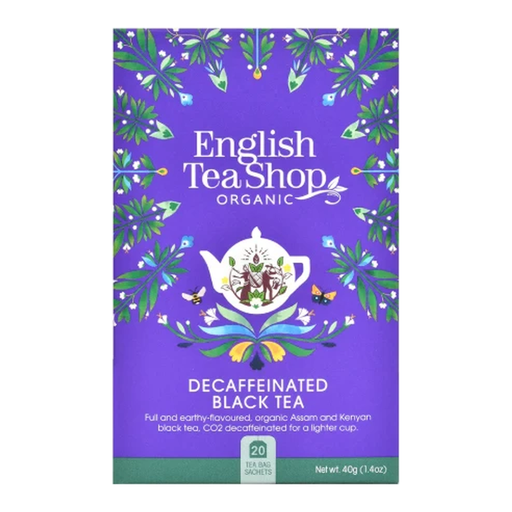
Organic Everyday Decaf offers an organic black-tea option containing Assam.
Decaf is an everyday black-tea blend positioned by Yorkshire Tea for lower-caffeine and bedtime drinking.
Tetley Decaf is an everyday decaffeinated black tea available in different pack quantities.
PG Tips Decaf is another everyday black-tea option; Tesco lists a 160-bag pack.
Tesco Decaff Original Tea provides an own-label black-tea option in an 80-pack weighing 250g, as listed by Tesco.
These decaffeinated black teas are options to consider for a winter mug. Their pack labels and preparation directions can help you decide whether either suits the strength and serving style you want.
 No image available
Consider this decaffeinated black tea if you want an everyday winter mug: Yorkshire Tea describes its Decaf blend as flavour-packed.
This listing identifies a 250g pack. Check the pack’s tea-bag count and brewing directions if either matters to your routine.
 No image available
Consider this organic decaffeinated black tea if that product type appeals for your winter cup.
The stated pack weight is 20g. Check its tea-bag count and preparation directions on the current pack, and confirm the measurement basis of any caffeine figure if you need a precise amount.
No. Twinings says decaffeinated tea can retain minor traces of caffeine. If a specific amount matters, check the current pack or ask the manufacturer about the tea you plan to buy.
Start with a black tea whose maker describes the flavour you want, then follow its preparation guidance. Twinings suggests four minutes for a punchier cup of English Breakfast Decaffeinated, while Tetley’s guidance reproduced by Tesco specifies two to three minutes before adding milk. Do not apply one blend’s timing to every tea.
Yes, if that suits the blend and your taste. Twinings suggests a splash of milk with its English Breakfast Decaffeinated, and Tetley’s preparation guidance says to add milk after brewing. Follow the directions for the product you choose.
Check the current product pack. Waitrose warns that recipes can change, so an online description should not be your only source when ingredients or allergens affect your choice.