Students with limited appliance space
If there is room for one laundry appliance but not a separate dryer, compare the washer-dryer’s dimensions with both its intended position and the route into the house.


A washer-dryer makes sense for a student house when a separate tumble dryer will not fit, but choose its drying capacity for the loads you expect to dry: a full wash load may be too large for one drying cycle. Check the space and installation arrangements first, then compare the cotton settings, combined wash-and-dry energy label and capacity against the household’s usual laundry loads.
If there is room for one laundry appliance but not a separate dryer, compare the washer-dryer’s dimensions with both its intended position and the route into the house.
When several residents wash everyday clothes, the drying limit matters as much as the wash capacity: it determines whether a washed load must be divided before drying.
If cotton underwear forms part of the usual laundry, check the exact model’s cotton settings and compare energy information using the loads the household will normally wash.
Check whether the appliance can be installed before comparing programmes. Then use the household’s normal wash and dry loads—not its largest occasional load—to judge capacity.
| Concern | What to check | Who this matters to |
|---|---|---|
| Fit and installation | Measure the appliance space, access route and door clearance; check the tenancy arrangements before arranging installation. | If the washer-dryer cannot get into place or be installed with the accommodation provider’s agreement, its programmes will not help me. Around 25% of consumers put fit and installation first. |
| Shared-load drying | Compare the maximum wash-and-dry load with the wash-only capacity; plan how a larger washed load would be divided. | Several of us need everyday clothes dried, so I need a drying load we can manage without repeatedly waiting for another batch. For around 33% of consumers, drying capacity is the primary concern. |
| Cotton settings and rinsing | Check the exact model’s cotton programme and temperature choices against garment labels; look for an extra-rinse option if detergent residue is a concern. | I wash cotton underwear regularly and want settings that suit its care labels, with a way to add a rinse when needed. Cotton care is the main priority for around 17% of consumers. |
| Energy and typical loads | Compare the combined wash-and-dry label as well as the wash-only label, and choose a capacity suited to usual loads. | We share the utility bills, and I would rather compare the cycles we will use than choose the largest drum available. Around 25% of consumers focus primarily on energy use and load size. |
A 9kg wash rating can sit alongside a 6kg drying limit. Which? explains that washer-dryers have lower drying than washing capacities, so a full wash may need splitting before it can be dried.
Check the exact model’s maximum wash-and-dry load before deciding whether it suits a shared household.
Wash-only and combined-cycle labels can differ. LG lists its FWV696WSE as class B for washing and class E for washing and drying; the wash-only class cannot stand in for the cycle you intend to use.
If drying will be regular, compare the combined-cycle label and product information for the models under consideration.
Energy Saving Trust identifies temperature and load size as important factors in washing-machine energy use. A capacity chosen for an occasional large load may not reflect the household’s ordinary laundry.
Base the choice on typical shared loads and follow each garment’s care label when selecting a programme and temperature.
A machine must fit its intended position and be suitable for the installation arrangements. GOV.UK guidance for qualifying rented homes in England also distinguishes those homes from student halls of residence; it does not establish permission to install a new appliance.
Measure the space and access route, review the tenancy agreement and get the accommodation provider’s agreement before arranging installation.
Bosch lists washer-dryers with larger wash capacities than drying capacities, including the WDU8H541GB and WNG25401GB.
LG’s FWV696WSE is a 9kg wash and 6kg dry example for comparing programmes, dimensions and separate energy labels.
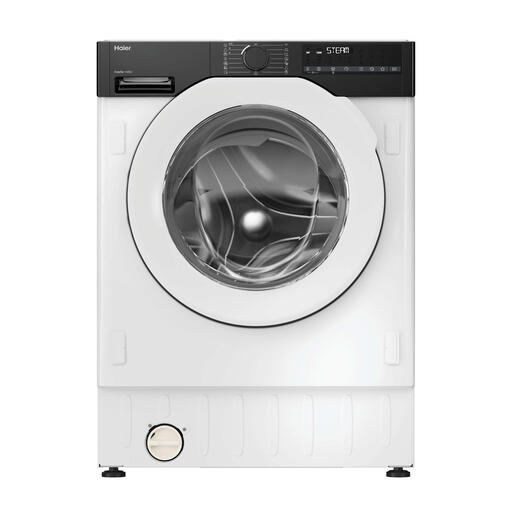
Haier’s HWD90-B14367U1 is a freestanding 9kg wash and 6kg dry model to assess against a shared household’s space and drying needs.
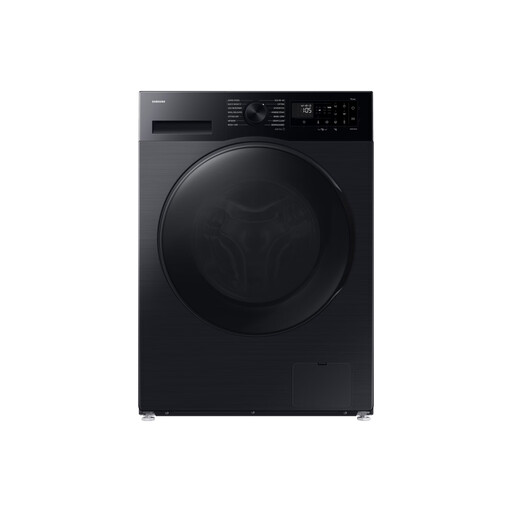
Samsung lists the WD90HG5U34BBEU as a 9kg wash and 6kg dry model with connected and cycle-management features.
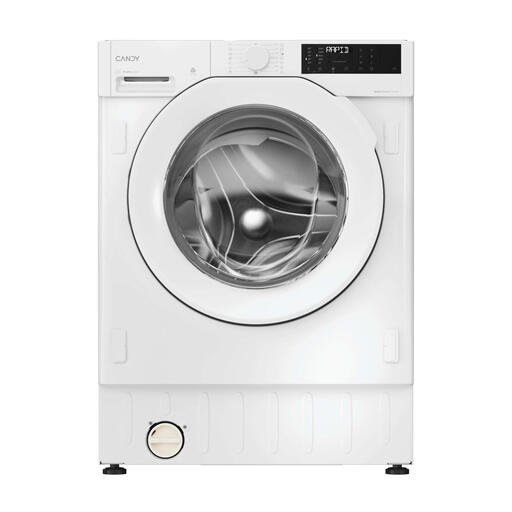
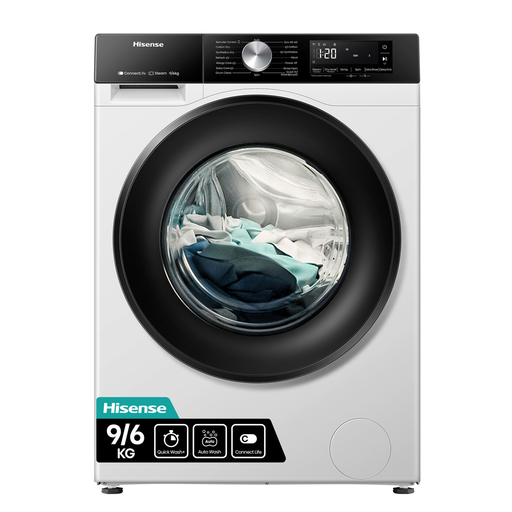
These all-in-one washer-dryers offer different wash and dry capacities and include both freestanding and integrated designs. For cotton underwear in a student house, check the exact cotton settings, available space and installation arrangements before choosing.
 No image available
Consider this freestanding model where shared wash loads can be divided into smaller drying batches. A full 9kg wash exceeds its 6kg drying limit; check its cotton programme and temperatures against the underwear care labels.
The product name states an A wash rating and D combined-cycle rating. Measure the intended position and access route before ordering.
 No image available
This integrated model is relevant to a fitted kitchen with suitable cabinetry and agreed installation arrangements. Its 6kg drying limit means a full 9kg wash would need dividing before drying.
Check the cabinet-door requirements, exact cotton settings and available space before ordering.
 No image available
Consider this model only where an integrated appliance can be accommodated and installation is agreed. Its 6kg drying capacity is lower than its 9kg wash capacity.
Check the cabinet-door arrangements, cotton programme and temperatures, and the combined-cycle energy label for this exact model.
 No image available
This model offers one appliance for shared washing and smaller drying batches; a full 9kg wash exceeds its 6kg drying limit.
The product name states a 1400 rpm spin speed. Confirm its installation type, cotton settings and fit for the intended space.
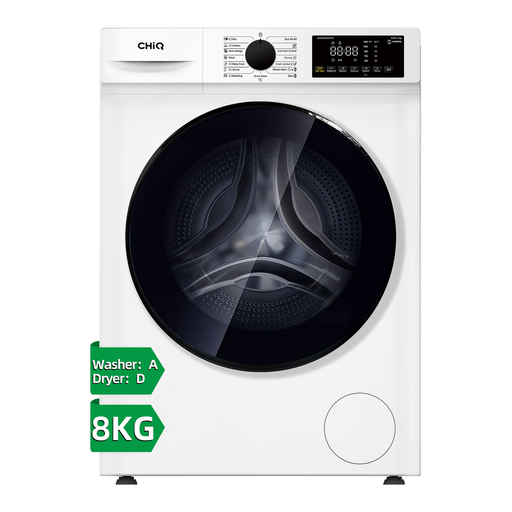 No image available
This freestanding option suits consideration where one appliance is needed and a 5kg drying batch meets the household’s routine. Its drying limit is lower than its 8kg washing limit.
The product name states an A wash rating and D combined-cycle rating. Check the cotton settings and measure the position and access route before ordering.
Not if it exceeds the model’s drying capacity. Which? explains that washer-dryers dry less than they wash, so check the exact wash-and-dry limit and divide a larger washed load before drying.
Not automatically: choose for the household’s normal wash loads and realistic drying batches rather than its largest occasional load. Energy Saving Trust identifies load size as an important factor in washing energy use, while the drying capacity may be lower than the headline wash figure.
Check that the exact model offers a cotton programme with temperatures compatible with the garments’ care labels. If detergent residue concerns you, check whether it also has an extra-rinse option; Which? notes that an extra rinse can help remove more detergent.
Check your tenancy agreement and obtain the accommodation provider’s agreement before arranging installation; the electrical-safety rules alone do not grant permission to add an appliance. GOV.UK guidance distinguishes qualifying rented homes in England from student halls of residence, which are excluded from the cited regulations, so do not apply the same conclusion to every type of student accommodation.
Compare the combined wash-and-dry label, not just the wash-only label, when regular drying is part of the plan. The two ratings can differ; also consider usual load size and garment-care instructions when choosing how to wash.