Shared-house laundry coordinator
If several residents use one machine, you need to plan drying batches as well as washing loads. Which? notes that washer-dryers have a lower drying capacity than washing capacity.


Choose a washer-dryer if a separate dryer is impractical, but size it around the drying capacity rather than the larger washing capacity. An 8kg wash / 5kg dry model can suit moderate shared loads; a 10kg / 6kg model allows a larger drying batch, though neither can dry a full wash load at once. Check the installation space and the cloths’ care labels before choosing.
If several residents use one machine, you need to plan drying batches as well as washing loads. Which? notes that washer-dryers have a lower drying capacity than washing capacity.
You need to establish whether the available space takes a freestanding machine or requires an integrated one, then check the exact model’s dimensions and installation clearances.
You want a routine that suits the cloths’ care labels and their condition, without assuming that every ordinary load needs a 60°C wash. Guidance from Sandwell and West Birmingham NHS Trust distinguishes ordinary laundry from heavily soiled items or those associated with a known infection.
For a UK student house washing face cloths alongside everyday laundry, establish the available space and likely drying batch size before comparing programmes and operating information.
| Concern | What to check | Who this matters to |
|---|---|---|
| Shared-house drying capacity | Compare the stated wash-only and wash-and-dry capacities in kg; decide how a full wash would be split for drying. | When several residents share laundry time, I want to avoid a queue of wet loads after washing. Around 31% of consumers put drying throughput first. |
| Space and installation | Measure the gap and check the exact model’s dimensions, required clearances and freestanding or integrated fit. | If the machine has to occupy an existing kitchen space, I need to know it will fit before considering its programmes. Space and installation are the main concern for roughly 31% of consumers. |
| Running information and noise | Compare like-for-like wash-and-dry information on the energy label and product information sheet, plus the stated noise figure for the relevant phase. | With shared bills or rooms near the appliance, I care about its operating information and potential disturbance. Around 23% of consumers give these issues first priority. |
| Face-cloth and fabric care | Check the cloths’ care labels, suitable temperature programmes and whether an extra-rinse option is available. | For regularly used face cloths, I want a wash that suits the fabric and the actual level of soiling. Approximately 15% of consumers place cloth care first. |
An 8kg or 10kg wash rating is not the amount the machine can dry in the same cycle. Which? explains that washer-dryers have a lower drying capacity, which can mean additional batches in a shared house.
Compare the model’s separate drying figure and plan who will remove laundry before drying a full wash.
Guidance from Sandwell and West Birmingham NHS Trust on laundering patients’ clothes at home distinguishes ordinary laundry from heavily soiled items or those associated with a known infection. Hotter washing can also be unsuitable for some fabrics.
Follow the cloth’s care label and choose a temperature appropriate to its condition; do not apply a hotter programme automatically.
Energy Saving Trust notes that larger appliances can use more energy even when they have the same rating. The letter alone does not describe how a particular household will use its wash-and-dry cycles.
Compare the relevant label and product-information-sheet figures for exact models of suitable capacity.
Models differ in depth, and an integrated washer-dryer needs a different installation arrangement from a freestanding one.
Measure the available space, then check the exact model’s installation instructions for door and hose clearances before ordering.
Beko’s BMND8545U is an example of a freestanding 8kg wash / 5kg dry model for households considering moderate shared loads.
Bosch lists the freestanding WDU8H541GB with 10kg washing and 6kg wash-and-dry capacity.
Haier’s freestanding X7 HWD100-B14367UUK is a 10kg wash / 6kg dry model for households considering a larger drying batch.
These washer-dryers offer freestanding options for shared laundry, plus one integrated model for a property with a compatible cabinet. Compare each machine’s drying limit and fit before deciding how it would handle face cloths alongside other loads.
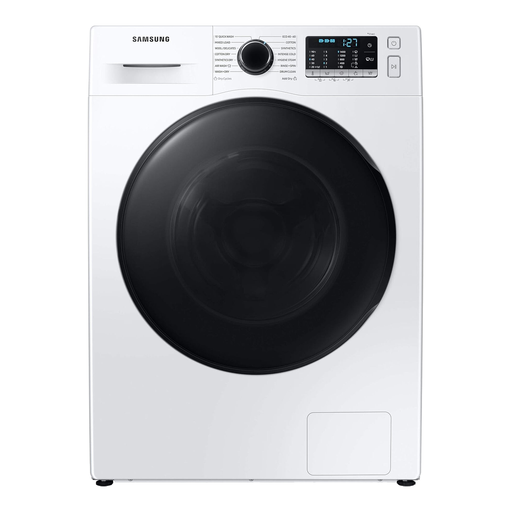 No image available
Consider this freestanding model for moderate shared loads when residents can divide a full wash before drying.
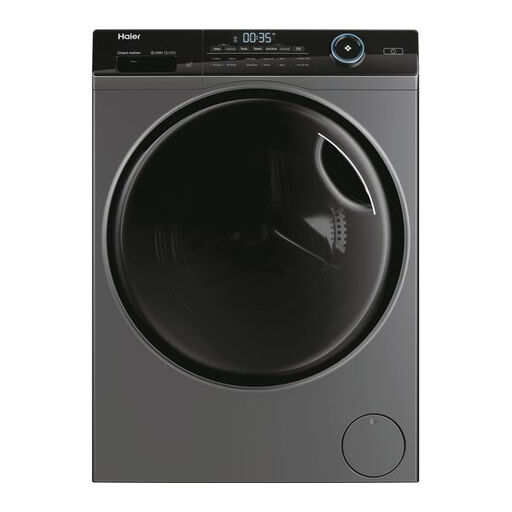 No image available
This freestanding model is worth considering when several residents need a larger drying batch and have space for the machine.
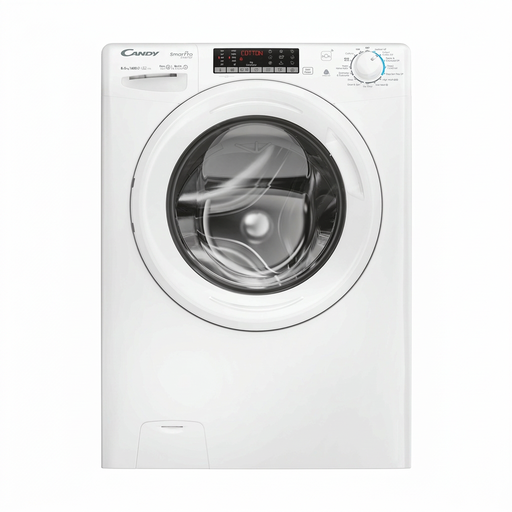 No image available
This freestanding option suits households planning smaller drying batches, provided its combined-cycle timing works with shared use.
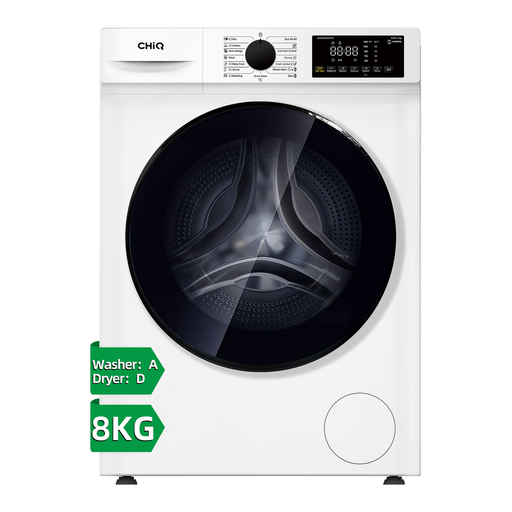 No image available
Consider this model for routine shared loads if its full installation requirements suit the available space.
 No image available
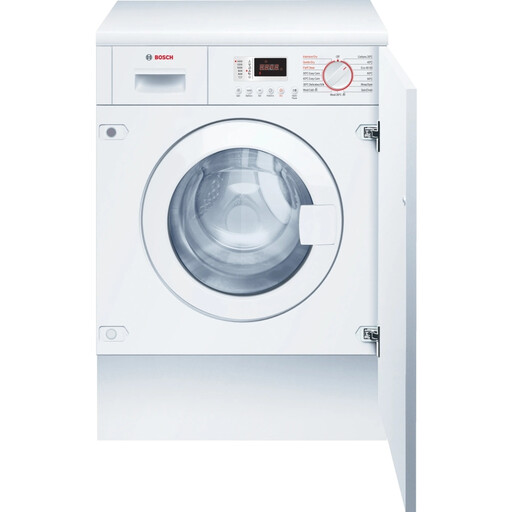
Choose an integrated model only if the property has a compatible cabinet and installation arrangement.
No: a 60°C wash is not a blanket requirement for ordinary face cloths. Guidance from Sandwell and West Birmingham NHS Trust on laundering patients’ clothes at home says ordinary unsoiled laundry does not need that temperature, while identifying higher-temperature washing for heavily soiled items or those associated with a known infection when the fabric permits it. Follow the cloth’s care label.
Not when the load exceeds its separate drying limit. Which? explains that washer-dryers have lower drying than washing capacities: for example, Beko lists the BMND8545U at 8kg wash / 5kg dry, while Bosch lists the WDU8H541GB at 10kg wash / 6kg wash-and-dry. Remove part of a full wash before drying it.
Compare the wash-and-dry information for exact models of suitable capacity, rather than relying on the rating letter alone. UK guidance from the Department for Energy Security and Net Zero and the Office for Product Safety and Standards covers energy labels and product information sheets for in-scope products; use those figures alongside the household’s likely loading pattern.
No: extra capacity is useful only if the household’s loads warrant it. Energy Saving Trust notes that larger appliances can use more energy even with the same rating, so compare suitable models’ label information and avoid choosing a larger drum solely for its headline capacity.
Avoid overloading the drum and follow the model’s cleaning instructions. Energy Saving Trust cautions that overloading can reduce efficiency and cause damage; leaving the door open after use can also help the drum dry, where the appliance instructions permit it.