Who this choice affects

Holiday-budget spreadsheet students

If you compare accommodation, transport and activities across browser tabs, then total and share the figures in a spreadsheet, prioritise a comfortable keyboard and compatibility with the spreadsheet application you use.

Students with unconfirmed course software

A laptop can handle holiday planning yet still be unsuitable for an installed course application or assessment. Check your department’s requirements before choosing ChromeOS or macOS; UWE Bristol and the University of Edinburgh both caution about specialist software on Chromebooks.

Students moving between their room and campus

If the laptop will also go to lectures, libraries or group work, compare its weight, charging arrangements, ports, webcam and microphone. The University of Warwick recommends a laptop for use across campus, residences and home.

What to check when choosing

Windows laptop

Choose when: Course software requirements are still unclear; UWE Bristol describes Windows as compatible with most university and specialist software.

Bear in mind: Weight, battery life and connections depend on the exact laptop, not its operating system.

MacBook

Choose when: Your course confirms macOS compatibility and you want a portable laptop for browser, spreadsheet and study tasks.

Bear in mind: UWE Bristol warns that some specialist applications may be unavailable on macOS.

Chromebook

Choose when: Your work is browser-led and your course confirms that its applications and assessments work with ChromeOS.

Bear in mind: UWE Bristol and the University of Edinburgh warn that required specialist software may not run on a Chromebook.

Concern What to check when buying Who this matters to
Browser and spreadsheet work Compare the exact processor, RAM and SSD with your coursework. UWE Bristol’s core specification for ordinary study lists an i3 (9th generation) or Ryzen 3 (3rd generation), 8GB RAM and a 128GB SSD. If I need browser tabs, a spreadsheet and coursework open during an ordinary study session, I want a configuration suited to those tasks. Around 36% of consumers put everyday study capability first.
Proportionate specifications Check whether your course calls for intensive programming, data analysis or creative work before choosing a higher specification; assess a reliable laptop you already own against those requirements too. When my work is mainly holiday planning and documents, I would rather choose for that workload than for graphics-heavy tasks I do not use. Roughly 29% of consumers prioritise proportionate specifications.
Course software compatibility Ask your department which operating system, installed applications and assessment platform it requires. Confirm any desktop Excel requirement against Microsoft’s Windows and macOS compatibility information. If an assessment needs an installed application, browser-based holiday planning cannot tell me whether the laptop will run it. About 21% of consumers put course-software compatibility first.
Room use and carrying Compare screen and keyboard comfort, weight, charging and the ports your accessories need. Treat a stated battery-life maximum as a rating, not assured runtime. I want room-based work to be comfortable without making the laptop awkward to take to campus. Around 14% of consumers place that balance first.

Buying pitfalls

  • Choosing a Chromebook before checking course software

    Browser-led holiday planning does not establish that required desktop applications or assessments will work. UWE Bristol and the University of Edinburgh both warn about Chromebook limitations for specialist study software.

    Ask your department which applications and assessment tools you must use before making ChromeOS your only study laptop.

    If required software cannot run on it, you may need access to another compatible computer.

  • Choosing intensive-workload hardware for ordinary tasks

    UWE Bristol distinguishes its core specification for Microsoft 365, research and coursework from higher specifications for more demanding work.

    Match the processor, memory and storage to your actual course applications rather than assuming holiday-cost spreadsheets require graphics-intensive hardware.

  • Overlooking ports and charging

    A laptop used in a student room may need to connect to a display or existing accessories, while a portable model may have a different selection of ports.

    Check the exact model’s USB, display and charging connections against the equipment you intend to use.

    An adapter or hub may be needed for an accessory that cannot connect directly.

Relevant brands to consider

Lenovo

A brand to compare for mainstream student laptops, including Windows and Chromebook options.

  • Lenovo’s student guidance suggests 8GB RAM or more, a multi-core processor and SSD storage for tasks such as note-taking and research.
  • That guidance is not a specification for every Lenovo model; confirm the configuration and connections of the laptop you choose.

Dell

A brand to compare for conventional Windows laptops in 14-inch and 15.6-inch formats.

  • Dell’s student catalogue describes models intended for portable productivity and everyday home learning.
  • Those are range descriptions; check the exact model and configuration against your course requirements.

Apple

Relevant when your course confirms macOS compatibility and you want a compact laptop for spreadsheets and general study.

  • Apple lists the current 13-inch MacBook Air with 16GB unified memory, a 512GB SSD and two Thunderbolt 4 USB-C ports; its stated wireless-web battery life is up to 15 hours.
  • Apple’s battery figure is a rated maximum, and UWE Bristol cautions that some specialist applications may not be available on macOS.

Acer

Relevant for students considering browser-led Chromebook use alongside conventional laptop choices.

  • Acer describes particular Chromebook 514 configurations with a 14-inch FHD screen, USB-C, USB-A and HDMI.
  • Those connections are model-specific, and a Chromebook still needs a course-software and assessment compatibility check.

Joybuy laptops for this use

These Windows laptops are options to compare for holiday-cost spreadsheets and ordinary study. Check the exact configuration and any course-specific software requirements before choosing one.

Acer Aspire Go 15 AG15-21P laptop

Acer Aspire Go 15 AG15-21P, Ryzen 3 7320U, 8GB RAM, 256GB SSD

Consider this Windows 11 Home laptop for browser research, spreadsheets and ordinary coursework, subject to your course’s software requirements.

The listing describes a 15.6-inch Full HD IPS display, full-size keyboard, USB-C, USB-A and HDMI connections, and an approximate weight of 1.6kg.

Check the exact model naming before ordering: the descriptions use both Aspire Go 15 and Aspire 3. The stated battery life of up to 10 hours is not assured runtime.

Joybuy
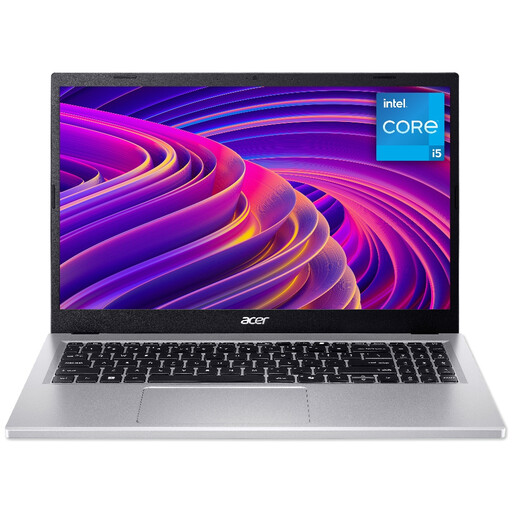
Acer Aspire Go AG15-71P laptop

Acer Aspire Go AG15-71P, Core i5-13420H, 8GB RAM, 512GB SSD

Consider this Windows 11 Home configuration if you want a larger screen and numeric keypad for room-based spreadsheet work.

The listing describes a 15.6-inch Full HD anti-glare display, USB-C, USB-A, HDMI and Ethernet, with an approximate weight of 1.78kg.

Confirm the exact model and configuration before buying. Its stated battery life of up to 8 hours depends on use.

Joybuy

Acer Aspire Lite AL15-36P-C29Z laptop

Acer Aspire Lite AL15-36P-C29Z, Intel N150, 8GB RAM, 128GB SSD

Consider this configuration for browser-led holiday research and ordinary study if its storage and application restrictions suit your course.

The listing describes a 15.6-inch Full HD anti-glare display, HDMI, USB-C and USB-A, and a weight of 1.53kg.

The detailed listing specifies Windows 11 Home in S Mode: check whether required applications work in that mode. Confirm that 128GB is enough for local files and software; the stated battery life of up to 12.5 hours is not assured runtime.

Joybuy

Lenovo IdeaPad 1 15-inch laptop in Cloud Grey

Lenovo IdeaPad 1 15-inch, Ryzen 3 7320U, 8GB RAM, 128GB SSD, Cloud Grey

Consider this laptop for spreadsheets and ordinary coursework if Windows 11 Home in S Mode permits your required applications.

The listing describes a 15.6-inch Full HD display, numeric keypad, USB-C, USB-A and microSD reader, with a weight of 1.58kg.

Check whether 128GB meets your storage needs. One USB-C port is specified for data transfer only, so confirm your charging and display connections; the stated battery life of up to 10 hours is not assured runtime.

Joybuy

ASUS Vivobook 14 X1407QA-LY003W laptop in Quiet Blue

ASUS Vivobook 14 X1407QA-LY003W, Snapdragon X, 16GB RAM, 512GB SSD, Quiet Blue

Consider this smaller Windows 11 Home laptop for carrying between your room and campus, after checking the applications your course requires.

The listing describes a 14-inch WUXGA anti-glare display, HDMI, USB-A and USB4 connections, and a weight of 1.49kg.

Confirm compatibility with your course and assessment software on this Snapdragon-based configuration. Check the exact model’s battery guidance if you need longer unplugged sessions.

Joybuy

Frequently asked questions

Do I need a powerful laptop just to compare holiday costs?

Not for browser research and spreadsheets alone. UWE Bristol’s core guidance for ordinary Microsoft 365 work, research and coursework lists an i3 (9th generation) or Ryzen 3 (3rd generation), 8GB RAM and a 128GB SSD; check whether your course has more demanding requirements before choosing a configuration.

Should I choose Windows, a MacBook or a Chromebook for study?

When course requirements are unknown, Windows is a sensible compatibility starting point: UWE Bristol says it runs most university and specialist software. Confirm course applications before choosing macOS, and choose a Chromebook as your main device only if the required applications and assessments work with ChromeOS; UWE Bristol and the University of Edinburgh warn about specialist-software limitations.

Can I return a laptop bought online in the UK if I change my mind?

For an eligible UK distance purchase, GOV.UK says you have 14 days after receiving the laptop to tell the seller you want to cancel, followed by another 14 days to return it. Check the applicable conditions and the seller’s return process; remedies for a faulty or misdescribed laptop are separate from change-of-mind cancellation.

What should I do with an old laptop in the UK?

Use an appropriate electrical-waste collection route rather than household rubbish. GOV.UK says a household waste recycling centre can accept electrical products and that, when you buy a new electrical product, the retailer must accept an old like-for-like item for free, including with online purchases.