What matters when choosing?
For study across lectures, the library and accommodation, establish course compatibility first. Then compare what you will carry, how you take notes and how you will reach your files throughout the day.
| Concern |
Buying checks |
Who this matters to |
| Course software |
Check your department’s required applications, operating system, processor architecture and hardware connections. General university guidance may not cover specialist courses. |
If my course uses specialist applications or equipment, I need to know they will work on my device. Around 33% of consumers put course compatibility first. |
| Daily portability |
Compare the device’s stated weight, screen size and charging connections alongside the charger you intend to carry. The University of York suggests a laptop under 1.5 kg for students carrying one around campus. |
When I move between teaching rooms and the library, carrying and charging the laptop must fit my routine. For around 27% of consumers, portability is the primary concern. |
| Notes and typed work |
Decide whether you regularly need handwriting or PDF annotation, then check the keyboard and whether the required pen or accessories are included. The University of Nottingham says touchscreens are not required for most courses. |
I annotate lecture material often, but I also need a workable way to write assignments. Around 20% of consumers place their note-taking workflow first. |
| Files and online access |
Check local SSD capacity, your university’s cloud-storage arrangements and the connections needed for online sessions. The University of York recommends at least a 256GB SSD in its general guidance for taught students. |
If I switch study locations, I need to reach coursework files and join online sessions without relying on one device or connection point. File and access continuity comes first for around 20% of consumers. |
Joybuy laptop choices
These laptops cover conventional and 2-in-1 formats for study between campus locations. Compare each configuration with your department’s requirements, particularly where a course needs specialist software or connected equipment.
 No image available
Lenovo IdeaPad Slim 3 15.3-inch, Ryzen 5 7535HS, 24GB, 512GB (83K7009MUK)
Consider this Windows laptop if you need a keyboard for typed coursework and room for locally stored files.
It has a 15.3-inch WUXGA display, 24GB DDR5 RAM, a 512GB PCIe SSD and Windows 11 Home. Its listed weight is 1.59 kg, above the University of York’s under-1.5-kg suggestion for carrying a laptop around campus.
Check the ports, charging arrangements and any specialist course applications against your daily needs.
View on Joybuy
 No image available
HP OmniBook X Flip 16-as0004na, Core Ultra 5 226V, 16GB, 512GB
Consider this 2-in-1 if you switch between keyboard work and touch use, provided its Windows configuration meets your course requirements.
The listed configuration has a 16-inch touchscreen, Intel Core Ultra 5 226V processor, 16GB RAM, a 512GB SSD and Windows 11 Home.
If you plan to carry it daily or write by hand, check its weight and whether the exact model supports a suitable pen.
View on Joybuy
 No image available
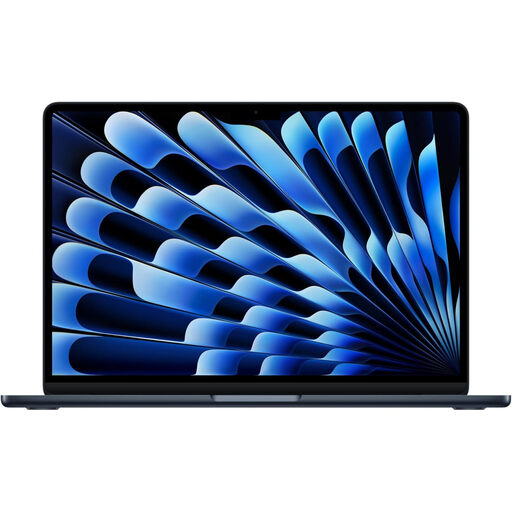
Apple 13-inch MacBook Air (2026), M5, 16GB, 512GB, Midnight
Consider this 13-inch MacBook for study across campus only after confirming that your required applications and equipment work with macOS.
The listed variant has an M5 chip with a 10-core CPU and 8-core GPU, 16GB of unified memory and a 512GB SSD.
Check the exact carrying weight and charging arrangements if those affect your journey between study spaces.
View on Joybuy
 No image available
Lenovo IdeaPad 1 15-inch, Ryzen 3 7320U, 8GB, 128GB, Cloud Grey
Consider this laptop for typed study work if its application requirements and local storage capacity fit your course.
It has a 15-inch Full HD format, AMD Ryzen 3 7320U processor, 8GB RAM and a 128GB SSD. The listed weight is 1.58 kg, and its operating system is Windows 11 Home in S Mode.
The 128GB SSD is below the University of York’s general recommendation of at least 256GB. Confirm that required applications work with your intended S Mode setup before buying.
View on Joybuy
 No image available
Microsoft Surface Laptop 7 15-inch, Snapdragon X Elite, 16GB, 256GB, Maya
Consider this touchscreen laptop if your course confirms that its required software and peripherals work with its Snapdragon processor.
The listed configuration has a 15-inch PixelSense touchscreen, Snapdragon X Elite processor, 16GB RAM and a 256GB SSD.
Processor architecture matters for some specialist applications and hardware interfaces. Check those requirements with your department rather than assuming all Windows laptops are interchangeable.
View on Joybuy
Common questions
Can a tablet with a keyboard replace my study laptop?
Only if your department confirms that the tablet can handle every required application, assessment format and specialist task. University College London says a tablet alone is not sufficient for its study requirements; Loughborough University considers tablets useful for notes and online resources but identifies limits to their software availability.
What should I ask my department before buying?
Ask for the current requirements for operating system, applications, processor architecture and any equipment you must connect. Check memory, storage and ports against those tasks too: the University of York and the University of Warwick both note that departmental requirements can differ from general student guidance.
Do I need a Windows laptop for university?
Not for every course, but some specialist work requires a closer check. Loughborough University recommends Windows for engineering because its NX software does not work on Apple devices, while the University of Nottingham recommends Windows on standard Intel or AMD hardware for its electrical and electronic engineering workflow.
How can I keep coursework accessible between campus and home?
Use university-provided cloud storage where available and keep a separate backup routine, while checking the connection needed for online classes or virtual desktops. University College London recommends OneDrive for personal study files, and the University of Nottingham notes that virtual-desktop use depends on a stable internet connection.
What should I do if a laptop bought in the UK is faulty?
Keep proof of purchase and details of the fault, then contact the seller about the remedy available in your circumstances. The UK Consumer Rights Act 2015 provides remedies when goods fail statutory requirements; a manufacturer warranty is separate and does not replace those rights.


