Guitarists monitoring takes
If room noise distracts you while recording, look for a wired, closed-back, around-ear design. Check its fit with your guitar position and give the cable a route that stays clear as the desk moves.


For monitoring guitar takes in a shared or noisy space, start with wired, closed-back, around-ear headphones that give you a secure fit and a workable cable route. Open-back headphones are a separate option for editing or checking a mix in a quiet private room; whichever design you choose, check its impedance against your headphone output and its cable reach at standing height.
If room noise distracts you while recording, look for a wired, closed-back, around-ear design. Check its fit with your guitar position and give the cable a route that stays clear as the desk moves.
If you mainly review guitar tone and edits after recording in a private, quiet room, an open-back reference pair is worth considering. It is less suited to sessions where you need to keep outside sound from distracting you.
If your main question is whether the headphones will work with your audio interface and standing position, check the output, connector and exact impedance variant. Measure the cable route at your normal standing height before choosing a model.
Choose when: You monitor guitar while recording or need less distraction from other sound in the room.
Trade-off: A closed design does not establish a comfortable fit or a particular sound for every listener.
Choose when: You review edits or mixes in a quiet private room after recording.
Trade-off: Outside sound remains more audible. Audio-Technica positions open-back designs for private-space mixing, while beyerdynamic notes that background noise remains discernible with its open-back DT 990 Edition.
| Concern | What to check | Who this matters to |
|---|---|---|
| Isolation during takes | Check for wired, closed-back, around-ear construction and assess the pad seal and fit. | If other sound distracts me while I record, I need to hear my guitar take without turning up playback to compete with the room. Around 33% of consumers put isolation first. |
| Tone and edit assessment | Decide whether listening happens during recording, in a quiet room afterwards, or both; compare cup designs for that task. | When I review a take, I want to hear tone and edits clearly, but I may also need the headphones for tracking. Roughly 27% of consumers prioritise critical listening. |
| Interface and cable fit | Check the output connection and the exact impedance variant; measure cable reach with the desk raised and leave controlled slack. | If I move between sitting and standing, the connection must suit my source and the lead must stay clear of my feet. About 20% of consumers make setup compatibility their primary concern. |
| Comfort and upkeep | Assess headband pressure and pads for the exact model, and check whether worn pads or cables can be replaced. | For repeated recording sessions, I need a fit I can wear comfortably and parts I can maintain if they wear. Around 20% of consumers put comfort and upkeep first. |
The DT 770 PRO comes in different impedance variants. beyerdynamic distinguishes its 32-ohm version, which it says can also be used with mobile devices, from its 250-ohm version, which it particularly associates with powerful amplifiers and interfaces.
Identify your headphone output and choose the exact variant against its specifications, rather than assuming every DT 770 PRO will suit the same source.
If the chosen headphones need more output than your source can provide, using them as intended may require a suitable headphone amplifier.
Open-back listening can suit quiet-room editing, but background sound remains more perceptible than the isolation-focused closed-back route used for recording.
Choose the cup design for the task you do most. If you both track and edit, start by meeting the recording need and consider a separate quiet-room listening option only if you will use it.
A lead that reaches at sitting height may pull tight or cross where you stand when the desk rises. Documented cable choices differ between models.
Measure from the interface to your normal standing position, allow controlled slack and keep the lead clear of your feet and guitar.
Turning up monitoring level does not address a distracting room or an uncomfortable fit. Royal Free London advises limiting headphone listening time and taking regular breaks.
Check fit and your monitoring environment first, keep playback at a comfortable level and take breaks during longer sessions.
The closed-back ATH-M50x is relevant when cable choice matters at a desk that changes height.
The closed-back DT 770 PRO range is relevant when you can choose its impedance variant around a known headphone output.
The SRH840A is a closed-back, around-ear option to consider if a locking, detachable cable matters to your setup.
The closed-back K371 is relevant if you are comparing a 32-ohm specification with detachable cable options.
This wired over-ear option is worth checking if you need a direct connection at your standing desk. Confirm its cup construction and suitability for monitoring guitar recordings before choosing it as a studio reference pair.
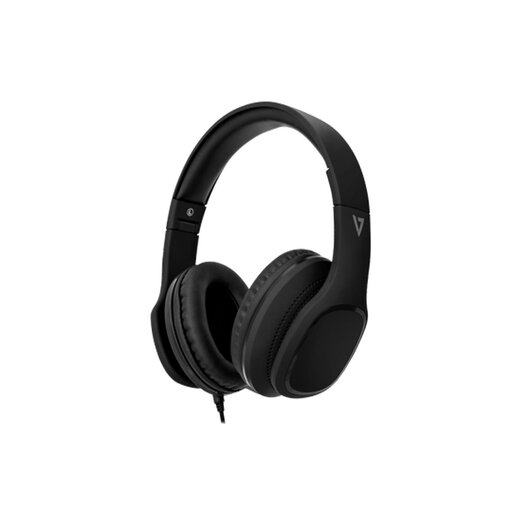 No image available
Consider these for a wired desk setup if their connection and fit suit your source and recording position.
The product name specifies 40 mm drivers and an inline MEMS microphone. Check the cable reach at standing height and confirm the cup construction and monitoring characteristics if isolation or reference listening is essential.
Choose closed-back headphones when isolation matters while you monitor guitar takes. For editing or mix checks in a quiet private room, an open-back pair is another option; beyerdynamic notes that outside sound remains audible through its open-back DT 990 Edition.
That depends on the actual headphone output, so check its specifications before choosing a 250-ohm variant. For the DT 770 PRO range, beyerdynamic associates the 250-ohm version particularly with powerful amplifiers and interfaces, while saying the 32-ohm version can also be used with mobile devices.
It should reach from your output to your normal standing position with controlled slack and without crossing where you stand. Measure that route with the desk raised; Audio-Technica UK lists several cable choices for the ATH-M50x, including a 3.0 m straight lead.
Address distracting room sound and headphone fit rather than relying on more volume, and take regular listening breaks. Royal Free London advises keeping headphone volume below 60% of maximum, limiting use to an hour at a time and taking at least a five-minute break each hour.