Late-evening home vocal rehearsers
If you practise harmonies or backing parts while others are nearby, you need to hear the guide track without letting too much of it escape from the earcups.


For backing-vocal rehearsal before sleep, start with wired, closed-back over-ear headphones if you need to contain the guide track in a shared home. Check that the pads seal comfortably, then match the exact headphone variant and connector to your playback device; an open-back pair is better reserved for quiet-room listening where leakage will not disturb anyone.
If you practise harmonies or backing parts while others are nearby, you need to hear the guide track without letting too much of it escape from the earcups.
If your guide track plays from a phone, tablet or laptop, check both the headphone connection and whether that device can provide a usable listening level.
If you may later record vocals with the same pair, a closed-back design and a practical wired connection matter because cue-track spill can reach an active microphone.
Choose when: You rehearse near other people or may later monitor a guide track while recording vocals.
Trade-off: The enclosed earcups can leave you less aware of sounds in the room; the seal and headband must also suit your fit.
Choose when: You are listening in a quiet room, leakage is acceptable and you want an open presentation for checking a vocal part.
Trade-off: Sound passes through the earcups, so the guide track may disturb someone nearby or reach a recording microphone.
| Concern | What to check | Who this matters to |
|---|---|---|
| Track leakage | Look for closed-back over-ear construction, then assess the pad seal and how audible the track is beside you at your intended level. | I rehearse near other people and want the guide track to stay reasonably contained without turning it up over household noise. Around 31% of consumers put containment first. |
| Wear comfort | Assess the pad opening and headband pressure over a realistic rehearsal session; check return terms if you cannot try the fit beforehand. | Repeated evening practice is difficult if the pads or headband become uncomfortable before I finish. Comfort is the primary concern for around 31% of consumers. |
| Device match | Check the exact variant’s impedance, your device’s headphone output and the plug or adaptor required. | I play the guide track from a phone, laptop or interface and need a usable level from that particular output. Around 23% of consumers prioritise the device match. |
| Cable and storage | Check cable length, whether the lead detaches and whether the earcups fold for storage. | I want to connect a wired pair quickly and put it away after a short session without awkward cable handling. A simple setup comes first for around 15% of consumers. |
Open-back headphones let sound pass through the earcups, which works against keeping a late-evening guide track contained.
Begin with closed-back over-ear models when someone nearby needs quiet. Consider open-back listening separately if leakage is acceptable.
Focusrite notes that higher-impedance headphones generally require more power from an interface output. Variants within one model family can be intended for different sources.
Check your playback device and the manufacturer’s guidance for the exact headphone variant before ordering.
If your current output cannot provide a satisfactory level, using that variant may require a suitable interface or headphone amplifier.
Pad seal and pressure vary with ear shape, glasses and head size. A pair can feel comfortable yet leak more sound than you expected.
Try it for a realistic rehearsal length if possible, assess leakage at a moderate level and check the retailer’s return conditions.
Extra volume does not solve a poor seal. Hinckley & Bosworth Borough Council advises setting headphone volume in a quiet environment rather than turning it up to block surrounding noise.
Set a moderate level in a quiet room and assess whether the earcups provide enough separation for your rehearsal.
The closed-back ATH-M series is relevant to wired home rehearsal and possible vocal tracking.
The closed-back DT 770 PRO line is relevant when you can choose an impedance variant for your playback equipment.
The wired MDR-7506 offers published specifications that help with device and wearing-weight checks.
The closed-back, over-ear K371 is a foldable option to consider for rehearsal and later listening checks.
The closed-back SRH840A is relevant if cable handling and replacement pads are important to you.
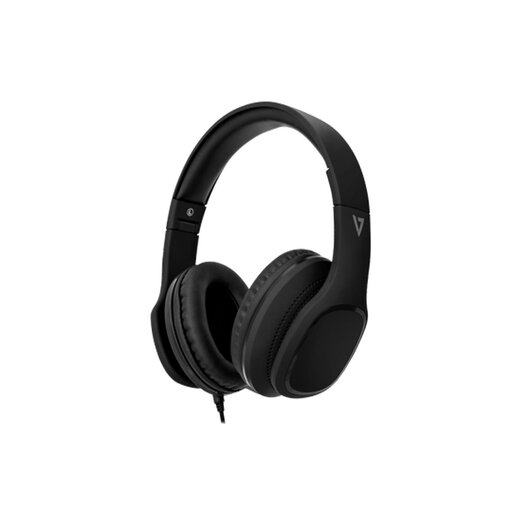
This wired over-ear option may suit guide-track playback while practising a backing part. Before relying on it in a shared room, check its fit and how much sound escapes at your intended listening level.
 No image available
For wired guide-track playback during backing-vocal practice; check the plug against your device and assess leakage before using them near someone who needs quiet.
Over-ear design with 40 mm drivers and an inline MEMS microphone. The product name describes passive noise cancellation, but that does not establish how much backing-track sound escapes.
Yes, when containing the guide track around other people is important. Choose an over-ear pair with a comfortable seal and check leakage at your intended level; open-back headphones are more appropriate when the room is quiet and leakage is acceptable.
Choose the exact variant for your playback device rather than treating a higher number as an upgrade. Focusrite says higher-impedance headphones generally need more output power, while beyerdynamic positions the 250-ohm DT 770 PRO for stationary equipment such as monitor controllers and headphone amplifiers. Check your device’s guidance and the required connector too.
Set the volume in a quiet room rather than raising it to cover household noise. Hinckley & Bosworth Borough Council advises against using extra headphone volume to block noisy surroundings; check the earcup seal if distractions keep drawing you towards a higher level.
Prioritise a closed-back over-ear design and a cable and connector that work with your recording interface. Closed-back earcups are the relevant choice when you want to reduce guide-track spill into an active microphone, although you should still check the seal and listening level in your own setup.