Socket-and-cable minimisers
Students with few available power points who want to type notes without keeping a keyboard cable connected. They still need to plan for charging or replacement batteries, depending on the model.


Choose a compact Bluetooth keyboard if your study device supports Bluetooth and you want to avoid a permanent cable or USB receiver. Check the UK key layout and device-switching controls if you type UK symbols or move between devices. A tri-mode keyboard adds receiver and wired options, but a rechargeable model still needs periodic charging.
Students with few available power points who want to type notes without keeping a keyboard cable connected. They still need to plan for charging or replacement batteries, depending on the model.
Students who organise notes across devices and want a clear way to switch the keyboard between them. Logitech and CHERRY describe multi-device switching on specific compact models, but channel counts vary.
Students making room for paper notes or a tablet who also rely on familiar UK key legends. A compact shape and a UK layout are separate details to check; QWERTY alone does not establish both.
For study notes with limited sockets, decide how the keyboard will connect and draw power, then check how it switches devices and fits beside your other materials.
| Concern | What to check | Who this matters to |
|---|---|---|
| Connection and power | Check whether Bluetooth works with your devices and whether the keyboard needs USB charging or replacement batteries. A 2.4 GHz receiver occupies a USB port when used. | If my desk has few sockets, I want to type without leaving another cable connected, but I still need a manageable power routine; around 42% of consumers put that need first. |
| Device switching | Check the number of supported connections, the switching controls and compatibility with each study device. | When I take notes on a tablet and organise them on a laptop, I want to move between the two without pairing from scratch each time; roughly 25% of consumers prioritise switching. |
| Desk fit and UK layout | Check dimensions, the keys retained on a compact layout and an explicit UK English, UK layout or UK ISO designation if needed. | With notebooks beside my screen, I need room to write and familiar key legends for UK symbols; around 33% of consumers make desk fit and UK typing their primary concern. |
A US-layout keyboard can connect to a UK computer while its printed symbols and Enter key differ from the arrangement you expect.
If those details matter for coursework, check the listing and product images for an explicit UK English, UK layout or UK ISO designation.
A rechargeable model needs periodic charging; a model using replaceable batteries needs suitable cells. Neither removes the need for a power routine.
Check the exact model’s power type and decide whether charging from an available USB source or replacing batteries fits your setup.
A 2.4 GHz receiver needs a compatible USB port or adapter. Bluetooth may be a more direct connection for a tablet that supports it.
Check the connection method on every device you use for notes, including how the keyboard switches between them.
A smaller keyboard leaves more room for study materials but may omit a number pad that you use regularly for numerical coursework.
Compare the pictured keys with your usual tasks before deciding whether the smaller footprint is worth that trade-off.
The Pebble Keys 2 K380s is a compact Bluetooth option for typing across compatible study devices.
The B1 Pro UK-ISO variant is a compact option for consumers who want several connection methods alongside a specified UK layout.
The KW 7100 MINI BT and KW 9200 MINI illustrate different compact, multi-device connection choices.
These wireless-capable keyboards offer different ways to free desk space or connect study devices. Compare each listing’s layout, connection methods and power routine against your own setup; the US-layout options require particular care if you type UK symbols regularly.
 No image available
Consider this wireless keyboard if clearing space around your study materials matters. The name identifies a UK version, but check the product images for the exact key legends and layout before relying on UK symbol positions.
 No image available
The stated UK layout makes this worth considering if familiar key legends matter. Its 96 layout is a different desk-space choice from a smaller compact keyboard; check its dimensions and power arrangement against your workspace.
 No image available
The compact 68-key format may appeal when paper notes need desk space. The title specifies Bluetooth 5.1 and wired operation, but also a US layout; check the key legends and device-switching method if either affects your work.
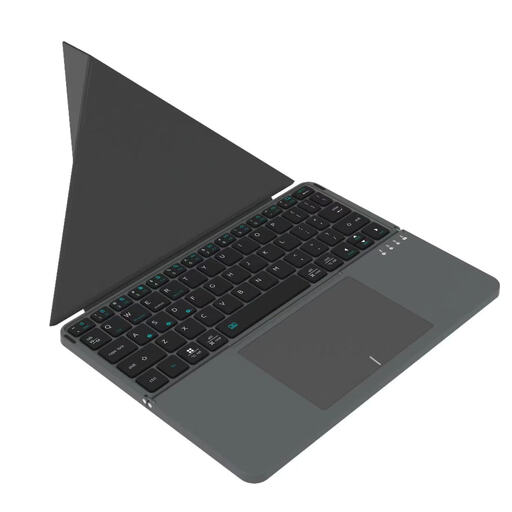 No image available
Bluetooth makes this an option for a compatible study device without a permanently connected keyboard cable. Its title lists computers, laptops, iPads and smartphones; check the exact key layout and switching controls if UK typing or moving between devices matters.
 No image available
The 75% layout is relevant when desk space is tight, while the title lists Bluetooth, 2.4 GHz and wired connections. It explicitly has a US layout, so compare its printed keys with your typing needs and check how its battery is charged.
Choose Bluetooth if your device supports it and keeping a USB port free matters. A 2.4 GHz connection is an alternative where the exact keyboard offers it, but its receiver uses a compatible USB port; neither choice removes the keyboard’s power needs.
Choose an explicitly marked UK English, UK layout or UK ISO variant if you rely on familiar UK symbol positions and key legends. A US-layout keyboard can connect to a UK computer, but its printed symbols may differ from the computer’s settings.
No: it can operate without a permanent keyboard cable but still needs periodic USB charging. Check whether an available laptop, power bank or USB adapter fits your charging routine, and whether the exact model can be used while charging if that is important to you.
Check your local authority’s and retailer’s current electrical-equipment collection or take-back instructions. GOV.UK guidance notes that equipment powered by batteries can still count as electrical and electronic equipment even though it is not connected to the mains.