
24/7 Customer Support

Free returns

Same-day & Next-day Delivery

Quality Guaranteed

Unlock Your Welcome Offers: FREE Delivery | Up to 80% OFF | Free 30-day JoyPlus trial
Download the APP
Watching a rider land their first trick on a new stunt scooter is a fantastic moment. But choosing the right one can feel like navigating a minefield of marketing claims and technical jargon. Many parents find themselves with a scooter that either isn't safe for tricks or falls apart after a few sessions at the local skate park.
As the Joybuy Product Recommendation Officer, my role is to help you sidestep these common issues. Before you buy, be aware of these three frequent purchasing traps:
To ensure you get a durable and safe kids stunt scooter, focus on a few core specifications rather than just the colour or graphics. These are the components that determine performance and longevity.
The deck and handlebars form the scooter's skeleton, and their material is crucial. You will typically find two main options:
Also, inspect the clamp. This small but vital part connects the handlebars to the fork. A double or triple clamp provides a much more secure and rigid connection than a single-bolt system, which is essential for withstanding the forces of 360° bar spins and landings.
A scooter's wheels and bearings dictate its speed and smoothness.
Proper sizing is critical for control. As a general rule, when the rider is standing on the deck, the top of the handlebars should sit at or slightly below their waist level. Always check the manufacturer's recommended age and height range. Equally important is the maximum user weight, which should never be exceeded.
Based on these practical criteria, here are a few options matched to different rider profiles.
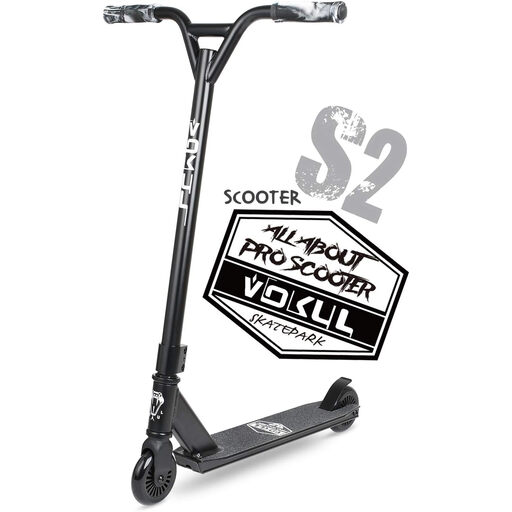
Why This Fits Their Persona: This is an ideal entry level stunt scooter for children aged 7-14 who are just starting to show an interest in tricks. It is designed to be stable and forgiving, helping build confidence for learning basic flips and grinds.
It directly counters the 'looks tough' trap by using a reinforced deck and a strong 4130 chromoly steel handlebar with a secure triple clamp, ensuring it can handle the learning process.
The focus on stability and durable construction provides a safe platform for beginners. Assembly is straightforward, requiring only the clamp to be tightened.
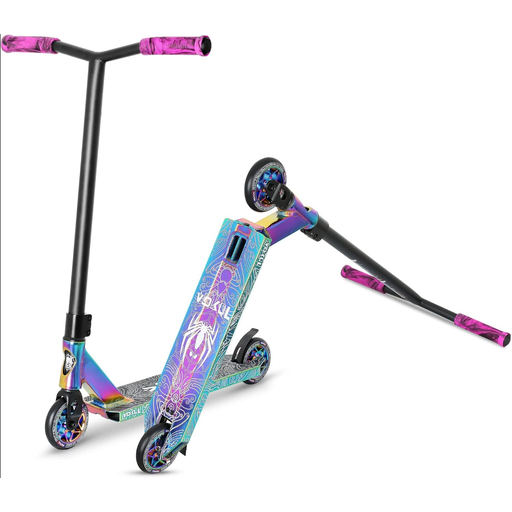
Why This Fits Their Persona: For the rider who has mastered the basics and is ready to spend more time at the skate park. This scooter is built for performance, with components that support a faster, more aggressive riding style.
It avoids the 'rough ride deception' by including high-performance ABEC-9 bearings and larger 110mm wheels. This combination provides the smooth, fast glide needed to build momentum for ramps and tricks.
The lightweight T-6061 aluminium deck makes the scooter more agile and easier to manoeuvre for aerials, while the solid construction supports riders up to 100 kg.
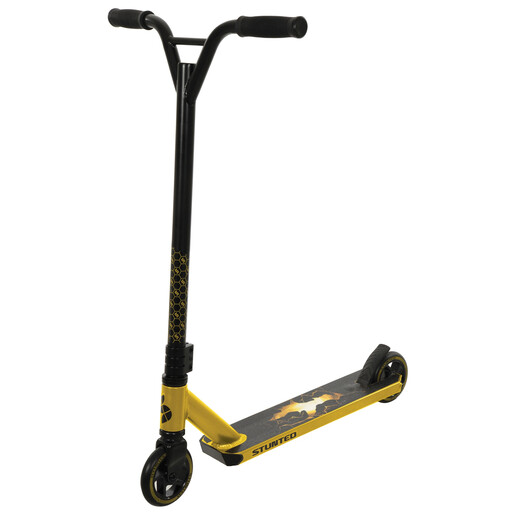
Why This Fits Their Persona: For the intermediate rider who wants their scooter to perform well and look the part. The metallic gold finish and contrasting black components offer a standout appearance at the skate park.
This scooter proves that style doesn't have to mean sacrificing substance. It features a robust aluminium box deck, a pro-grade triple clamp and ABEC 9 bearings, ensuring its performance matches its premium look.
The combination of 110mm wheels and a threadless headset provides a smooth, fast ride ideal for 360° tricks, while the box deck design helps reduce the risk of ankle injury.
We have compiled a complete, real-time list of products that fully satisfy these strict selection criteria and UK safety regulations.
1. How do I choose the right size stunt scooter for my child? The most important factor is handlebar height. Have your child stand on the floor (or ideally, the scooter deck). The handlebars should come up to their waist or hip level. If the bars are too high (at chest level), it will be difficult to control. If they are too low, it will create an uncomfortable, hunched-over riding position. Always check the manufacturer's age and height recommendations as a starting point.
2. What is the difference between a stunt scooter and a regular scooter? A stunt or freestyle scooter is specifically built to withstand the stresses of tricks. They feature a fixed, non-folding frame for maximum strength, a one-piece handlebar, a more robust deck and smaller, harder wheels. Regular kick scooters are designed for commuting or casual riding and often have larger wheels, folding mechanisms and adjustable-height handlebars, none of which are suitable for jumps or skate park use.
3. How long do stunt scooter wheels last? The lifespan of scooter wheels depends heavily on the riding surface, the rider's style and the quality of the wheel. Riding on rough tarmac will wear them down faster than smooth concrete at a skate park. For an active rider, wheels can be considered a consumable part that may need replacing every few months to a year. You'll know it's time when they look visibly worn down, develop flat spots or the polyurethane starts to de-hub from the core.