
24/7 Customer Support

Free returns

Same-day & Next-day Delivery

Quality Guaranteed

Unlock Your Welcome Offers: FREE Delivery | Up to 80% OFF | Free 30-day JoyPlus trial
Download the APP
As local skateparks fill with activity, more children are keen to move beyond simple scooting and start learning tricks. For parents, this brings up a new challenge: finding a safe, durable and appropriate stunt scooter for kids. Unlike standard kick scooters, a trick scooter is built to withstand the impacts of jumps and grinds.
Navigating the market can be confusing, with terms like 'pro scooter' and 'freestyle scooter' often used interchangeably. This guide is designed to cut through the clutter, helping you understand the key features to look for and providing a few recommendations to get your child rolling safely.
Before jumping into specific models, it's helpful to know what sets a good beginner stunt scooter apart. Here are three key areas to consider.
The core of any scooter for tricks is its frame. Look for decks made from lightweight yet strong materials like 6061 aircraft-grade aluminium. This provides the durability needed for landing jumps without weighing the scooter down. For handlebars, a one-piece, fixed design is crucial for safety and stability. While adjustable bars are fine for casual scooters, they are a weak point on a scooter intended for a skatepark. A strong triple clamp system, which secures the handlebars to the fork, is a sign of a well-constructed scooter.
Stunt scooter wheels are typically smaller and harder than those on commuter scooters. Common sizes are 100mm and 110mm. Smaller wheels offer more control for beginners, while larger wheels can achieve higher speeds, often preferred by intermediate riders. The wheel's core is also important; alloy or metal cores are far more durable than plastic. Paired with high-quality bearings, often indicated by an ABEC rating (like ABEC-9), these components ensure a smooth, fast and reliable glide.
Safety is paramount. A reliable rear brake, a non-slip deck for secure footing and a solid, non-folding frame are non-negotiable features. It's also vital to choose a scooter that fits your child. The handlebars should ideally sit around their waist height when they are standing on the deck. This posture gives them the best control and comfort, whether they are a scooter for boys or a scooter for girls. Always ensure your child wears a helmet and protective pads.
Here are a few recommendations that balance performance, durability and suitability for different young riders.
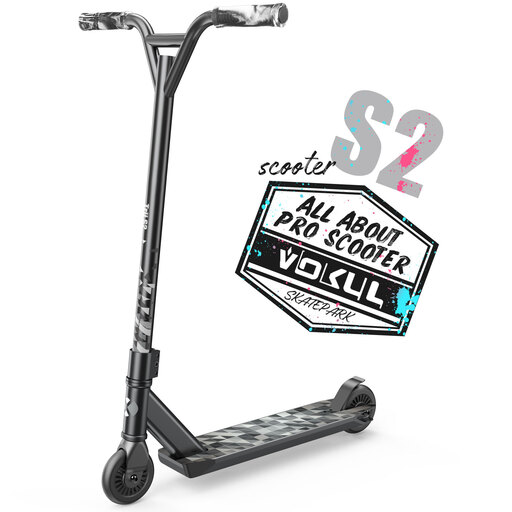
Why It Stands Out: The VOKUL S2 is engineered specifically as an entry-level pro scooter. It combines robust materials such as a 6061 aluminium frame and a 4130 chromoly steel handlebar, with a design focused on stability for learners. The reinforced deck and triple-bolt clamp provide the confidence young riders need to attempt their first tricks.
Pros:
Who is it for? This is an excellent choice for children aged 7–14 who are just starting their stunt scooter journey. Its stable and forgiving nature makes it a great platform for learning basic flips and tricks at the local skatepark scooter track.
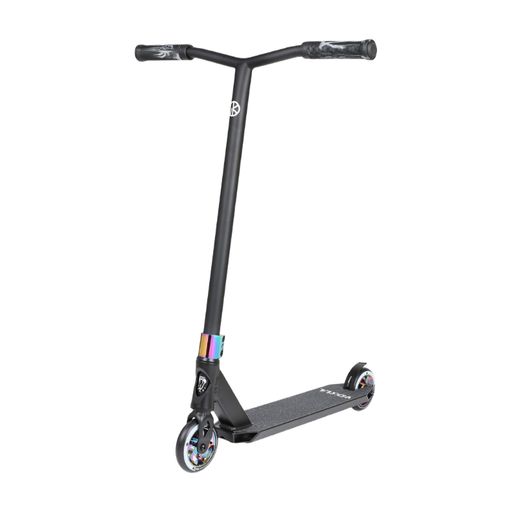
Why It Stands Out: The VOKUL K1 represents a step up for riders who have mastered the basics. It features larger 110mm alloy wheels and high-performance ABEC-9 bearings, delivering a noticeably faster and smoother glide. The one-piece fork and T-6061 aluminium deck are built to handle more demanding use, making it a capable freestyle scooter.
Pros:
Who is it for? Ideal for intermediate to advanced riders from age 8 upwards. If your child is already confident on a scooter and wants to progress to more complex tricks, the K1 offers the performance they need.
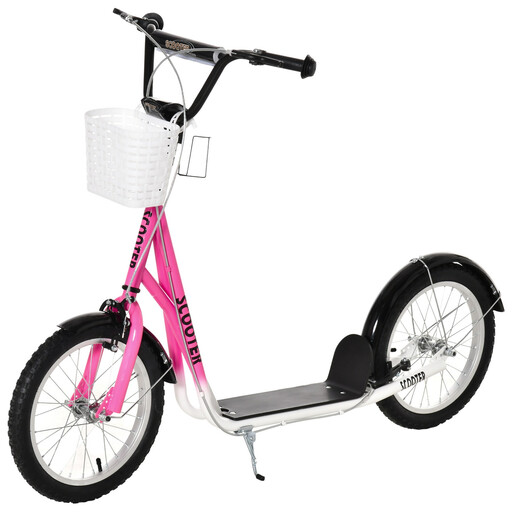
Why It Stands Out: It is important to note that this HOMCOM model is not a stunt scooter. It is designed for comfortable, casual riding. Its large, 16-inch inflatable rubber tyres provide a smooth ride over pavements and park paths. Features like an adjustable handlebar, a basket, a cupholder and dual brakes make it a practical and fun choice for getting around.
Pros:
Who is it for? This scooter is perfect for children who want a scooter for cruising around the neighbourhood, riding to a friend's house or enjoying park paths. It is not suitable for tricks, jumps or use at a skatepark.
If these models aren't quite what you're looking for, there are many other styles and configurations available. To see a wider variety of models tailored for different skill levels and preferences, explore our full collection of Kids Trick Scooter to find the perfect match for your aspiring rider.
1. What is the difference between a stunt scooter and a normal scooter? A stunt scooter, also known as a freestyle scooter, is built for durability with a fixed, one-piece frame and handlebars, a strong deck and smaller, solid wheels. This construction allows it to withstand the impacts from jumps and tricks. A normal kick scooter is designed for transport and often features a folding mechanism, adjustable handlebars and larger, softer wheels for a comfortable ride, but it cannot be used for stunts.
2. What age is good for a stunt scooter? Most brands design their beginner models for children aged 7 or 8 and older. However, readiness depends more on a child's individual balance, coordination and confidence than age alone. Always check the manufacturer's recommended age and weight limits before purchasing.
3. What size stunt scooter does my child need? The most important measurement is the handlebar height. When your child is standing on the scooter's deck, the top of the handlebars should be level with their hips or waist. This height provides optimal control and a comfortable riding posture for performing tricks.