
24/7 Customer Support

Free returns

Same-day & Next-day Delivery

Quality Guaranteed

Unlock Your Welcome Offers: FREE Delivery | Up to 80% OFF | Free 30-day JoyPlus trial
Download the APP
A cluttered shower can easily disrupt a relaxing daily routine. Bottles of shampoo, conditioner and body wash often end up balanced precariously on ledges or sitting on the shower floor. For many in the UK, especially renters, university students or anyone with a newly tiled bathroom, drilling holes for a permanent shelf is simply not an option.
This is where the suction cup shower caddy comes in as a practical, damage-free solution. These clever organisers provide instant storage without the need for tools, glue or permanent fixtures. This guide will walk you through what to look for in a reliable no-drill shower shelf and offer some of our top recommendations to help you reclaim your shower space.
Finding a suction caddy that stays put involves more than just picking one off a virtual shelf. Consider these key factors to ensure your choice is sturdy, practical and suited to your bathroom.
The single most important factor is the surface you plan to mount it on. Suction cups work by creating a vacuum, and this is only possible on completely smooth, non-porous surfaces. Think glossy tiles (without deep grout lines), glass, acrylic and stainless steel. They will not adhere properly to textured or porous tiles, painted walls or wallpaper. Look for models that specify the technology used, such as those based on bionic principles like an octopus sucker, which often provide a stronger, more reliable hold.
Consider how many products you need to store. A heavy duty shower organiser should have a clearly stated weight capacity. Check the product specifications for the maximum load, typically listed in kilograms or pounds. The caddy itself should be made from a durable, waterproof material like high-grade ABS plastic, which resists rust and is easy to clean.
A well-designed waterproof shower basket will feature ample drainage holes. This prevents water from pooling, which can lead to mould and mildew and helps your toiletries dry faster. Also, consider a removable shower caddy design. The ability to easily detach the basket from its suction mounts makes cleaning both the caddy and the wall behind it much simpler.
Here are a few standout options that offer reliable performance and user-friendly features.

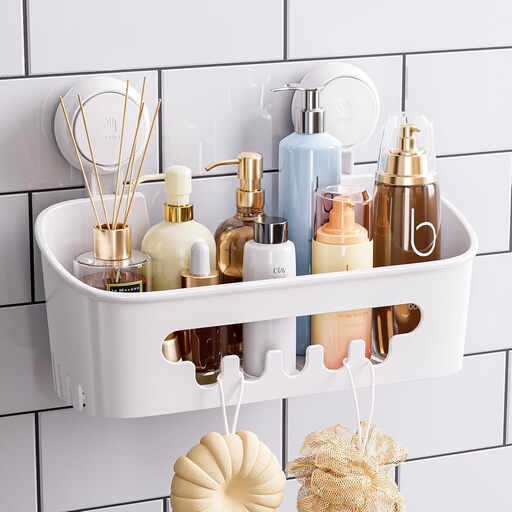

If a suction cup caddy isn't quite right for your surface type, or if you're exploring different styles and materials, there are many other damage-free solutions available.
For a wider selection of bathroom organisers, browse our complete collection of plastic shelving to find the perfect fit for your space.
1. How can I make my suction cup shower caddy stick better? Success lies in the preparation. First, ensure the surface is perfectly clean and dry; use rubbing alcohol to remove any soap scum or residue. The suction cup itself should also be clean. Press the caddy firmly against the wall to push all the air out from underneath the cup. For the models recommended above, a firm press of the palm is all that is needed to create a strong vacuum seal.
2. Can I install a suction caddy on tile grout lines? No. Suction cups require a flat, airtight seal to function. Placing a cup over a grout line creates a gap that allows air to enter, which will cause the suction to fail and the caddy to fall. Always install the suction cups entirely on the flat surface of the tile.
3. How much weight can a suction cup shower caddy typically hold? Weight capacity varies significantly between models. Lighter-duty caddies may only hold 1-2 kg, while a heavy duty shower organiser can hold up to 10 kg (22 lbs) or more, as seen in our recommendations. Always check the manufacturer's specifications before loading the caddy to avoid overloading it.