Day-trippers and holidaymakers
If you want sugar-free gum to carry while travelling, the main format choice is between a small pack for occasional use and a larger supply for several days or people.


For an occasional day trip, a small sugar-free pack keeps the amount you carry down; for a longer break or sharing, consider a bottle or multipack with enough pieces for the people using it. Check the particular pack’s sweeteners, allergens and warnings rather than relying on its sugar-free label alone, and keep used gum for a bin.
If you want sugar-free gum to carry while travelling, the main format choice is between a small pack for occasional use and a larger supply for several days or people.
North & East Devon Formulary Guidance discusses sugar-free gum for people who retain some salivary function. Persistent dry mouth calls for attention to its cause, rather than relying on gum alone.
If you have phenylketonuria (PKU), a soya allergy or a reason to limit polyols, compare the ingredients and warnings on the exact pack you intend to buy.
Match the quantity to your trip, then read the pack label and plan where used gum will go.
| Priority | What to check | Your needs |
|---|---|---|
| Pack format | Compare the number of pieces, whether they come in separate packs, and how much you want to carry. | For a day out, I would rather carry a small pack. For several days or a group, I may want more pieces in a bottle or multipack. |
| Sugar label | Look for a sugar-free or no-sugar label and read the nutrition information for the particular product. | I want gum labelled sugar-free, without assuming that the label tells me everything about its ingredients. |
| Ingredients and warnings | Check for aspartame and phenylalanine warnings, declared allergens and polyols; some packs warn that excessive consumption may produce laxative effects. | If I need to avoid a particular ingredient, I need the details for this flavour and pack, not just the brand name. |
| Dry-mouth concerns | North & East Devon Formulary Guidance describes salivation from sugar-free gum only where some salivary function remains. Consider the cause if dryness persists. | On a journey, I might consider gum for an occasional dry-mouth feeling, but not as a solution to an ongoing problem. |
| Disposal | Have a way to contain used gum until you reach a bin. GOV.UK includes chewing gum in its examples of littering. | At a beach, park or station, I need somewhere to keep a used piece if there is no bin nearby. |
Some sugar-free gums contain aspartame, polyols or allergens. The Extra and Mentos packs described by Sainsbury’s and Tesco carry phenylalanine and excessive-consumption warnings.
Read the current pack’s ingredients and warnings, particularly if you have PKU, an allergy or a reason to limit polyols.
A bottle or multipack gives you more gum to carry or share, but quantity alone does not tell you which ingredients or warnings apply.
Choose a small pack for occasional solo use, or compare larger pack counts with the length of your trip and number of users.
North & East Devon Formulary Guidance limits its discussion of saliva stimulation to people with some remaining salivary function and advises addressing underlying causes where appropriate.
If dry mouth continues or troubles you, seek appropriate advice rather than using gum as the only response.
GOV.UK includes discarded chewing gum in its examples of littering.
Wrap a used piece and put it in a bin, or keep it contained until you find one.
UK supermarket listings include Extra sugar-free gum in small packs and larger formats.
Tesco lists Mentos Pure Fresh sugar-free gum in Fresh Mint packs, including a 50-piece format.
Tesco lists Trident Tropicaltwist as a tropical-fruit-flavour sugar-free gum in a three-pack.
These packs, bottles and a multipack give you different quantities to consider for day trips, longer breaks or sharing. Check the current label before choosing for a specific ingredient need.
 No image available
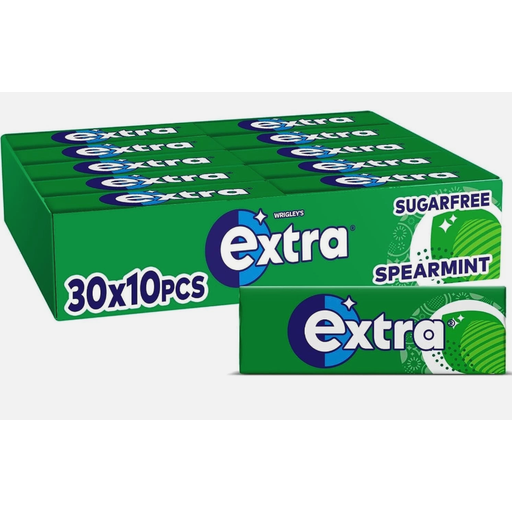
Thirty separate 10-piece packs may suit sharing or taking a smaller pack out each day on a longer break.
If soya, aspartame or polyols matter to you, check the current pack’s ingredients and warnings before buying.
 No image available
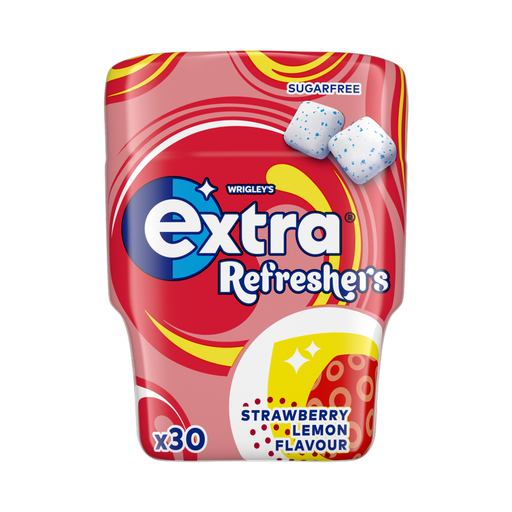
This 30-piece pack offers more pieces for an outing than a small 10-piece pack.
Check its current ingredient and allergen information if you need to avoid soya, milk or particular sweeteners.
 No image available
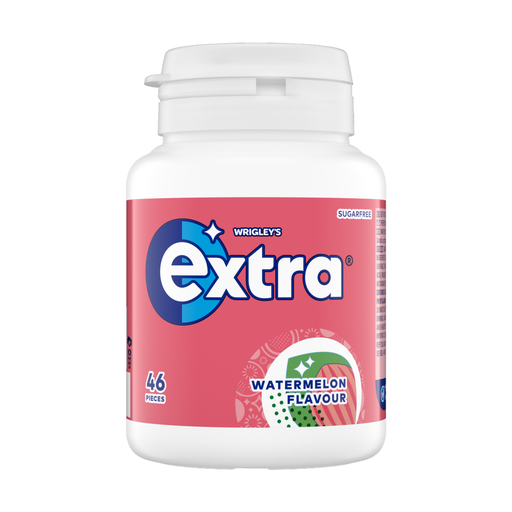
The 46-piece bottle is a quantity to consider for several days or more than one gum user.
Check the current pack for sweeteners, allergen declarations and any applicable warnings.
 No image available
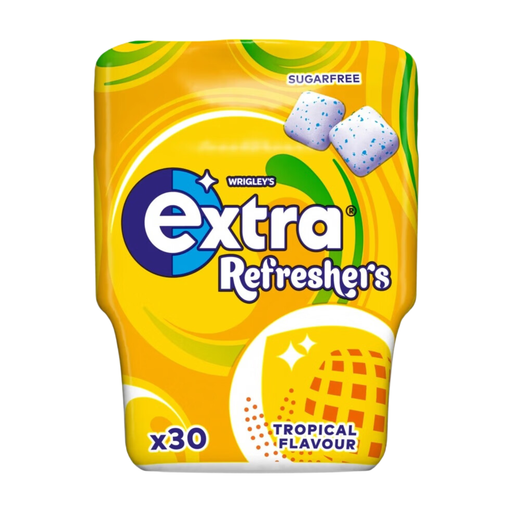
This 30-piece bottle is an option when you want a larger supply than a small day-trip pack.
Read the current label for soya, sweeteners and phenylalanine or excessive-consumption warnings if these affect your choice.
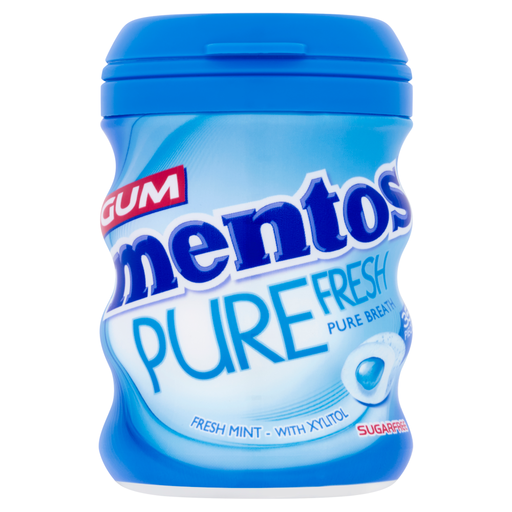 No image available
The 35-piece pack offers a quantity between the smaller day-trip packs and the larger multipack shown here.
Check the current ingredients and warnings if you need to avoid soya, aspartame or polyols.
A sugar-free label distinguishes the gum’s sugar content, but does not establish a dental benefit for every product. Check the individual pack and continue normal dental care rather than treating gum as a substitute.
North & East Devon Formulary Guidance describes saliva stimulation from sugar-free gum only in people with some remaining salivary function. If dry mouth persists or troubles you, seek advice about its cause rather than relying on gum alone.
The Extra and Mentos examples listed by Sainsbury’s and Tesco carry those warnings. The NHS advises that aspartame is unsuitable for people with PKU because it contains phenylalanine; check each pack’s ingredients and warnings, including those concerning excessive consumption.
Keep it contained until you find a bin. GOV.UK includes chewing gum in its examples of littering, so do not leave a used piece on the ground.