Parents of older children on outings
A small pack may be convenient after eating during a day out if the child can chew safely and an adult manages access. Sugar-free gum is not a substitute for food, water or toothbrushing.


For a school-holiday outing, consider sugar-free chewing gum only for an older child who can chew safely with appropriate supervision; gum is confectionery, not a replacement for a snack. A small pack keeps the carried quantity limited, separate packs can be stored for different outings, and a bottle calls for adult-managed access. Check the exact pack’s ingredients and warnings before choosing.
The child’s ability to chew safely matters before flavour or pack size. NHS guidance says sugar-free gum is not suitable for young or unsupervised children.
A small pack may be convenient after eating during a day out if the child can chew safely and an adult manages access. Sugar-free gum is not a substitute for food, water or toothbrushing.
Separate packs can be stored for different days or distributed by adults. A bottle offers a shared supply but needs more active control over access.
For food supplied by state-funded schools in England, Department for Education guidance addresses school-food requirements, and the Requirements for School Food Regulations 2014 define chewing gum as confectionery. Check the particular setting’s rules before supplying gum or including it in a packed bag.
Start with whether gum is appropriate for the child, then check the exact variant’s label. Pack format matters only after those checks.
| Priority | What to check | Your needs |
|---|---|---|
| Safe chewing | Consider the individual child’s ability to chew safely and the supervision available. NHS guidance says sugar-free gum is not suitable for young or unsupervised children. | I need an option that suits this child, not just a flavour they like. If safe chewing is in doubt, I’ll choose a different item. |
| Snack role | Confirm that the pack says sugar-free. Keep gum separate from plans for food, water and regular toothbrushing; NHS guidance says sweeteners do not automatically make a food healthy. | I’m considering something to chew after eating, not something to replace a holiday snack or a drink. |
| Ingredients | Read the exact pack for sweeteners, a phenylalanine warning, allergens such as soya, and any excessive-consumption warning. Ingredients can differ by variant. | Where PKU, a soya allergy or sensitivity to an ingredient matters in my household, I need to screen the physical pack before use. |
| Pack size | Compare the number of pieces and whether they come in separate packs or one container. Sainsbury’s lists Extra formats containing 10 pieces, 5 × 10 pieces and 46 pieces. | For one outing, I’d rather carry a small quantity. For several days, separate packs may be easier to put away; a bottle would stay with an adult. |
| Setting rules | Check the written food and chewing-gum rules of the school or holiday club. In England, the Requirements for School Food Regulations 2014 classify chewing gum as confectionery; rules for school-supplied food do not, by themselves, settle a setting’s policy on brought-in items. | Before I pack or supply gum for a group activity, I need to know what that particular setting permits. |
Sugar-free describes its sugar content, not its role as food. NHS guidance says lower- or no-calorie sweeteners do not automatically make a food healthy.
Keep gum, if suitable, as an optional confectionery item after eating. Bring food and water separately.
Sainsbury’s lists an Extra bottle containing 46 pieces, and the checked label warns that excessive consumption may produce laxative effects. Pack size does not make gum suitable for a young or unsupervised child.
Choose a smaller carried pack when quantity control matters, and keep a shared bottle under adult control.
The checked gum labels include sweeteners, phenylalanine warnings and soya lecithin. Those details matter when screening a pack for a particular household.
Read the ingredients and warnings on the exact pack, especially where PKU, soya allergy or sensitivity to polyols is relevant.
England’s school-food regulations define chewing gum as confectionery, while an individual school or holiday club may also have rules about items brought from home.
Ask the setting for its written food and chewing-gum policy before packing or supplying it.
These examples show why the exact product and pack matter; a brand name alone does not establish ingredients or suitability for a child.
Sainsbury’s lists Extra White sugar-free gum in a 10-piece pack, a 5 × 10 multipack and a 46-piece bottle.
Sainsbury’s lists a 10-piece sugar-free Menthol & Eucalyptus pack for someone who wants that flavour profile.
Sainsbury’s lists a 35-piece Freshmint gum container labelled sugar-free with xylitol.
ToffeeWorld describes its listed Original Flavour sugar-free pack as imported from the USA.
These Joybuy options include separate 10-piece packs for planned distribution and two bottles for adult-managed use. Check whether gum suits the child before comparing the formats.
 No image available
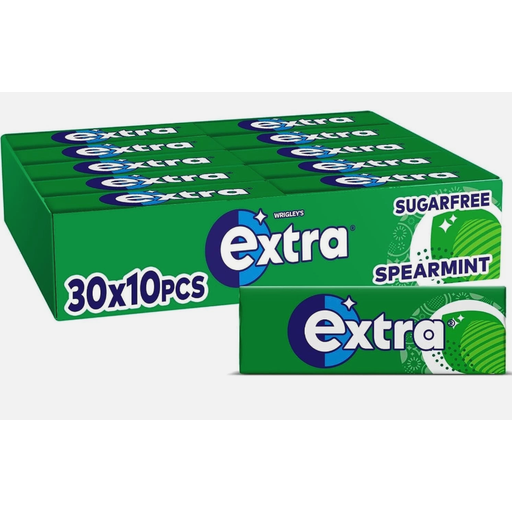
Separate packs can be put away for different outings or distributed by an adult. This sugar-free spearmint multipack contains 30 packs of 10 pieces, so managing the full supply still matters. Check the exact pack’s ingredients and warnings, including those relevant to soya and phenylalanine.
 No image available
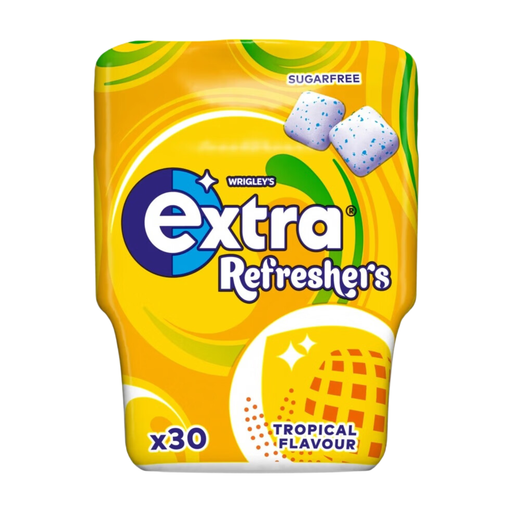
The bottle format suits carrying a shared supply when an adult manages access. It contains 30 pieces of tropical-flavoured sugar-free gum and is not divided into individual packs. Read the physical label for ingredients and warnings before offering it to a child.
 No image available
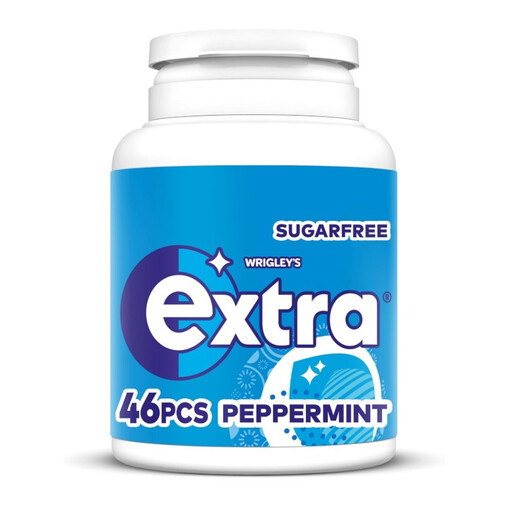
This peppermint bottle provides a larger shared supply for adult-managed use rather than separate outing packs. It contains 46 pieces. Check the physical label for sweeteners, allergens and warning statements, particularly if phenylalanine or polyols are a concern.
Treat it as confectionery rather than a replacement for food or water. NHS guidance says lower- and no-calorie sweeteners do not automatically make a food healthy; keep regular toothbrushing separate from any decision to use gum after eating.
NHS community-dental guidance says sugar-free gum is not suitable for young or unsupervised children. For an older child, consider their ability to chew safely and provide appropriate supervision before choosing a pack.
The warning is important when screening gum containing aspartame for someone with phenylketonuria (PKU); NHS information says aspartame is unsuitable for people with PKU. Check the exact pack’s ingredients and warning rather than relying on the brand name.
Checked sugar-free gum labels list polyol sweeteners and warn that excessive consumption may produce laxative effects. A multipack or bottle should not be treated as an unrestricted supply for a child; read the warning on the pack being used.
Check that setting’s written rules first. For food supplied by state-funded schools in England, Department for Education guidance addresses school-food requirements, and the Requirements for School Food Regulations 2014 define chewing gum as confectionery. That does not, by itself, determine a holiday club’s policy or what a parent may put in a packed bag.