Biscuit bakers considering a sugar-free ingredient
The checked products are labelled for chewing, not for use in dough. Keep the choice of a baking ingredient tied to the biscuit recipe you plan to follow.


Buy sugar-free chewing gum separately for chewing, not as a substitute for sugar in biscuit dough. The products described here are labelled as chewing gum and contain gum base and sweeteners; their labels do not provide a biscuit-baking method. If you are choosing gum for personal use, check the current pack for sweeteners, allergens and warnings.
The checked products are labelled for chewing, not for use in dough. Keep the choice of a baking ingredient tied to the biscuit recipe you plan to follow.
If the gum is a separate purchase for chewing, compare the pack format, sugar-free labelling, ingredients and warnings rather than treating it as part of the recipe.
Check the individual pack if aspartame, phenylalanine or soya matters to you. The checked products have different sweetener lists, and the checked Extra and Wrigley's labels include soya information.
Decide whether you need an ingredient for the biscuits or a separate pack of gum; then compare labels within the category you are buying.
| Priority | What to check | Your needs |
|---|---|---|
| Intended use | Read the product name, ingredients and directions. The checked gums contain gum base; the Extra Plus Deep Clean directions published by ASDA Groceries describe chewing after eating and drinking, not adding the product to dough. | If I am changing a biscuit recipe, I need a recipe and ingredient intended for that use. Gum bought for chewing stays separate. |
| Sweeteners and warnings | Compare the exact pack's sweeteners and warning statements. The checked gum labels list different combinations of sweeteners; checked Extra and Wrigley's labels warn that excessive consumption may produce laxative effects. | A sugar-free label matters to me, but I also want to know which sweeteners the gum contains and follow its pack warnings. |
| Phenylalanine and soya | Check the ingredients, phenylalanine warning and allergen information on the current pack. The NHS states that aspartame is not suitable for people with phenylketonuria (PKU); the checked Extra and Wrigley's products list soya. | If I need to avoid aspartame or soya, the particular pack's label determines whether I can choose it. |
The checked products contain gum base and are labelled for chewing. Their product information gives no method or substitution ratio for biscuit dough, so it cannot establish how a biscuit recipe would turn out.
Buy the gum separately. For biscuits, follow a recipe developed for the baking ingredient you choose.
The checked Extra and Wrigley's labels warn that excessive consumption may produce laxative effects.
Read and follow the warning on the pack rather than using its sugar-free description as a reason to disregard it.
Ingredients and allergen information can change. That matters when checking for aspartame, phenylalanine warnings or soya.
Read the physical pack's ingredients, allergen advice and warnings when you buy it.
These examples help distinguish labelled chewing products; a brand name alone does not establish suitability for a biscuit recipe.
The checked Extra products are sugar-free chewing gum, not recipe ingredients.
The checked 46-piece Wrigley's product is listed as sugar-free chewing gum.
Tesco Groceries lists Trident Tropicaltwist as sugar-free, tropical-fruit-flavour chewing gum with sweeteners.
These Joybuy options are sugar-free chewing gums for a separate purchase alongside biscuit-baking supplies, not ingredients selected for the dough.
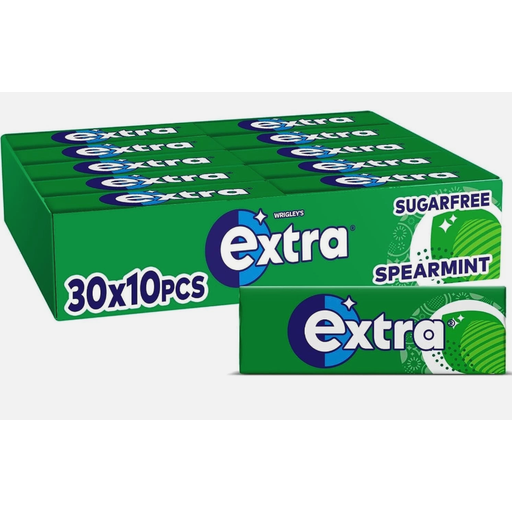 Image unavailable
A multipack for keeping chewing gum separate from your baking ingredients. The listing identifies 30 packs of 10 pieces and reports 0 g sugars; it also lists soya lecithin and warnings concerning phenylalanine and excessive consumption. Check the current pack before use.
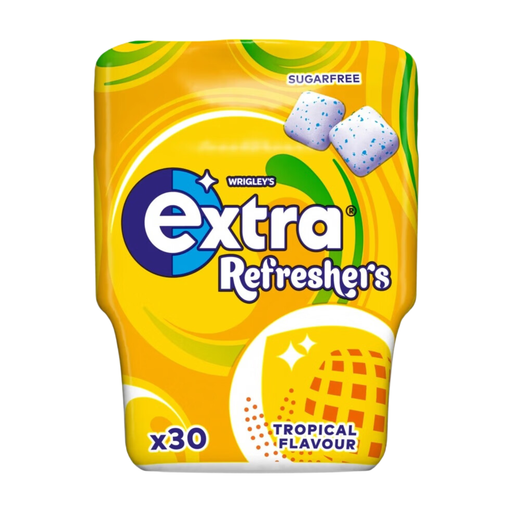 Image unavailable
A bottle format if you want gum for chewing alongside a baking shop. The listing specifies 30 pieces and 67g, reports 0 g sugars and lists soya and phenylalanine information alongside an excessive-consumption warning. Check the current pack before use.
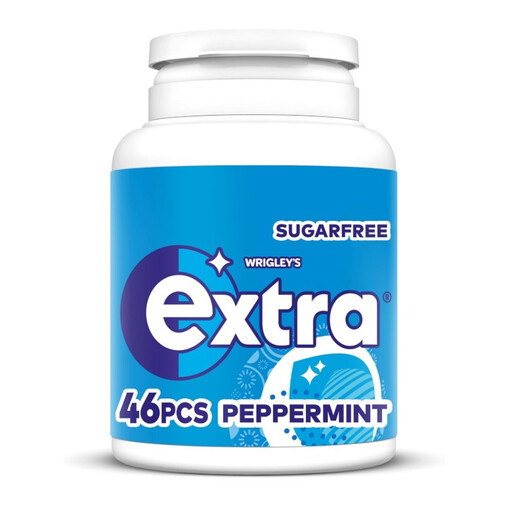 Image unavailable
A peppermint bottle option for chewing rather than adding to a biscuit recipe. The title specifies 46 pieces; the listing reports 0 g sugars and lists soya lecithin, a phenylalanine warning and an excessive-consumption warning. Check the current pack before use.
Yes. The checked products are labelled sugar-free or report 0 g sugars, while their ingredient lists name sweeteners that vary by product. Read the particular pack if you need to avoid one.
Check the ingredients for aspartame, also labelled E951, and read any phenylalanine warning. The NHS states that aspartame is not suitable for people with phenylketonuria (PKU).
No. The checked Extra and Wrigley's products list soya or soya lecithin. Read the current physical pack's ingredients and allergen advice rather than assuming the same declaration applies to every gum.