Tea-break snackers watching sugar
If sugar-free is a firm requirement, compare the sugars figure per 100 g rather than relying on “no added sugar” wording. If it is not, the per-bar figure helps you assess the portion you plan to eat.


If you need a sugar-free chocolate bar, check the current pack for no more than 0.5 g sugars per 100 g—the threshold set out for a sugar-free claim in the legislation.gov.uk annex to Regulation (EC) No 1924/2006. A “no added sugar” bar can exceed that figure; if sugar-free is not a requirement, compare the sugars in the portion you intend to eat, alongside the ingredients and allergen statement.
If sugar-free is a firm requirement, compare the sugars figure per 100 g rather than relying on “no added sugar” wording. If it is not, the per-bar figure helps you assess the portion you plan to eat.
A sugar claim does not describe every carbohydrate in a bar. Diabetes UK says polyols contain carbohydrates and calories, and that how to count them when adjusting insulin is not straightforward; discuss individual decisions with your healthcare team.
Check the exact pack’s ingredients and precautionary allergen statement, including when switching to no-added-sugar chocolate. N!CK’S lists nuts, peanuts, milk and soya in the may-contain statement for its Dark Chocolate bar.
Decide whether sugar-free is a requirement before comparing portion sizes: a smaller conventional bar and a no-added-sugar bar answer different needs.
Choose when: You need a bar whose sugars figure meets the sugar-free threshold of no more than 0.5 g per 100 g.
Keep in mind: The claim alone says nothing about the bar’s allergens or its total carbohydrate and energy.
Choose when: Avoiding added sugar matters to you, but meeting the sugar-free threshold is not essential.
Keep in mind: N!CK’S lists 1.7 g sugars and 16 g polyols per 100 g for its Dark Chocolate, so this particular bar is not sugar-free.
Choose when: You want a familiar bar for your break and do not require sugar-free chocolate.
Keep in mind: An individually wrapped or smaller bar defines a portion; it does not make that bar sugar-free.
| Priority | What to check | Your needs |
|---|---|---|
| Sugar claim | Read the exact claim, then check sugars per 100 g. The legislation.gov.uk annex to Regulation (EC) No 1924/2006 sets the sugar-free threshold at no more than 0.5 g per 100 g for foods. | If I specifically need sugar-free chocolate, “no added sugar” wording is not enough to settle the choice. |
| Other nutrition | Compare total carbohydrate and energy as well as sugars, using the same serving basis. If polyols are listed, note them separately. | I want to understand more than the sugar claim, particularly if I account for carbohydrate in an individual plan. Diabetes UK notes that polyols contain carbohydrates and calories. |
| Portion | Check the weight and sugars in the bar you would eat, not just per 100 g. Galaxy lists 23 g sugars per 42 g Smooth Milk bar; Snickers lists 20 g per 40 g bar on its UK product page. | For a short tea break, I would rather compare the actual wrapped portion than assume a small bar has little sugar. |
| Allergens | Read both the ingredients and any may-contain statement on the current pack. Recipes and precautionary statements differ between bars. | If I am buying for someone with an allergy, a no-added-sugar claim does not answer whether the chocolate is suitable. |
N!CK’S lists 1.7 g sugars per 100 g for its no-added-sugar Dark Chocolate. That exceeds the 0.5 g-per-100-g sugar-free threshold in the legislation.gov.uk annex to Regulation (EC) No 1924/2006.
For a strict sugar-free requirement, make the current pack’s per-100 g sugars figure your deciding check.
A small portion is not necessarily sugar-free. Mars lists 11 g sugars per 18 g Fun Size bar, while KitKat lists 10.2 g per 20.7 g serving for its 2 Finger Milk Chocolate.
Check sugars per 100 g for the claim, then sugars per bar for the portion you are considering.
Diabetes UK says polyols contain carbohydrates and calories and that counting them when adjusting insulin is not straightforward.
Read the full nutrition information; if you adjust insulin, discuss how a polyol-containing bar fits your individual plan with your healthcare team.
A different sugar formulation does not establish allergen suitability. N!CK’S Dark Chocolate carries a may-contain statement for nuts, peanuts, milk and soya.
Check the current pack’s ingredients and precautionary wording for the particular bar you buy.
These examples describe particular products and label checks, not every bar made by each brand or the Joybuy selection below.
Its Dark Chocolate is a no-added-sugar option to consider when sugar-free is not a strict requirement.
Dairy Milk is a conventional milk-chocolate reference for the tea-break choice.
Smooth Milk is a conventional milk-chocolate option rather than a sugar-free choice.
The Fun Size bar offers an individually sized conventional-chocolate portion.
The checked 40 g bar is a conventional peanut-containing chocolate option.
The checked Twin bar combines chocolate, caramel and biscuit for buyers without a sugar-free requirement.
The checked 2 Finger Milk Chocolate is a small conventional wafer-and-chocolate portion.
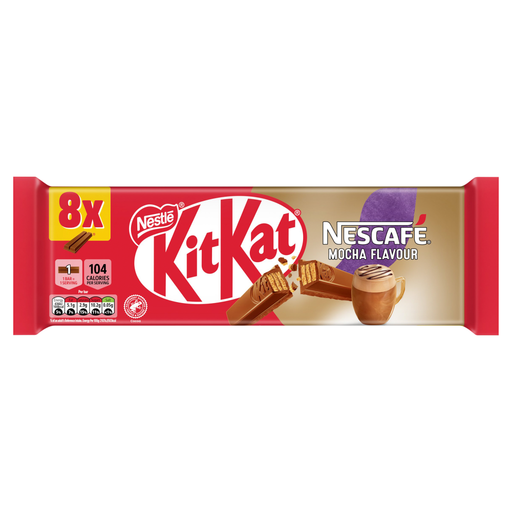
This KitKat Nescafé Mocha Coffee multipack is a conventional chocolate-bar option for a tea break, not a choice to rely on when sugar-free is essential. Check the current pack’s nutrition and allergen information for this specific variant.
 No image available
The 2-finger bars provide individually sized portions for a tea break if sugar-free chocolate is not required. The pack contains 8 x 20.7g bars; check its current label for sugars per bar and allergen information before choosing this variant.
For foods, the sugar-free claim threshold in the legislation.gov.uk annex to Regulation (EC) No 1924/2006 is no more than 0.5 g sugars per 100 g. Check the sugars figure on the current pack rather than judging by the front-of-pack description alone.
No. N!CK’S describes its Dark Chocolate as no added sugar but lists 1.7 g sugars per 100 g, above the 0.5 g-per-100-g sugar-free threshold. Compare the claim with the nutrition panel for the exact bar.
No. The claim does not describe all of a bar’s carbohydrate or energy. Diabetes UK says polyols contain both and that counting them when adjusting insulin is not straightforward; individual decisions about insulin should be discussed with a healthcare team.
Read the ingredients and precautionary allergen statement on the exact current pack. For example, N!CK’S Dark Chocolate says it may contain nuts, peanuts, milk and soya; the checked Twix Twin lists wheat, milk and soya among its allergens.