Hikers looking for less sugar
If you want a sweet snack to carry, compare the sugars on the exact pack and consider where you will store it during the walk. A product name or dietary label is not a substitute for its nutrition information.


If you need a snack to carry through a hike, choose a dry-stored option whose sugar claim and nutrition label meet your needs rather than packing a frozen ice cream cone. A cone is better suited to a stop where you can buy it frozen and eat it promptly; vegan or gluten-free labelling alone does not establish that it is sugar-free.
The deciding question is whether you want a frozen treat at a stop or food that must travel in your rucksack.
If you want a sweet snack to carry, compare the sugars on the exact pack and consider where you will store it during the walk. A product name or dietary label is not a substitute for its nutrition information.
A snack packed for the trail needs to remain usable until you eat it. University College London Hospitals NHS Foundation Trust notes that a mixture of carbohydrate and protein can help fuel muscles during a long hike, so sugar content is not the only consideration for an all-day walk.
Vegan, gluten-free and sugar-free describe different characteristics. If ingredients or allergens matter to you, check the exact product label; GOV.UK identifies allergen and free-from information as part of food labelling.
Decide where you will eat the snack first. Then compare the sugar claim, portion information and ingredients on the particular product you intend to buy.
Choose it when: The snack must travel in your pocket or rucksack without frozen storage.
Trade-off: It will not give you the experience of eating an ice cream cone; check its sugar claim and portion rather than assuming every dry-stored snack meets your goal.
Choose it when: You can buy the cone frozen and eat it promptly during or after the walk.
Trade-off: A frozen cone depends on suitable storage and handling, so it is a poor substitute for food you need to carry along the trail.
| Priority | What to check | Your needs |
|---|---|---|
| Storage and carrying | Check the storage instructions and whether you can meet them until eating. Consider the packaging and whether the snack will be protected in a rucksack. | I need something I can carry and eat later, rather than a frozen cone that I would have to buy at a stop. |
| Sugar claim | Read the claim on the exact pack, then compare sugars per 100g and per serving where stated. Do not treat vegan, gluten-free or no-added-sugar wording as a sugar-free claim. | If sugar-free is important to me, I want the product’s own label to support that specific choice. |
| Hike duration | Look at carbohydrate per serving and the amount you plan to carry. University College London Hospitals NHS Foundation Trust says a carbohydrate-and-protein mixture can help fuel muscles on a long hike. | For an all-day walk, I want to consider what the snack provides for the activity, not choose by its sugar claim alone. |
| Ingredients and allergens | Check the current ingredients, allergen statement and any free-from claim on the exact variant. GOV.UK explains that these are distinct parts of food labelling. | I need to know whether this particular pack fits my dietary requirements, regardless of the brand or range name. |
A cone needs appropriate storage and handling. If you cannot keep it frozen until you eat it, it may melt or become damaged in your bag.
Carry a snack suited to the storage conditions of your walk, and save a cone for a stop where you can buy and eat it promptly.
Vegan and gluten-free labels do not tell you that a cone contains no sugar. Likewise, a no-added-sugar claim is not the same wording as sugar-free.
Check the exact pack’s claim, sugars per 100g, serving information, ingredients and allergens before choosing.
Sugar content does not describe everything a snack provides. University College London Hospitals NHS Foundation Trust notes that carbohydrate alongside protein can help fuel muscles during a long hike.
For an all-day walk, compare the carbohydrate and portion information on the foods you plan to carry as well as their sugar claims.
These names help distinguish cone formats and dietary labels; they are not a list of sugar-free cones.
Tesco Groceries lists Cornetto cones, including a Non Dairy Vegan Gluten Free Vanilla variant.
Magnum UK presents classic and vegan products in its frozen range.
Tesco Groceries has an ice-cream-cone category covering different brands and variants.
These bars and biscuits are alternatives to carrying a frozen cone on a hike, not ice cream cones. Compare each current pack’s sugar claim, nutrition and ingredients with the portion you intend to take.
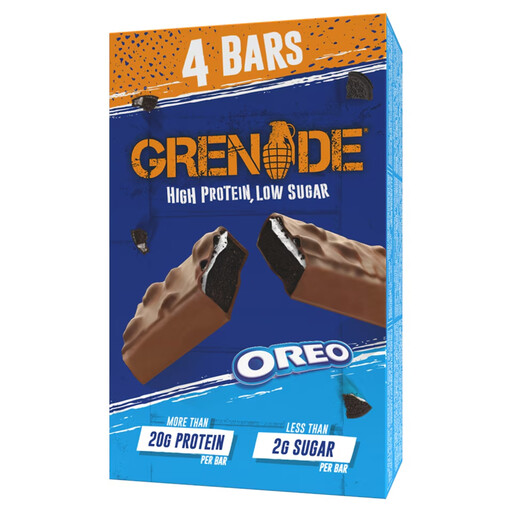 No image available
A bar to consider when you need a snack to carry rather than a frozen cone. The listed pack contains 4 x 60g; check the current label’s sugars and other nutrition per bar, along with its ingredients and allergens.
No image available
A biscuit option for carrying instead of a frozen dessert. The 400g pack is named sugar-free; check the current nutrition label for sugars per 100g and the amount you plan to pack, as well as ingredients and allergens.
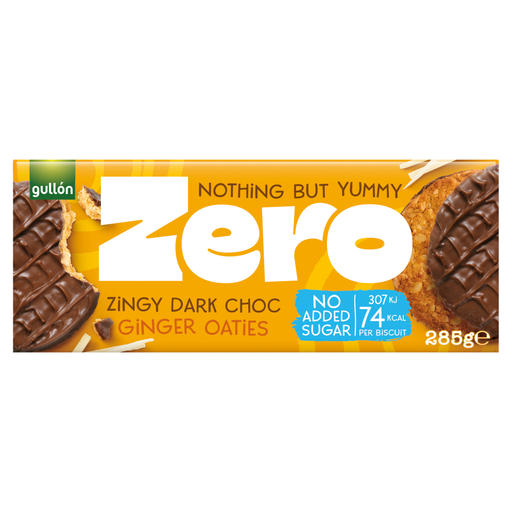 No image available
These 285g oaties are a dry-stored format to consider for a rucksack. Do not take the Zero range name to mean sugar-free: check the exact pack’s claim, sugars per 100g, intended portion and allergens.
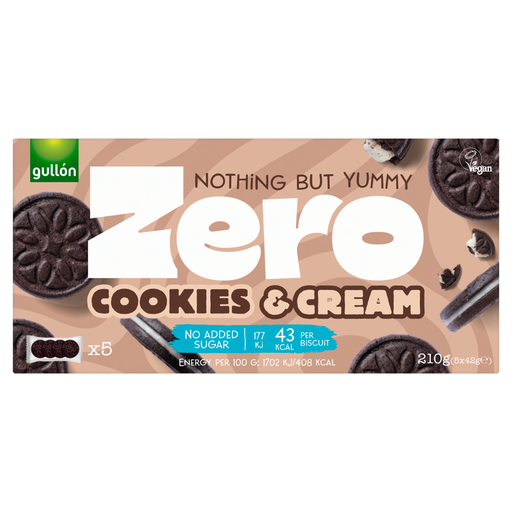 No image available
These 210g biscuits offer another format to carry instead of a cone. No added sugar is not a sugar-free claim; check the current pack’s sugars per 100g, your intended portion and the ingredient and allergen information.
A frozen cone is a poor choice if it must sit in a rucksack without suitable frozen storage: it can melt or be damaged before you eat it. For the trail, carry a snack suited to your storage conditions; buy a cone at a stop if you can eat it promptly.
No. Vegan and gluten-free identify different characteristics. Tesco Groceries lists a Cornetto Non Dairy Vegan Gluten Free Vanilla cone, but that name does not make a sugar-free claim; check the exact product’s label and nutrition information.
No, particularly if you are planning a long hike. University College London Hospitals NHS Foundation Trust notes that a mixture of carbohydrate and protein can help fuel muscles during a long hike. Compare the portion and nutrition of the snack you intend to carry, alongside any dietary requirements you follow.