The custard creams described by Tesco, Asda, Sainsbury’s and M&S contain sugars, including products labelled gluten free or milk free; none of those examined products is a sugar-free custard cream. If sugar free is essential for your afternoon tea break, consider an explicitly labelled biscuit in another format, and check its sugars, ingredients, allergens and sweetener warnings before buying.
Who is choosing a biscuit?
Shoppers who need a sugar-free biscuit
If the sugar-free claim matters more than the custard-cream format, compare explicitly labelled alternatives and read their nutrition and ingredient information. The custard creams described by Tesco, Asda, Sainsbury’s and M&S are not sugar-free options.
Shoppers seeking a free-from custard cream
If avoiding gluten, milk or wheat is the priority, look for the specific claim you need. Free-from custard creams from Tesco, Asda, Sainsbury’s and Schär retain the custard-cream format but also declare sugars, so check the two requirements separately.
Shoppers who can accept reduced sugar
A reduced-sugar biscuit is a different choice from a sugar-free one. Waitrose & Partners lists McVitie’s Rich Tea The Light One as reduced sugar, with 12.8g sugars per 100g; it is a rich tea biscuit, not a custard cream.
What should you check first?
An explicitly sugar-free biscuit
Choose this route: When a sugar-free claim is essential and a different biscuit format will do.
Trade-off: An M&S sugar-free chocolate wafer is not a custard cream; its product information also identifies wheat, soya and a warning about excessive consumption.
A conventional custard cream
Choose this route: When the sandwich-biscuit format matters and sugar free is not required.
Trade-off: Tesco, Sainsbury’s and M&S each declare sugars in their conventional custard creams; a small per-biscuit figure does not replace a per-100g comparison.
A free-from custard cream
Choose this route: When a stated gluten-free, milk-free or wheat-free claim addresses the ingredient you need to avoid.
Trade-off: Free-from does not mean sugar free: the examined Tesco, Asda, Sainsbury’s and Schär products all declare sugars.
| Priority | What to check | Your needs |
|---|
| Sugar-free claim |
Look for an explicit claim, then read “of which sugars” per 100g. Compare the same measure across packs rather than relying on a per-biscuit figure. |
If sugar free is essential to my choice, a reduced-sugar or free-from label does not answer that question. |
| Format and allergens |
Decide whether a custard cream is necessary. Check the exact gluten, milk or wheat claim and the ingredient and allergen statements on the chosen pack. |
I want a custard-cream-style biscuit, but I also need to check any ingredients I avoid separately from its sugar content. |
| Carbohydrate and sweeteners |
Read total carbohydrate as well as sugars, and check the sweetener ingredients and any pack warning. Diabetes UK advises checking total carbohydrate on the food label. |
Where carbohydrate information or sweetener tolerance matters to me, the sugars line alone is not enough to compare products. |
Common buying mistakes
-
Assuming “free from” means sugar free
Free-from claims identify particular ingredients or allergens. Tesco, Asda, Sainsbury’s and Schär list between 19.9g and 25g sugars per 100g for the free-from custard creams described in their product information.
Check the exact free-from claim you need, then read “of which sugars” separately.
-
Comparing only sugars per biscuit
Biscuits and stated portions can differ in size, so per-biscuit figures are not a like-for-like product comparison. Sugars also do not show total carbohydrate.
Compare the per-100g figures first, then check the stated portion and total carbohydrate if those details affect your choice.
-
Skipping warnings on a sugar-free alternative
The M&S Sugar Free Chocolate Wafer Squares information identifies wheat and soya and warns that excessive consumption may produce laxative effects.
Read the ingredients, allergen statement and warnings on the particular biscuit you intend to buy.
Brand and product references
Tesco
Tesco lists both conventional and free-from custard creams.
- Its Free From Custard Creams are labelled gluten free and milk free.
- Tesco Groceries declares 19.9g sugars per 100g for the free-from product and 28.3g per 100g for its conventional 400g custard creams. Neither figure describes a sugar-free biscuit.
Sainsbury's
Sainsbury’s lists conventional custard creams alongside a milk-free and gluten-free version.
- The free-from version addresses the stated milk-free and gluten-free requirements.
- Sainsbury’s declares 24.9g sugars per 100g for its free-from custard creams and 26.5g per 100g for its conventional 200g product.
Asda
Asda lists free-from custard creams for shoppers looking for the familiar biscuit format with specific ingredient exclusions.
- ASDA Groceries labels this product gluten free and milk free.
- ASDA Groceries declares 25g sugars per 100g; the free-from claim should not be read as a sugar-free claim.
Schär
Schär offers gluten-free custard creams in five 25g packs, as listed by ASDA Groceries.
- The listing also identifies the product as wheat free and lactose free.
- ASDA Groceries declares 23g sugars per 100g for these custard creams.
M&S
M&S has custard creams and, separately, a sugar-free chocolate wafer in a different biscuit format.
- Ocado lists M&S Sugar Free Chocolate Wafer Squares with 0.5g sugars per 100g.
- Marks & Spencer declares 40.2g sugars per 100g for Extra Cream Custard Creams. The sugar-free wafer is not a custard cream; check its wheat, soya and sweetener warning.
McVitie's
McVitie’s Rich Tea The Light One is a reduced-sugar tea biscuit rather than a custard cream.
- It offers a different biscuit format for shoppers who do not require sugar free.
- Waitrose & Partners lists 12.8g sugars per 100g for this product; reduced sugar does not mean sugar free.
Sugar-free biscuit alternatives on Joybuy
These are labelled zero-sugar biscuits for an afternoon tea break in formats other than custard creams: one sandwich cookie and one digestive. Check each product’s current pack information for the sugars declaration, ingredients, allergens and sweetener warnings.
 Image unavailable
Oreo Zero Sugar Sandwich Cookies, 97g
A sandwich-style cookie for a tea break, but not a custard cream. Check the pack’s sugars declaration, allergens and information about its sweeteners before choosing it.
View on Joybuy
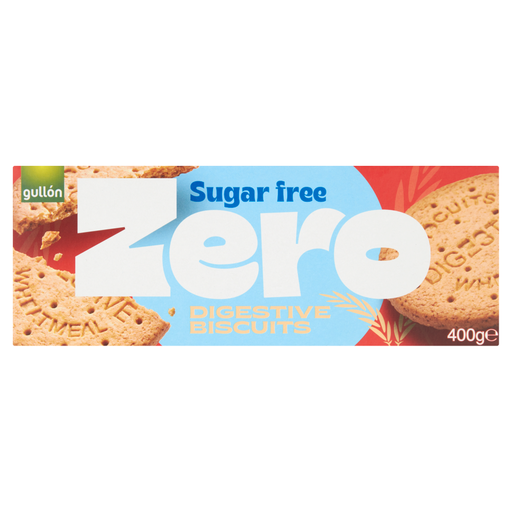 Image unavailable
Gullon Zero Sugar Free Original Digestives, 400g
A digestive biscuit for a tea break rather than a filled custard cream. Check the pack’s nutrition and ingredient information; the supplied product description warns that excessive consumption may produce a laxative effect.
View on Joybuy
Frequently asked questions
Are free-from custard creams sugar free?
No: “free from” refers to the specified ingredients or allergens, not to sugars. Tesco Groceries, ASDA Groceries and Sainsbury’s declare 19.9g, 25g and 24.9g sugars per 100g respectively for their free-from custard creams; ASDA Groceries lists 23g per 100g for Schär’s gluten-free version.
How can I check a sugar-free biscuit claim?
Look for an explicit sugar-free claim on the chosen product and read its “of which sugars” figure per 100g. Do not treat “reduced sugar” or an allergen-related “free from” claim as the same thing.
What could replace a custard cream at afternoon tea?
If a different format works for you, Ocado lists M&S Sugar Free Chocolate Wafer Squares with 0.5g sugars per 100g. They are wafers rather than custard creams; check the wheat and soya information and the warning that excessive consumption may produce laxative effects.
Does sugar free tell me the total carbohydrate content?
No. Diabetes UK advises checking total carbohydrate on the food label, not just sugars, and notes that polyols can contain carbohydrate and calories. If carbohydrate intake is part of an individual diabetes plan, discuss adjustments with your healthcare team rather than deciding from a sugar-free claim alone.


