Picnic shoppers avoiding sugar
You want an energy-drink-style option for lunch and need to distinguish a sugar-free or zero-sugar variety from other drinks in the same brand’s range. Check the exact can’s wording, ingredients and serving size.


For a picnic lunch, choose by the wording on the exact can, then by its caffeine content and serving size. Red Bull describes Sugarfree as without sugar and states 80 mg caffeine per 250 ml can; Monster Energy describes a 500 ml Ultra product as zero sugar with 150 mg caffeine, but figures for other Ultra varieties may differ. If you specifically need the words “no added sugars”, check the individual pack rather than treating “sugar-free” or “zero sugar” as the same claim.
You want an energy-drink-style option for lunch and need to distinguish a sugar-free or zero-sugar variety from other drinks in the same brand’s range. Check the exact can’s wording, ingredients and serving size.
You are choosing an individual serving and want to account for its caffeine alongside other drinks that day. Red Bull states 80 mg per 250 ml Sugarfree can; Monster Energy’s UK Ultra page states 150 mg for its featured 500 ml can. Check the figure for the particular variety you buy.
You are packing drinks for adults and children, or for someone who is pregnant, and need to keep caffeine content and pack warnings in view. A zero-sugar label does not mean a drink is caffeine-free.
Start with the exact variety’s sugar wording, then compare caffeine in the whole can and the number of servings you plan to pack.
| Priority | What to check | Your needs |
|---|---|---|
| Sugar wording | Read the claim and sugars figure on the exact pack. If “no added sugars” is essential, check for that wording and read the ingredients rather than relying on a search category. | I want to know whether this particular drink meets my requirement, not assume that “zero sugar”, “sugar-free” and “no added sugars” are interchangeable pack claims. |
| Caffeine per can | Compare the stated caffeine in a whole can, not just the can volume. Red Bull gives 80 mg for a 250 ml Sugarfree can; Monster Energy’s featured 500 ml Ultra product gives 150 mg. Other varieties need their own label checked. | For a casual lunch, I want to know how much caffeine one can adds to what I may already have consumed. |
| Serving and pack size | Check both millilitres per can and cans per pack. The Joybuy options below include 250 ml cans in four-packs and 500 ml cans in a 12-pack. | A smaller can may fit one person’s lunch; if I am packing for a group, I need to count cans without assuming everyone wants the same drink. |
| Other guests | Read caffeine warnings on each pack. The NHS advises a limit of 200 mg caffeine a day during pregnancy, counting caffeine from all sources. | I need suitable alternatives for guests who are not choosing a caffeinated energy drink, including children. |
Sugar and caffeine are separate things to check. Red Bull Sugarfree has 80 mg caffeine per 250 ml can, according to Red Bull, while Monster Energy states 150 mg for the 500 ml Ultra product on its UK page.
Read the caffeine amount for the whole can and for the exact variety you intend to serve.
A product described as “without sugar” or “zero sugar” does not, on that description alone, establish which words appear on its individual pack.
If the precise “no added sugars” wording matters to you, check the pack and ingredients before buying.
Lucozade states that Alert contains 4 g sugar per 100 ml, while Relentless describes White Citrus as a drink with sugar and sweetener. Neither should be confused with a different zero-sugar range or variety.
Match the full variety name to its nutrition panel instead of shopping by brand name alone.
High-caffeine pack warnings matter at a mixed-age picnic. The NHS also advises no more than 200 mg caffeine a day during pregnancy, from all sources.
Keep non-caffeinated drinks available and check each can’s warning and caffeine content before deciding whom it is for.
Sugarfree is a 250 ml energy-drink option for shoppers comparing a single can’s caffeine content.
The Ultra range includes zero-sugar 500 ml energy drinks, but the caffeine figure needs to be matched to the variety.
Lucozade Zero is a zero-sugar soft-drink range to consider if an energy-drink format is not essential.
Check the precise variety before considering a Relentless drink for a sugar-avoidance shortlist.
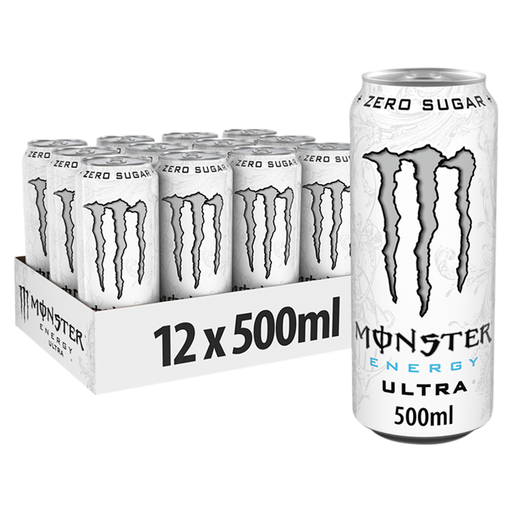
These Joybuy options cover two four-packs of 250 ml cans and a 12-pack of 500 ml Monster Ultra White cans. Compare the exact pack’s sugar wording and caffeine information before choosing drinks for your picnic.
 No image available
The four-can format lets you pack individual 250 ml drinks for lunch.
If you are choosing it for a specific “no added sugars” requirement, check that wording, the sugars figure and caffeine information on the individual pack. “No added sugars” does not mean zero sugars.
 No image available
The 250 ml cans suit a picnic where people are choosing individual servings.
Red Bull describes Sugarfree as without sugar and states 80 mg caffeine per can. Its ingredients include sucralose and acesulfame K; check the pack if you need the exact words “no added sugars”.
 No image available
The 12-can pack offers 500 ml cans for a picnic group, provided guests want that serving size.
Check Ultra White’s own sugar declaration, caffeine amount per can and warnings. Caffeine figures stated for other Monster Ultra varieties should not be assumed to apply to this one.
No. Monster Energy describes its featured 500 ml Ultra product as zero sugar with 150 mg caffeine, and Red Bull states 80 mg caffeine in a 250 ml Sugarfree can. Check caffeine on the exact variety you plan to pack.
No. If you need the precise “no added sugars” wording, read the individual pack and ingredients. A manufacturer’s description of a range as sugar-free or zero sugar does not establish the exact claim printed on every variety.
Check the caffeine warnings and choose non-caffeinated drinks for children rather than assuming a zero-sugar energy drink is suitable. In July 2026, the Department of Health and Social Care announced an intended ban on sales of high-caffeine energy drinks to under-16s in England from April 2027, subject to Parliamentary approval.
Caffeine content matters regardless of sugar content. The NHS advises no more than 200 mg caffeine a day during pregnancy, so account for caffeine from other food, drinks and medicines as well as any energy drink.