Who is this choice for?
The same sugar-free label can sit on different can sizes and caffeine amounts, so the right pack depends on how the household will use and store it.
Adults checking sugar declarations
If reducing added sugar is your reason for stocking energy drinks, compare the nutrition panel and ingredients for the exact flavour. A sugar-free or zero-sugar name does not tell you which sweeteners it contains or how much caffeine is in a can.
Households with teenagers
Check age warnings before placing a multipack alongside everyday soft drinks. The Red Bull and Sainsbury’s labels reviewed advise against use by children or under-16s, respectively; a zero-sugar claim does not change those warnings.
Adults comparing caffeine per can
Can size matters when you want a repeatable portion. Sainsbury’s lists 30 mg caffeine per 100 ml for its 250 ml Gold Bolt Zero Sugar can, equivalent to 75 mg per can; Red Bull states 80 mg per 250 ml Sugarfree can, and Monster Energy states 150 mg per 500 ml Ultra can. These figures describe those products, not every variant from each brand.
What should you check before buying?
Start with the exact can’s sugar and caffeine declarations, then decide whether its warnings and pack quantity fit your pantry.
| Priority | What to check | Your needs |
|---|
| Sugar and sweeteners |
Read sugars per 100 ml and per can, the product’s exact sugar wording, and the ingredient list. Red Bull Sugarfree and Sainsbury’s Gold Bolt Zero Sugar list sucralose and acesulfame K in the cited product information. |
I want to know what is in the particular flavour I will stock, rather than choosing by the brand name or the presence of a sweetener alone. |
| Caffeine per can |
Compare mg per can alongside can size. Red Bull states 80 mg in 250 ml Sugarfree; Monster Energy states 150 mg in 500 ml Ultra. Where a label gives mg per 100 ml, use the stated can volume to work out the whole-can amount. |
A smaller can makes sense for my pantry if I want a smaller stated caffeine amount in each unopened container; a 500 ml can is a different portion choice. |
| Household access |
Read the exact product’s age, pregnancy, breastfeeding and caffeine-sensitivity warnings before stocking it. A GOV.UK announcement from July 2026 says England plans to ban sales to under-16s from April 2027 of covered drinks containing more than 150 mg caffeine per litre, including sales online. |
If children share the pantry, I need to keep high-caffeine cans separate from drinks intended for them and avoid buying a case on the assumption that zero sugar means suitable for everyone. |
| Pack quantity |
Confirm the number and size of cans in the exact listing, then check its best-before date, storage instructions and stock status when ordering. |
I would rather choose a quantity that fits my storage space and expected use than assume a larger multipack is the right household purchase. |
Brands and retailer ranges to check
These references describe particular products or listings; a brand name alone does not establish the sugar or caffeine content of another flavour.
Red Bull
Red Bull Sugarfree is a 250 ml option with 80 mg caffeine per can, according to Red Bull’s product information. Tesco lists Sugar Free multipacks in more than one quantity.
- Red Bull lists sucralose and acesulfame K for Sugarfree, so the sweeteners can be checked before choosing a pack.
- Sugarfree is not caffeine-free; read the warnings on the exact variant, including any advice concerning children and pregnancy.
Monster Energy
Monster Energy describes its 500 ml Ultra can as containing 0 g sugar and 150 mg caffeine.
- The stated 500 ml can size makes it straightforward to compare the whole-can portion with a 250 ml option.
- Its stated 150 mg per can is higher than the stated amounts for the 250 ml Red Bull Sugarfree and Sainsbury’s Gold Bolt Zero Sugar examples. Check the label for the exact Monster variant and pack.
Sainsbury's
Sainsbury’s lists Gold Bolt Zero Sugar as a six-pack of 250 ml cans and describes it as a no-added-sugar drink.
- Its listing states 30 mg caffeine per 100 ml, equivalent to 75 mg in a 250 ml can, and names sucralose and acesulfame K.
- The listing advises against use by under-16s, pregnant or breastfeeding women, people with heart disease and people sensitive to caffeine.
Relentless
Relentless needs checking flavour by flavour when no added sugar is the pantry requirement.
- Relentless publishes ingredient information for its Cherry and White Citrus variants.
- Those two variants list sugar-containing ingredients or are described as containing sugar and sweetener; neither should be treated as a no-added-sugar choice on the basis of its brand name.
Lucozade
Lucozade describes its Zero range as zero sugar and its Alert range as high caffeine. Those descriptions concern different ranges.
- The range names give shoppers a starting point for checking a particular drink’s sugar and caffeine declarations.
- Do not assume a Lucozade Zero drink has the same caffeine role as a high-caffeine Alert drink; check the exact product label.
Tesco
Tesco is a retailer reference for comparing branded multipack formats, rather than a sugar or caffeine specification for a drink.
- Tesco lists Red Bull Sugar Free and Monster Zero Sugar or Ultra products in differing pack formats.
- Check the current listing for its exact flavour, can count and availability before planning a bulk purchase.
Joybuy pantry-pack options
These Joybuy packs offer sugar-free or zero-sugar-labelled energy drinks in four-, nine-, 12- and 24-can quantities. Compare each exact variant’s can label and caffeine amount before choosing how much to stock.
 No image available
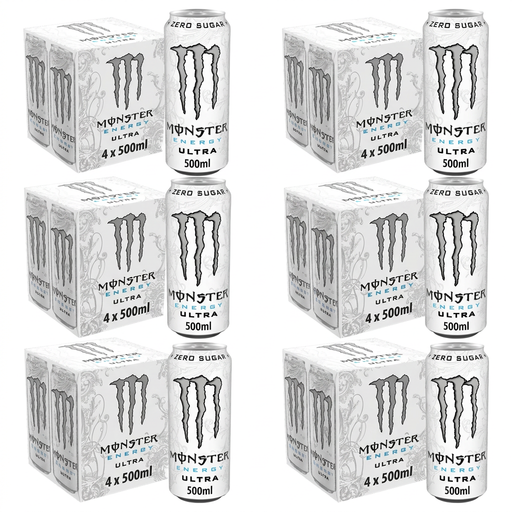
Monster Energy Ultra Zero Sugar 6 × 4 × 500 ml
The 6 × 4 format is a larger pantry quantity of 500 ml cans. Check the exact cans for their sugar declaration, caffeine per can and high-caffeine warnings before stocking them for a shared household.
View on Joybuy
 No image available
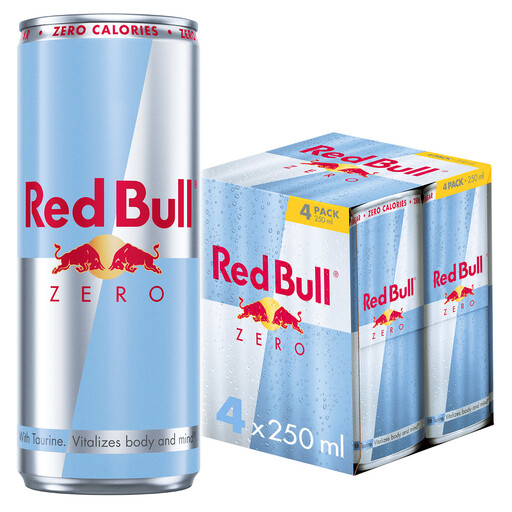
Red Bull Zero 4 × 250 ml
Four 250 ml cans make this a smaller pack to consider when deciding how many drinks to keep in the pantry. Red Bull Zero is a distinct variant from Red Bull Sugarfree; check this pack’s own caffeine amount, ingredients and warnings rather than applying Sugarfree’s figures to it.
View on Joybuy
 No image available
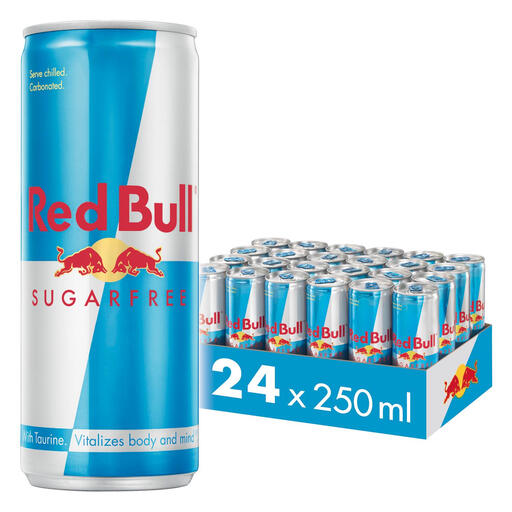
Red Bull Sugarfree 24 × 250 ml
This 24-can case is a bulk option if the household wants 250 ml Sugarfree cans. Red Bull states that each 250 ml Sugarfree can contains 80 mg caffeine and lists sucralose and acesulfame K; check the pack’s warnings and best-before date before ordering a case.
View on Joybuy
 No image available
Monster Energy Original Green Zero Sugar 9 × 500 ml
This nine-can pack uses 500 ml cans. Check the current can label for caffeine per can before choosing it for a repeatable portion, and read its sugar declaration and consumer warnings for this specific Original Green Zero Sugar variant.
View on Joybuy
 No image available
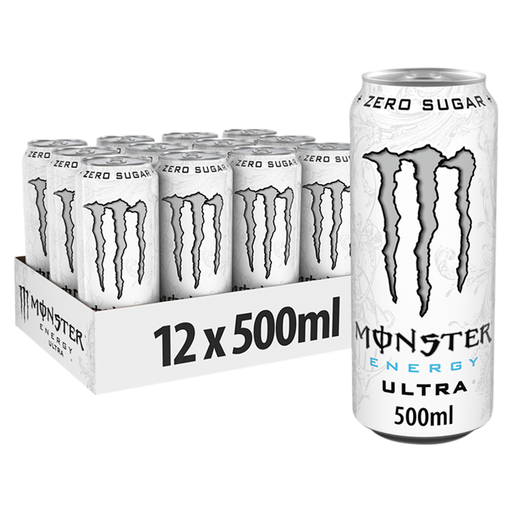
Monster Ultra White 12 × 500 ml
The 12-can case offers 500 ml Ultra White cans for pantry stocking. The Joybuy product information describes it as zero sugar; confirm caffeine per can and the consumer warnings on the current Ultra White label rather than transferring a figure from another Monster Ultra listing.
View on Joybuy
Questions about sugar, caffeine and storage
Does no added sugar mean an energy drink has no caffeine?
No. Sugar wording does not state the caffeine amount. Red Bull says its 250 ml Sugarfree can has 80 mg caffeine, Monster Energy lists 150 mg for a 500 ml Ultra can, and Sainsbury’s lists 30 mg per 100 ml for its 250 ml Gold Bolt Zero Sugar can, equivalent to 75 mg per can. Check the exact variant you are buying.
Should high-caffeine cans go in a pantry shared with under-16s?
Keep them separate from drinks intended for children and follow the warnings on each can. In a July 2026 announcement, GOV.UK said England plans to ban sales to under-16s from April 2027 of covered drinks, other than tea or coffee, containing more than 150 mg caffeine per litre; the announced scope includes shops, vending machines and websites. That future sales measure does not replace the product’s current label advice.
Does zero sugar change pregnancy or breastfeeding warnings?
No. The cited Red Bull, Monster and Sainsbury’s product labels advise against use during pregnancy or breastfeeding despite their sugar-free or zero-sugar positioning. Read the warning on the exact can rather than treating its sugar declaration as suitability advice.
How should I store an energy-drink multipack?
Follow the storage directions and best-before date on the exact pack. Sainsbury’s Gold Bolt Zero Sugar specifies a cool, dry place away from direct sunlight; check other packs individually rather than assuming their instructions or dates are identical.


