What should you check?
Start with the type of drink you want, then check the claim, ingredients and pack size on the individual product.
Standard zero-sugar cola
Choose it when: You want cola flavour and caffeine is acceptable. Coca-Cola Great Britain and Pepsi UK list caffeine in Coca-Cola Zero Sugar and Pepsi MAX respectively.
Bear in mind: The checked drinks also list sweeteners, including aspartame; their sugar claims do not remove the need to read the ingredients.
Caffeine-free zero-sugar cola
Choose it when: You want cola flavour but prefer to avoid caffeine. Coca-Cola Great Britain and Pepsi UK identify separate caffeine-free zero-sugar variants.
Bear in mind: Caffeine-free does not mean sweetener-free, so check the selected variant’s ingredients and warning.
Non-cola zero-sugar drink
Choose it when: You would rather have a fruit, lemon-lime or other non-cola flavour with your snack.
Bear in mind: Flavour and range names do not establish the sugar, caffeine or sweetener details of every variant.
| Priority |
What to check |
Your needs |
| Sugar claim |
Read the exact product wording and sugars per 100ml on the nutrition panel. If you specifically require a “no added sugar” claim, do not substitute “zero sugar” without checking the pack. |
I want the drink I buy to match the sugar claim I am looking for, not merely to sit in a sugar-free range. |
| Caffeine |
Look for an explicit caffeine-free variant and check its ingredients. Coca-Cola Great Britain and Pepsi UK distinguish these from their standard zero-sugar colas, which list caffeine. |
For an afternoon cola, I would rather choose a version explicitly labelled caffeine free. |
| Sweeteners |
Check the complete ingredient list and any phenylalanine notice. The Food Standards Agency identifies aspartame as a possible risk for people with PKU. |
If PKU or a particular sweetener matters to me, the sugar figure alone cannot settle my choice. |
| Pack size |
Compare the number of cans, volume per can and total volume. Check the best-before date and how you would store a multipack. |
Individual cans may suit my snack routine, but I need a multipack size I can use and store. |
Brand and range references
Brand families contain different variants, so use these references to identify the product label you need to check rather than assuming every drink from a brand has the same recipe.
Coca-Cola
Coca-Cola Great Britain lists both Coca-Cola Zero Sugar and a separately named Caffeine Free variant for cola shoppers.
- The standard Zero Sugar product lists 0g sugars and includes caffeine in its published specification.
- Check the precise variant: the standard drink and Caffeine Free version differ on caffeine, while the selected ingredients and phenylalanine notice still matter.
Pepsi
Pepsi UK distinguishes Pepsi MAX from Pepsi MAX Caffeine-Free.
- Pepsi UK lists zero sugar for both variants and identifies the caffeine-free version by name.
- Standard Pepsi MAX lists caffeine and aspartame. Check the exact variant’s ingredients if you need to avoid either.
Sprite
Sprite Zero Sugar is a lemon-lime option for shoppers who do not want cola flavour.
- Tesco Groceries lists an 8 × 330ml format in its UK sugar-free fizzy-drinks range.
- Check the selected pack for its current ingredients and caffeine information.
Fanta
Fanta Zero Orange and Fanta Zero Fruit Twist are fruit-flavoured options to consider instead of cola.
- The separately named flavours let shoppers look for the type of fruit flavour they prefer.
- Check each variant’s own nutrition panel and ingredients; a shared brand does not establish an identical recipe.
Dr Pepper
Dr Pepper Zero offers another flavour choice within a sugar-free fizzy-drinks range.
- Tesco Groceries lists Dr Pepper Zero in an 8 × 330ml format.
- Use the exact product label to check its current sugar claim, ingredients and pack details.
Tesco
Tesco’s own-label range includes a product named No Added Sugar Ginger Beer.
- Its 6 × 330ml cans provide another named no-added-sugar option to compare by flavour and format.
- Do not assume that every Tesco own-label fizzy drink carries the same sugar claim; read the individual pack.
Joybuy fizzy-drink options
These Joybuy options cover caffeine-free and standard cola, plus non-cola sugar-free drinks in cans. Match the exact sugar claim, ingredients and pack size to your afternoon snack.
 No image available
Diet Coke No Caffeine, 24 × 330ml
A cola option for an afternoon snack when caffeine-free wording matters. The pack contains 24 individual 330ml cans; check the current sugar claim and ingredients, including the phenylalanine notice, before choosing it.
View on Joybuy
 No image available
Pepsi MAX Caffeine-Free, 24 × 330ml
Choose this separately named variant if you want Pepsi MAX cola flavour without caffeine. It comes as 24 individual 330ml cans; check the pack’s sweeteners and phenylalanine notice if either affects your choice.
View on Joybuy
 No image available
Coca-Cola Zero Sugar, 24 × 330ml
This standard Zero Sugar cola comes in 24 individual 330ml cans. Coca-Cola Great Britain lists caffeine and aspartame for the standard variant, so choose the separately named Caffeine Free product if you need to avoid caffeine.
View on Joybuy
 No image available
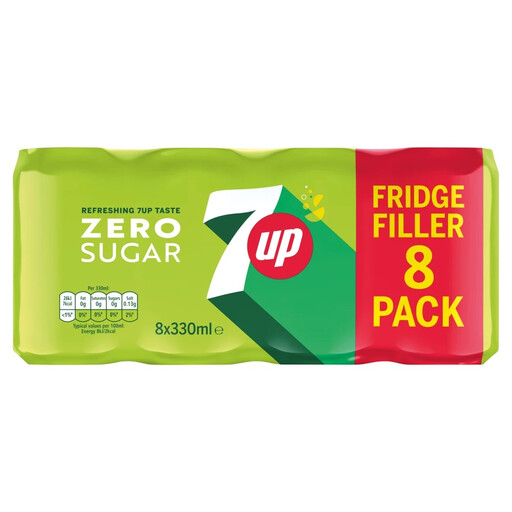
7UP Zero, 8 × 330ml
A non-cola option in an eight-pack of 330ml cans. Check the current pack if your requirement is specifically “no added sugar”, and read its ingredients and phenylalanine notice before choosing.
View on Joybuy
 No image available
Tango Apple Sugar-Free, 24 × 330ml
An apple-flavoured alternative to cola, supplied as 24 individual 330ml cans. If caffeine or a particular sweetener matters to you, check the current ingredients; also confirm the pack wording if you specifically need a “no added sugar” claim.
View on Joybuy
Questions about choosing
Does “zero sugar” automatically mean “no added sugar”?
Do not treat the phrases as interchangeable when your requirement depends on the exact claim. Check the selected drink’s current wording, nutrition panel and ingredients; Tesco Groceries, for example, lists products named “No Added Sugar” separately from products named “Zero”.
Which cola should I check if I want to avoid caffeine?
Look for a variant explicitly labelled caffeine free, such as Pepsi MAX Caffeine-Free or Coca-Cola Zero Sugar Caffeine Free. Pepsi UK and Coca-Cola Great Britain distinguish these from standard Pepsi MAX and Coca-Cola Zero Sugar, which list caffeine.
Why does a zero-sugar drink mention phenylalanine?
Some zero-sugar drinks contain aspartame and carry a notice that they contain a source of phenylalanine. The Food Standards Agency identifies aspartame as a possible risk for people with PKU, making the ingredient list and warning important checks on the exact product.
Is a zero-sugar drink automatically suitable for a school meal?
No: the sugar claim alone does not establish suitability for school catering. For food and drink provided to pupils in England, check the Department for Education’s current school-food standards and the full product specification; check the applicable rules separately in other UK nations.
How do I choose between individual cans and a multipack?
Check the number of cans, the volume of each one and the total amount you will need. A multipack makes sense for your routine only if you have space for it and can use it within its best-before date.


