
24/7 Customer Support

Free returns

Same-day & Next-day Delivery

Quality Guaranteed

Unlock Your Welcome Offers: FREE Delivery | Up to 80% OFF | Free 30-day JoyPlus trial
Download the APP
Reducing sugar does not necessarily mean placing every product marked “zero” or “free” into your basket. UK shoppers can easily spend more on products that contain similar calories to standard alternatives, rely heavily on sweeteners or use “no added sugar” wording that is misunderstood.
This guide explains what to check when comparing sugar-free food and drinks, including zero sugar drinks, sugar-free biscuits, calorie-free sweeteners, low-calorie soft drinks and convenient multipacks.
These terms are not interchangeable. Sugar-free products must meet a defined legal threshold for sugars, generally no more than 0.5g of sugars per 100g or 100ml when the claim is used under UK nutrition-claim rules. “No added sugar” means that sugars have not been added as an ingredient, but the product may still contain naturally occurring sugars.
For example, a snack made from fruit may contain substantial natural sugar while still having no added sugar. Always compare the “of which sugars” figure in the nutrition table rather than relying on front-of-pack wording.
Many zero sugar drinks are low in energy, but not every sugar-free food is calorie-free. Biscuits can still contain flour, oils and fats, while sweetener tablets may include carbohydrate-based bulking ingredients.
Gullon Zero Sugar Free Original Digestives, for instance, list less than 0.5g of sugar per 100g but provide 430 kcal per 100g. They may suit someone avoiding sugar while still wanting a biscuit, but they should not be treated as a low-calorie snack automatically.
Sweeteners can alter taste, texture and tolerance. Products containing polyols such as maltitol, isomalt or erythritol may carry a warning that excessive consumption may produce a laxative effect. Aspartame-containing drinks carry a source-of-phenylalanine warning, which is relevant to people with phenylketonuria.
A multipack can also encourage larger portions. Calculate the cost and nutritional value per can, biscuit serving or tablet, not just per box.
Start with three figures:
For low-calorie soft drinks, check both calories and sweeteners. 7UP Zero 330ml cans provide 0g sugar and 7 calories per can, while the listed ingredients include aspartame and acesulfame K. Coca-Cola Zero Sugar 330ml cans provide 0g sugar and approximately 1 kcal per can, but contain caffeine and a source of phenylalanine.
The nutrition panel does not tell the whole story. Read the ingredients for:
A product described as a vegan drink may still contain ingredients that some shoppers prefer to avoid, such as caffeine or particular sweeteners. Likewise, vegetarian food is not automatically suitable for vegans.
Multipacks offer convenience, but compare the unit price and your likely consumption rate. A 24-can case may work for a household or office, whereas a smaller pack can reduce storage pressure and avoid waste.
For ready-to-drink products, check whether refrigeration is required after opening. For biscuits and powdered products, look for resealable packaging and clear preparation instructions. With meal replacement shakes, confirm whether the nutrition information applies to powder alone or to the shake prepared with milk.
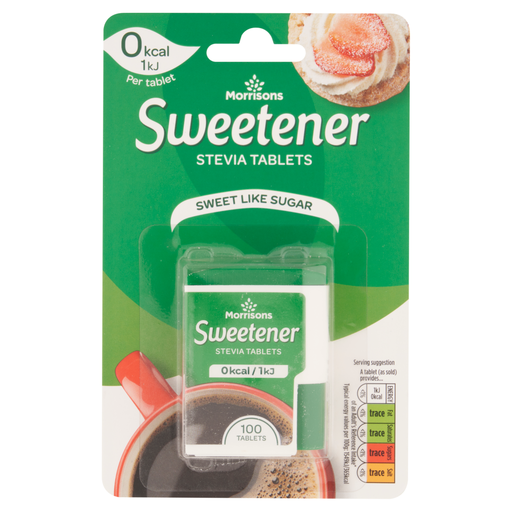
Why This Fits Their Persona: A compact 100-tablet dispenser is practical for tea and coffee drinkers who want to reduce added sugar gradually without buying a large powder tub.
The label states 0 kcal and 1kJ per tablet, while the ingredient list identifies steviol glycosides and dextrose rather than suggesting that the whole product is nutritionally identical to sugar.
100 portions, vegetarian suitability and simple ambient storage.

Why This Fits Their Persona: The 500ml ready-to-drink bottles suit shoppers who prefer brewed-tea flavour without sugar, mixing or carbonation during commutes, office days or meals.
The product information lists water, oolong tea leaves, sodium bicarbonate and vitamin C, with 0g sugar, fat and energy per 100ml.
15 portable 500ml bottles, zero sugar and no listed allergens.

Why This Fits Their Persona: A 24-can case is suited to families, shared fridges, events and regular soft-drink consumption where individual 330ml portions are convenient.
The nutrition information specifies 0g sugar and 7 calories per 330ml can, rather than leaving shoppers to estimate the value from a per-100ml panel.
Zero sugar, zero caffeine, suitable for vegetarians and vegans, with individual cans for portion control.
We have compiled a complete, real-time list of products that fully satisfy these strict selection criteria and UK safety regulations.
For sugar-free biscuits, compare fibre, fat, calories and polyols as well as sugar. Gullon Zero No Added Sugar Cookies and Cream contains 2.4g sugars and 9g fibre per 100g, while its ingredients include maltitol and soya. The product is listed as suitable for vegans, but may contain milk, so check the packaging if allergies are a concern.
For healthy snack options, a single-ingredient product can make label checking easier. J.ZAO Dried Sweet Potato Chips contain sweet potato only, but list 30.1g sugars and 328 kcal per 100g. Natural sugar still counts, even when no sugar is added.
Reduced-sugar staples such as Branston Reduced Sugar & Salt Baked Beans contain 30% less sugar and 30% less salt than the stated standard comparison, but still contain sugar and provide 173 kcal per half can. This is a reduced-sugar choice, not a sugar-free product.
Meal replacement shakes need additional care. Check calories and nutrients as prepared, and follow the stated usage instructions. SlimFast products contain milk and soya, and are not suitable for everyone. They should not be treated as a sole source of nutrition unless the label specifically says so.
Not necessarily. Some contain aspartame, caffeine or other sweeteners. Check the ingredients and warnings, particularly if you have an allergy, intolerance or a condition requiring dietary management. They should be consumed as part of a balanced diet.
No. Removing or replacing sugar does not remove flour, fat or other energy-providing ingredients. Compare calories per serving and avoid assuming that “sugar-free” means suitable for unlimited snacking.
The answer depends on pack size, tablet count and how much you use. Calculate the cost per 100 servings or per teaspoon-equivalent. Tablets can be convenient for hot drinks, while granulated options may be more suitable for baking; always check the product’s usage guidance.
Before placing an order, review the latest ingredients, allergen statement, nutrition panel, storage instructions and best-before information on the product packaging. Formulations can change, and the label supplied with the product should take priority.