Cinema-goers avoiding sugars
If sugar-free status matters more than fudge itself, check the claim and sugars declaration on the exact snack you plan to buy. A smaller serving of standard fudge does not make that product sugar-free.


If avoiding sugars is essential, choose a snack labelled sugar-free and check the nutrition panel rather than assuming a small piece of conventional fudge qualifies. Marks & Spencer lists 62.9 g sugars per 100 g for its Clotted Cream Fudge, while Waitrose & Partners lists 74.7 g per 100 g for its version; neither meets a sugar-free requirement. If you choose a different kind of sweet, check your cinema’s outside-food policy before taking it along.
If sugar-free status matters more than fudge itself, check the claim and sugars declaration on the exact snack you plan to buy. A smaller serving of standard fudge does not make that product sugar-free.
If the creamy texture is the reason for choosing fudge, compare the pack’s sugars per 100 g, serving size and allergen statement without expecting it to meet a sugar-free requirement.
If you plan to take a packaged snack into a cinema, check that chain’s policy and any rules for your particular venue before buying it.
Decide whether sugar-free status or the taste and texture of fudge matters more, then check the pack and the cinema’s entry rules.
| Priority | What to check | Your needs |
|---|---|---|
| Sugar-free status | Under the sugar-free claim condition published by legislation.gov.uk, a food making this claim must contain no more than 0.5 g sugars per 100 g or 100 ml. Check the claim against the sugars declaration on the exact pack. | I’m avoiding sugars, so a smaller portion of ordinary fudge would not meet my sugar-free requirement. |
| Ingredients and nutrition | Read the sweeteners and allergen information. Compare energy, fat and sugars per 100 g, and check what the pack calls a serving. | I want to know what is in the snack and how much a serving contains, not just whether its front label says sugar-free. |
| Fudge or another snack | Check the product type as well as its sugar claim. Marks & Spencer lists 62.9 g sugars per 100 g for Clotted Cream Fudge; Waitrose & Partners lists 74.7 g per 100 g for its Clotted Cream Fudge. | I’d choose traditional fudge for its familiar texture only if sugar-free status is not essential. Otherwise, I’d consider another kind of sweet. |
| Cinema policy | Confirm the current policy for your venue. ODEON excludes heated food, pungent food and alcohol from the snacks guests may bring; Cineworld prohibits externally purchased hot food and alcohol. | I’m bringing a snack from home and need to know whether this cinema will let me take it in. |
Portion size does not change whether a product qualifies for a sugar-free claim. Marks & Spencer’s Clotted Cream Fudge lists 62.9 g sugars per 100 g, and Waitrose & Partners’ version lists 74.7 g per 100 g.
If avoiding sugars is essential, check the claim and sugars declaration on the exact product rather than relying on the amount you intend to eat.
The NHS notes that lower- or no-calorie sweeteners do not necessarily make a food or drink healthy. A sugar-free claim alone does not describe its energy, fat, ingredients or serving size.
Read the full nutrition panel and ingredients. If the pack warns about effects from eating large amounts of its sweeteners, take that warning into account when deciding how much to bring.
ODEON allows guests to bring snacks and drinks subject to exclusions, while Cineworld states restrictions on externally purchased hot food and alcohol. A snack’s sugar-free label does not determine whether a venue permits it.
Check the current rules for the cinema you are visiting before packing an outside snack.
The listed Marks & Spencer and Waitrose clotted-cream fudges contain milk-based ingredients, and Waitrose says its product may contain peanuts and nuts.
For any product you buy, use the allergen statement on its current pack, including any precautionary warnings.
These examples distinguish conventional fudge from other sweets; a retailer’s range is not a substitute for checking an individual pack.
M&S lists a traditional Clotted Cream Fudge with an ingredients and nutrition panel.
Waitrose & Partners lists Clotted Cream Fudge with nutrition information per 100 g and per portion.
Tesco’s toffee-and-fudge listing includes conventional fudges and a separately listed sugar-free fruit toffee.
Thorntons lists traditional toffee and fudge formats, including vanilla and assorted fudge.
These Joybuy options are a biscuit and a chewing gum labelled sugar-free, not fudge. Choose by the kind of snack you want, then check its pack and your cinema’s policy.
 No image available
This is a biscuit option for someone who wants a sweet cinema snack but does not need fudge. The 97g pack is labelled Zero Sugar; check its sugars declaration and allergen information on the pack. The product listing warns that excessive consumption may have a laxative effect.
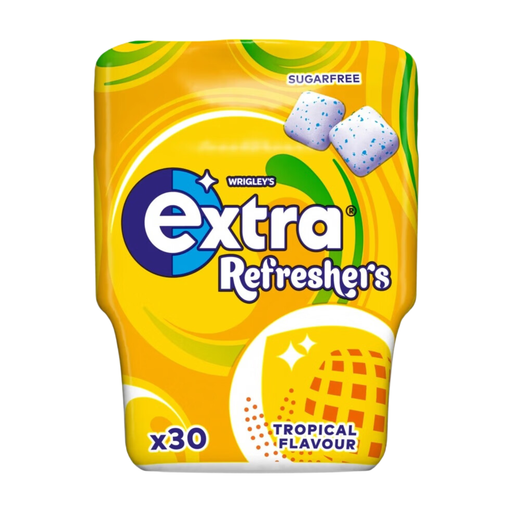 No image available
This 30-piece bottle is a chewing-gum option rather than fudge or a biscuit. It is labelled Sugarfree; check the pack’s sugars declaration, ingredients and allergen information. The product listing warns that excessive consumption may have a laxative effect.
Under the sugar-free claim condition published by legislation.gov.uk, the product must contain no more than 0.5 g sugars per 100 g or 100 ml. Check the claim and nutrition panel on the exact pack; a smaller portion or a reduced-sugar description is not the same claim.
No. The NHS says lower- or no-calorie sweeteners do not necessarily make a food or drink healthy. Compare the sugars, energy and fat declarations, serving size and ingredients rather than judging the snack by one front-of-pack claim.
Check the policy for your specific cinema before you go. ODEON says guests may bring snacks and drinks but excludes heated food, pungent food and alcohol; Cineworld prohibits externally purchased hot food and alcohol. A product being sugar-free does not override a venue’s rules.
Those rules do not establish a general ban on a visitor’s cinema snack. Department for Education guidance concerns food provided in state-funded schools in England, while Department of Health and Social Care guidance concerns promotion and placement of certain high-fat, sugar or salt products in qualifying retail settings. For taking your own snack into a cinema, check the venue’s outside-food policy.