Adults managing diabetes who want a small gum pack
A sugar-free pack may suit everyday chewing when you want to avoid conventional sugared gum. Keep it separate from any treatment you carry for a hypo.


For everyday chewing, look for an individually sold pack labelled sugar-free, then check its current nutrition panel, ingredients and warnings rather than relying on a description such as “diabetic friendly”. Sugar-free gum is not a treatment for a hypo; if you count carbohydrate or adjust insulin, consider the sweeteners and carbohydrate information with guidance from your diabetes team.
A sugar-free pack may suit everyday chewing when you want to avoid conventional sugared gum. Keep it separate from any treatment you carry for a hypo.
Check the carbohydrate information and sweeteners on the exact pack. Diabetes UK notes that polyols contain carbohydrate; ask your diabetes team how to account for them if you adjust insulin.
For after-meal use when brushing is not practical, the Oral Health Foundation describes sugar-free gum as an addition to, not a replacement for, normal oral care.
Start with the claim on the pack, then check the details that matter to your use of it. A gum bought for everyday chewing has a different role from a treatment for a hypo.
| Priority | What to check | Your needs |
|---|---|---|
| Sugars and carbohydrate | Look for a sugar-free claim on the exact pack. Read both sugars and total carbohydrate on its nutrition panel. | I want gum for everyday chewing without assuming that “sugar-free” means carbohydrate-free. |
| Polyols | Read the sweetener list for polyols and check for an excessive-consumption warning. Diabetes UK notes that polyols contain carbohydrate; the NHS warns that large amounts can have a laxative effect. | If I chew gum frequently or adjust insulin for carbohydrate, the ingredients and pack warning matter to my choice. |
| Hypo treatment | Keep sugar-free gum separate from your hypo supplies. Diabetes UK advises 15 to 20g of fast-acting carbohydrate for immediate hypo treatment; follow your own diabetes plan. | I need an appropriate fast-acting carbohydrate treatment available rather than relying on gum. |
| Aspartame | Check the ingredients and any source-of-phenylalanine warning. The NHS says aspartame is unsuitable for people with phenylketonuria (PKU). | Where PKU affects my choice, I need to know whether this particular pack contains aspartame. |
| Pack format | Check whether you are buying one bottle or one smaller pack, and how many pieces it contains. | I may want a compact pack rather than a bottle, even if both are sold individually. |
That description does not tell you the pack’s sugars, total carbohydrate or sweeteners.
Look for an explicit sugar-free claim, then read the current nutrition panel and ingredient list.
Sugar-free gum is not a substitute for the fast-acting carbohydrate advised by Diabetes UK for hypo treatment.
Keep the treatment specified in your diabetes plan separately available.
Diabetes UK notes that polyols contain carbohydrate, while the NHS warns that large amounts can have a laxative effect.
Check the exact pack’s sweeteners and warnings. If you adjust insulin for carbohydrate, seek individual guidance from your diabetes team.
The Oral Health Foundation describes sugar-free gum as an extra measure after eating, not a substitute for normal oral care.
Continue your usual brushing and cleaning routine rather than relying on gum alone.
EXTRA’s UK product information describes a 10-piece Spearmint Sugarfree pack and lists 0g sugars per 100g. Check the label of the flavour and format you actually buy.
Tesco lists an Airwaves Menthol & Eucalyptus Sugarfree 10-piece pack among its chewing-gum singles.
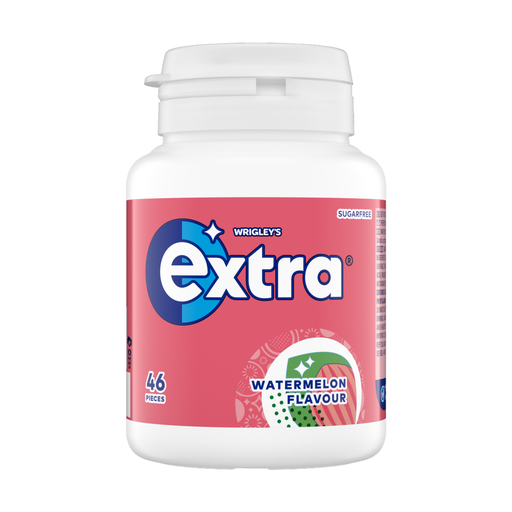
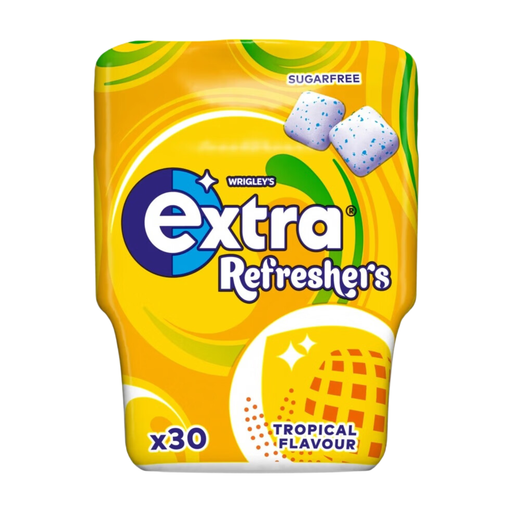
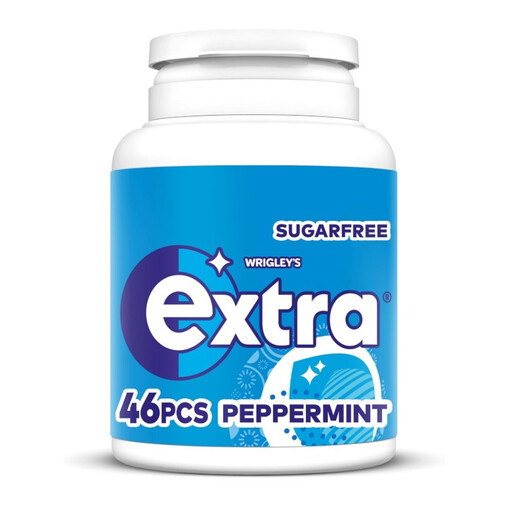
These individually sold EXTRA bottles are options for everyday chewing. They contain 30 or 46 pieces, so check the format if you meant a smaller single pack; none should be used as hypo treatment.
 No image available
A single bottle for everyday chewing rather than hypo treatment. The product information flags polyols, aspartame and soya; check the current pack’s carbohydrate information if you count carbohydrate.
 No image available
A 30-piece bottle for everyday chewing, not hypo treatment. The product information lists aspartame and a source-of-phenylalanine notice, and warns that excessive consumption may have a laxative effect. Check the current pack’s carbohydrate information if it matters to your plan.
 No image available
A 46-piece bottle for everyday chewing, not hypo treatment. Check the flavour on the pack before buying: the product title says Peppermint, while its description says Ice Mint. The ingredient information lists polyols, aspartame and soya; use the current pack for nutrition values.
No. A sugar-free label helps you identify the product, but it is not an individual diabetes recommendation. Diabetes UK notes that polyols contain carbohydrate; ask your diabetes team how to account for them if you adjust insulin.
No. Diabetes UK advises immediate treatment with 15 to 20g of fast-acting carbohydrate for a hypo. Keep an appropriate treatment separately available and follow your diabetes plan.
Check the sugar-free claim, sugars and total carbohydrate on the nutrition panel, and the sweeteners in the ingredient list. Read any warning about excessive consumption on that exact pack.
No. The Oral Health Foundation describes sugar-free gum after eating as an extra measure, not a substitute for normal oral care.
Check the ingredient list and any source-of-phenylalanine warning on the exact pack. The NHS says aspartame is unsuitable for people with phenylketonuria (PKU).