People taking a break at their desk
A small pack may suit a bag or pocket; a bottle or multipack may suit gum kept in a desk drawer. Choose the format around how often you expect to use it.


Choose a gum labelled sugar-free in a flavour and pack size that suit your tea break, then check the ingredients and warnings on the exact variant. If you want xylitol, confirm it appears on the label; if you have phenylketonuria (PKU), the NHS says aspartame is unsuitable, so check for aspartame and a phenylalanine warning before choosing.
A small pack may suit a bag or pocket; a bottle or multipack may suit gum kept in a desk drawer. Choose the format around how often you expect to use it.
A sugar-free label helps identify the type of gum you want, but it does not mean the product contains no sweeteners. Compare the ingredient lists if particular sweeteners matter to you.
Aspartame, polyols and allergens vary between products. Read the label of the exact gum before choosing, particularly if PKU or an ingredient allergy is relevant.
Start with the label and flavour, then choose a pack format that fits where you will keep the gum and how often you will use it.
| Priority | What to check | Your needs |
|---|---|---|
| Sugar-free status | Check that the exact variant is labelled sugar-free. Read its ingredient list for sweeteners rather than assuming sugar-free means sweetener-free. | I want a sweet-tasting gum without choosing a sugar-containing variant by mistake. |
| After-food use | If you want xylitol, confirm it in the ingredients. Torbay and South Devon NHS Foundation Trust suggests sugar-free gum, preferably containing xylitol, for 20 minutes after meals; follow any directions on the particular pack. | After a snack, I want to know whether the gum I picked contains xylitol and what its own directions say. |
| Ingredients and warnings | Look for aspartame, a source-of-phenylalanine warning, polyols and listed allergens. The NHS says aspartame is unsuitable for people with PKU; it also notes that large amounts of some polyols can have a laxative effect. | If an ingredient affects my choice, I need to check the exact pack rather than rely on the brand name. |
| Flavour and format | Compare mint, menthol-and-eucalyptus or fruit flavours. Check the piece count and whether the product is a small pack, bottle or multipack. | A pocket pack works for an occasional break; if I keep gum at my desk, I may prefer a larger format. |
Reviewed UK listings name sweeteners including xylitol, sorbitol and aspartame. Whether a gum suits you depends on its particular ingredients and warnings, not just the front-of-pack description.
Read the ingredient list and warnings on the exact variant, especially if you have PKU or need to avoid an ingredient.
Torbay and South Devon NHS Foundation Trust describes chewing sugar-free gum, preferably containing xylitol, for 20 minutes after meals. That is a specific use condition, not a reason to replace toothbrushing.
Keep up your usual dental care and check whether the gum you choose contains xylitol or gives its own after-food directions.
A bottle or multipack keeps more pieces to hand. Some gums containing polyols carry an excessive-consumption laxative-effect warning, which remains relevant when gum is used repeatedly.
Choose a format that fits your likely use and follow the warning on the pack.
An Airwaves 5-pack weighing 70g is not the same configuration as an Airwaves 46-piece, 64g bottle. The name alone does not establish that the contents or format match.
Compare the full variant name, piece count, weight and ingredients before substituting one listing for another.
Brand names can help narrow a flavour search, but ingredients and warnings need checking by variant.
UK supermarket listings include sugar-free Extra mint gum in small packs, bottles and multipacks.
Sainsbury's lists a sugar-free Menthol & Eucalyptus gum in a 46-piece bottle for shoppers who prefer that flavour combination.
A UK retailer lists Trident sugar-free gums in several flavours.
These sugar-free gum options span mint and fruit flavours, with small packs, bottles and a multipack to consider for a morning break or desk drawer.
 No image available
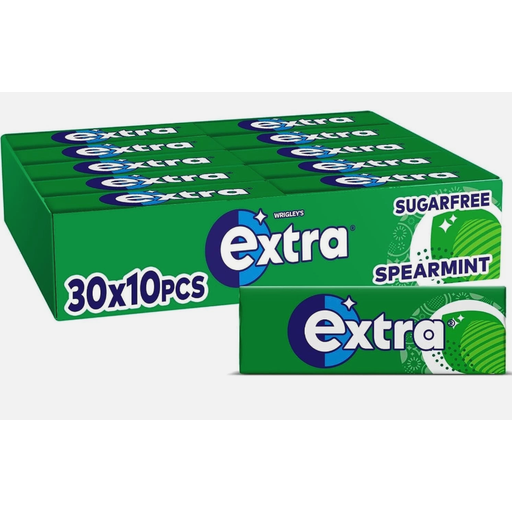
The individual packs may suit carrying gum or keeping some at a desk; the full multipack contains 300 pieces. The product description lists xylitol and directions to chew for at least 20 minutes after eating and drinking. It also carries phenylalanine and excessive-consumption laxative-effect warnings, so check the pack before use if those warnings affect your choice.
 No image available
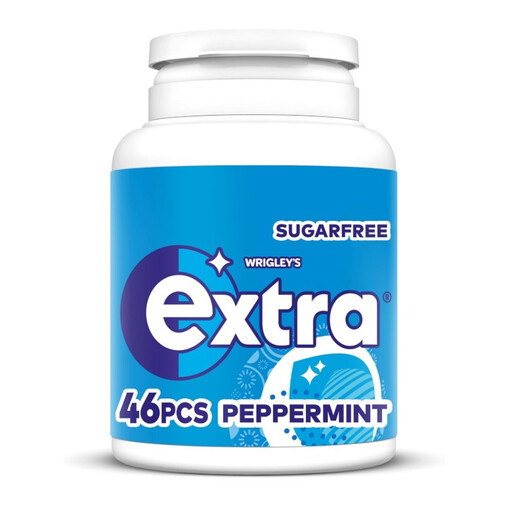
A peppermint bottle to consider if you want gum to keep in a bag or at your desk. Its listed ingredients include aspartame, polyols and soya lecithin. Check the pack's ingredients and warnings before use, particularly if PKU, soya or polyol intake affects your choice.
 No image available
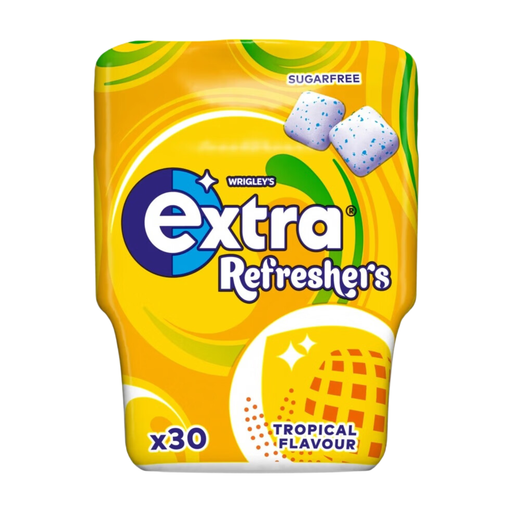
The tropical-flavour bottle offers a fruit option rather than mint for a tea break. It contains 30 pieces and weighs 67g. The product description lists xylitol and carries phenylalanine and excessive-consumption laxative-effect warnings.
 No image available
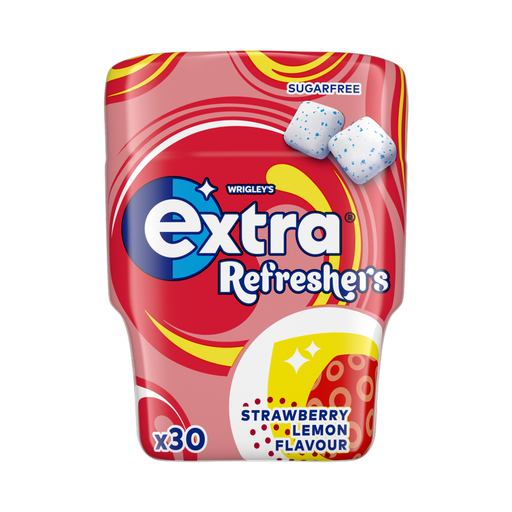
A strawberry-and-lemon option in a 30-piece, 67g pack; its individually wrapped pieces may suit carrying. The product description lists soya and possible traces of milk, alongside phenylalanine and excessive-consumption laxative-effect warnings. Check the pack if any of these affect your choice.
 No image available
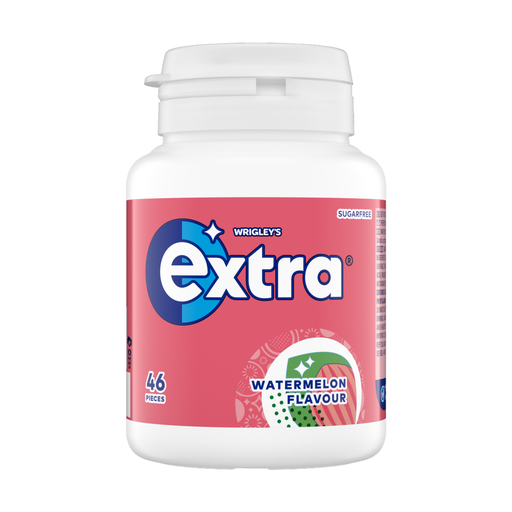
The 46-piece, 64g bottle is a fruit-flavour alternative to mint. Its listed ingredients include aspartame, polyols and soya lecithin. Check the pack's ingredients and warnings before use, particularly if PKU, soya or polyol intake is relevant.
Yes, it can. Reviewed UK sugar-free gum listings name sweeteners such as xylitol, sorbitol and aspartame. Check the ingredient list of the exact variant if you want to avoid a particular one.
No. The NHS says aspartame is unsuitable for people with phenylketonuria (PKU). Check for aspartame or E951 and a warning that the gum contains a source of phenylalanine; sugar-free status alone does not answer that question.
No. Torbay and South Devon NHS Foundation Trust suggests chewing sugar-free gum, preferably containing xylitol, for 20 minutes after meals. That advice does not make gum a replacement for toothbrushing.
Some contain polyol sweeteners. GOV.UK says foods containing more than 10% polyols must carry an excessive-consumption laxative-effect warning. Follow the warning on the gum you choose, including when buying a bottle or multipack.
Check the label on the exact pack you receive before using it. Ingredient and allergen details are variant-specific; a similarly named gum or a different pack configuration should not be assumed to have the same contents.