Choose a sugar-free gum by checking its pack size, ingredients and warnings against your revision routine: a small pack is easier to carry for one session, while a larger pack provides a supply for a desk or shared space. Sugar-free describes the gum’s sugar content, not an improvement in concentration or exam results; check the current label before repeated chewing, particularly for phenylalanine and excessive-consumption warnings.
Who might consider sugar-free gum?
Students choosing a sweet-tasting desk item without sugars
Sugar-free gum is one way to choose confectionery without sugars during revision. The NHS describes approved sweeteners as an alternative to sugar, but a sugar-free label does not make gum equivalent to a meal or say anything about study performance.
Students revising away from home
A small pack may be easier to carry to a library or campus than a bottle. UK listings from retailers including Tesco and Sainsbury’s show individual packs alongside larger formats, so check whether you are buying one session’s supply or a multipack.
People likely to chew gum repeatedly
Long sessions make the ingredients and pack warnings worth reading before purchase. Some listed gums carry phenylalanine and excessive-consumption warnings; check the exact formulation for these and for allergens such as soya if they matter to you.
What should you check before buying?
Start with the sugar-free label and a pack size that fits where you revise, then read the ingredients and warnings for that particular flavour and format.
| Priority | What to check | Your needs |
|---|
| Sugars |
Check that the exact product is labelled sugar-free, then read its ingredients and nutrition panel. Do not assume that another flavour has the same formulation. |
I want a sweet-tasting desk item without sugars, rather than a sugar-containing sweet. I am not choosing gum in place of food. |
| Pack format |
Check the number of pieces, whether you are buying a single pack or a multipack, and how the packaging closes after opening. |
For one trip to the library, I would rather carry a small pack. If I keep gum at a study desk, I may want a larger supply with packaging that suits storage. |
| Ingredients and warnings |
Read the sweeteners, allergen information and any phenylalanine or excessive-consumption warning on the current pack. GOV.UK says foods with more than 10% added polyols require a laxative-effect warning. |
I expect to chew more than one piece during a long session, so I want to know which warnings apply to this gum. If I need to avoid a particular ingredient, I need to check this flavour’s label. |
| Flavour and claims |
Choose a flavour you want to chew. Treat freshness wording or an added-nutrient claim separately from any claim about learning or exam results. |
Mint, fruit and menthol-and-eucalyptus flavours give me different options, but I do not need a promised revision effect to choose between them. |
| Oral-care routine |
Keep the choice of gum separate from brushing with fluoride toothpaste. UK oral-health guidance from the Department of Health and Social Care and NHS England identifies dietary sugars as a cause of tooth decay. |
I want to avoid adding sugars when I choose confectionery during revision, without treating chewing gum as a replacement for brushing. |
What is easy to overlook?
-
Reading “sugar-free” as an invitation to chew without limit
Some sugar-free gums use polyols and carry a warning about the laxative effect of excessive consumption. The warning still matters during a long revision session.
Read the current pack before buying and choose a pack size that fits how you plan to use it.
-
Skipping the ingredient and allergen label
The NHS says aspartame is unsuitable for people with phenylketonuria (PKU). Listed gum formulations may also contain soya-derived ingredients.
Check the exact flavour and format for phenylalanine warnings, sweeteners and allergens, including when switching between products from the same brand.
-
Treating a freshness or nutrient claim as a study claim
A flavour description or a claim about normal psychological function does not establish that chewing the gum improves concentration, learning or exam results.
Choose on the basis of flavour, format and label suitability rather than expecting a revision-performance effect.
-
Buying a large pack for a short outing
A bottle can be useful at a fixed desk, while a small individual pack takes up less space when travelling to study.
Check both the pieces per pack and the total quantity in a bundle before deciding what to carry.
Which brands provide useful references?
These examples show why format and flavour are not enough to identify a gum’s ingredients: read the label of the product you actually choose.
Extra (Mars Wrigley)
UK retailer listings include individual packs and larger bottles in several flavours.
- A smaller pack and a bottle serve different carrying and desk-storage needs.
- Sainsbury’s Extra White bottle listing names several sweeteners and carries phenylalanine and excessive-consumption warnings. Check the chosen Extra formulation rather than applying that ingredient list to every variant.
Airwaves (Mars Wrigley)
A menthol-and-eucalyptus sugar-free option listed in a 10-piece pack, with larger formats also appearing in UK retailer listings.
- The 10-piece format gives buyers a compact option if they prefer its flavour.
- Sainsbury’s listing for that pack carries phenylalanine and excessive-consumption warnings; read the current label before repeated use.
Mentos
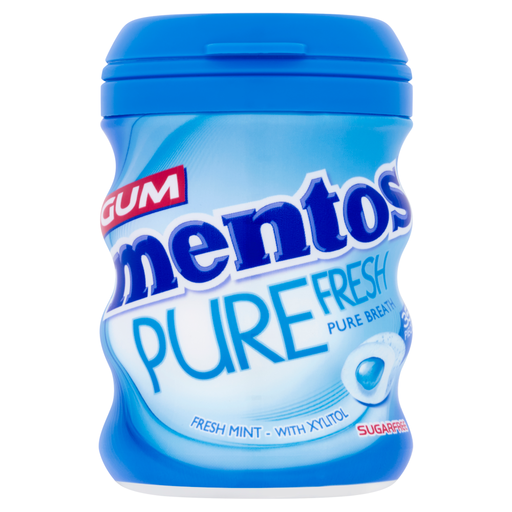
The Pure Fresh Fresh Mint product listed by Tesco is a 70g, 35-piece sugar-free format.
- Its stated piece count helps you judge whether the pack suits a regular desk supply rather than one short outing.
- Tesco lists xylitol at 32% for this Fresh Mint product and displays phenylalanine and excessive-consumption warnings. Check the exact variant’s label; those details do not describe every Mentos gum.
Joybuy gum options for revision
These sugar-free gum options include bottles, a larger mint pack, individually wrapped pieces and a bundle of smaller packs. Compare the total quantity and current label before deciding what suits a single outing or a desk supply.
 No image available
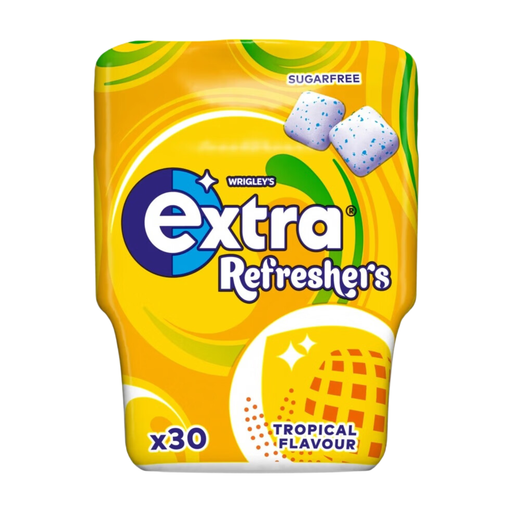
Extra Refreshers Tropical Sugarfree Gum, 30 pieces, 67g
The 30-piece bottle provides a larger supply to keep with revision materials. The listing states that it contains a source of phenylalanine and warns that excessive consumption may produce laxative effects; check the current pack before repeated use.
View on Joybuy
 No image available
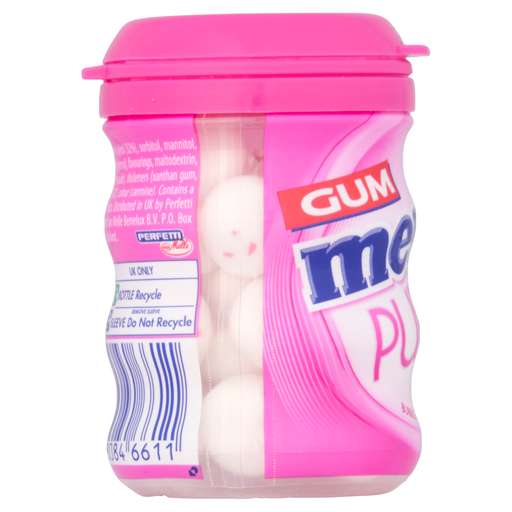
Mentos Pure Fresh Bubblefresh, 70g
This sugar-free 70g bottle is a larger-format option for a study desk. Its listing describes a liquid-filled centre and 32% xylitol, and identifies soya, a phenylalanine warning and an excessive-consumption warning. Check the current pack if these ingredients or warnings affect your choice.
View on Joybuy
 No image available
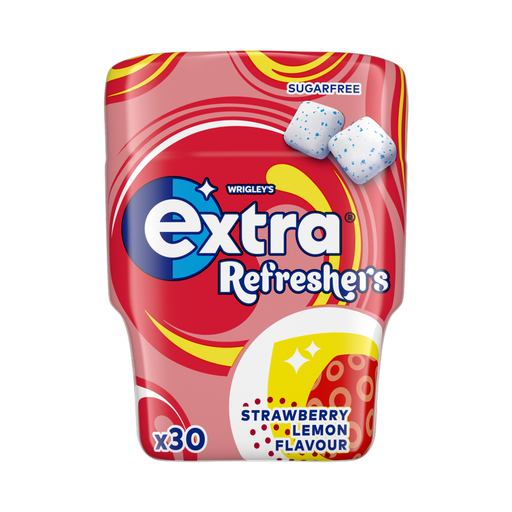
Wrigleys Extra Strawberry Lemon Refreshers, 30 pieces, 67g
The listing describes 30 individually wrapped pieces, which may be convenient to carry between revision sessions. It reports zero sugars and identifies soya, possible traces of milk and a source of phenylalanine. Check the current pack for its full warnings before buying.
View on Joybuy
 No image available
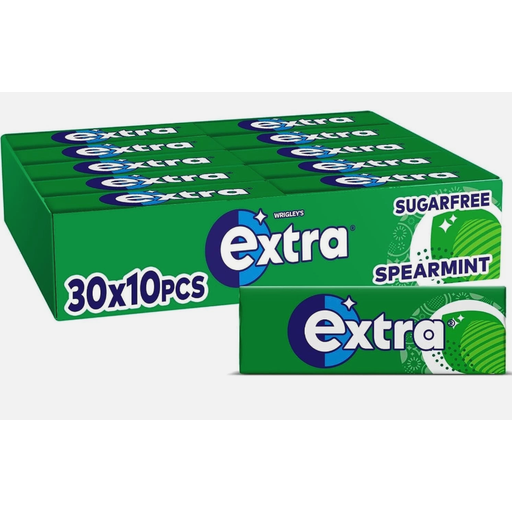
Wrigley Extra Sugar Free Spearmint, 10 pieces × 30 packs
Separate 10-piece packs could be taken to different study sessions, but the bundle contains 300 pieces in total. The listing reports zero sugars, lists soya lecithin and carries phenylalanine and excessive-consumption warnings.
View on Joybuy
 No image available
Mentos Pure Fresh Mint, 35 pieces, 70g
The 35-piece, 70g pack offers a larger sugar-free gum supply for a bag or desk. Its listing identifies 32% xylitol and soya, along with phenylalanine and excessive-consumption warnings. If you need packaging that closes after opening, check the pack before choosing it.
View on Joybuy
Frequently asked questions
Can sugar-free gum replace brushing during revision?
No. Choosing gum without sugars does not replace brushing with fluoride toothpaste. UK oral-health guidance from the Department of Health and Social Care and NHS England identifies dietary sugars as a cause of tooth decay; keep your usual oral-care routine alongside any confectionery choice.
Why does some sugar-free gum carry a laxative-effect warning?
Some formulations contain polyols. GOV.UK food-labelling guidance says foods with more than 10% added polyols require a warning that excessive consumption may cause a laxative effect. Read the warning on the particular pack rather than assuming that all sugar-free gums have the same ingredients.
Should someone with PKU check a sugar-free gum’s label?
Yes. The NHS says aspartame is unsuitable for people with phenylketonuria (PKU). Check the current pack for aspartame and a source-of-phenylalanine warning, even if you have bought another flavour from the same brand before.
Does gum promoted for freshness or psychological function improve revision?
Neither a freshness description nor a nutrient-function claim establishes that a gum improves concentration, learning or exam results. Tesco displays a niacin claim relating to normal psychological function for an Extra Plus product; that claim should not be read as a revision-performance result for the gum.


