Choose gum labelled sugar-free in a pack that fits the journey: a bottle keeps pieces together for repeated use, a multipack gives passengers separate packs, and a smaller pack suits an occasional chew. Check the exact pack for sweeteners, allergens and any phenylalanine statement, and leave choosing or opening gum until a stop if you are driving.
Who is this for?
Travellers who want gum after food or drinks
A small pack may be enough for occasional use; a bottle keeps more pieces together for passengers or stops. The NHS includes sugar-free gum among its suggestions after strong-smelling food and drinks, but gum does not replace cleaning your teeth.
Travellers dealing with a dry mouth
The NHS lists regular sips of water and chewing sugar-free gum among self-care measures for dry mouth. Persistent symptoms call for advice from a pharmacist or clinician rather than a different pack of gum.
Shoppers checking particular ingredients
Read the label for the exact flavour and pack if you need to avoid an allergen or sweetener. A Sainsbury’s listing for Extra Refreshers Bubblemint names soya lecithin and aspartame and carries a phenylalanine statement; other variants need their own checks. The NHS says aspartame is unsuitable for people with phenylketonuria (PKU).
What should you check?
Bottle
Consider it when: several pieces will be used during the trip and you want to keep them in one container.
Bear in mind: a larger supply is not a reason to chew continuously, particularly if chewing bothers your jaw.
Multipack
Consider it when: passengers want separate packs or you are packing for several travel days.
Bear in mind: check the flavour and ingredients of the precise multipack rather than assuming they match another product in the range.
Small pack
Consider it when: one passenger wants gum only occasionally or wants to try a flavour.
Bear in mind: a small pack has fewer pieces to share or use over a longer journey.
| Priority | What to check | Your needs |
|---|
| Sugar-free label |
Look for a sugar-free statement on the exact pack. Check the sugars figure per 100 g on its nutrition panel rather than relying on the flavour or brand name. |
I want gum labelled sugar-free, not just a mint-flavoured product that sounds as though it might be. |
| Pack format |
Compare the number of pieces and whether they come in one bottle, separate packs or a smaller box. Check where the pack can be kept securely in the car. |
Will one person use it occasionally, or would separate packs be easier for passengers over several days? |
| Ingredients |
Read the current sweetener list, allergen declaration and any phenylalanine statement. The NHS identifies aspartame as E951 and says it is unsuitable for people with PKU. |
I need to check the exact flavour for ingredients I avoid; a sugar-free label alone does not answer that question. |
| Use during the journey |
Keep water available if dry mouth is the concern. Choose or open gum when stopped rather than searching through a bag while driving. |
After food or drinks, I may want an occasional piece without distracting the driver. The NHS lists sugar-free gum after strong-smelling food and drinks. |
| Pack warnings |
Read any excessive-consumption warning. Tesco’s listing for Extra White Bubblemint carries a warning that excessive consumption may produce laxative effects. |
If I tend to chew piece after piece, I want to notice the warning before setting a large bottle beside me. |
| Chewing comfort |
Consider whether chewing aggravates existing jaw symptoms. Gloucestershire Hospitals NHS Foundation Trust advises that most jaw-joint problems are made worse by chewing. |
With jaw pain or difficulty opening my mouth, pack size matters less than whether chewing is comfortable at all. |
What can be overlooked?
-
Assuming sugar-free means suitable for every diet
Sugar-free gum can still contain sweeteners and allergens. Sainsbury’s lists aspartame and soya lecithin in its Extra Refreshers Bubblemint handy box; the NHS says people with PKU should avoid aspartame.
Check the ingredient and allergen information for the exact pack and flavour, including aspartame or E951 and any phenylalanine statement.
-
Missing an excessive-consumption warning
Some gum packs carry this warning; Tesco’s Extra White Bubblemint listing states that excessive consumption may produce laxative effects.
Read the warning on the pack and take account of it if you expect to chew gum repeatedly during the drive.
-
Choosing by bottle size despite jaw discomfort
Having more pieces to hand does not make chewing suitable for someone whose jaw symptoms worsen with use. Gloucestershire Hospitals NHS Foundation Trust notes that most jaw-joint problems are made worse by chewing.
If chewing causes pain or difficulty opening your mouth, stop chewing and seek clinical advice if symptoms persist.
-
Leaving disposal until you are on the road
Used gum needs somewhere to go. GOV.UK identifies littering, including chewing gum, as an environmental offence that can result in a penalty.
Keep used gum and wrappers until you can put them in a bin, without handling disposal while driving.
Brand and range references
These examples show formats and label details to compare, not a guarantee that every flavour in a range has the same ingredients.
Extra
A range to compare if you are choosing between a bottle, separate packs and a smaller box. Tesco lists sugar-free Extra bottle and multipack products.
- Tesco lists an Extra White sugar-free 46-piece bottle and an Extra Spearmint sugar-free multipack of five 10-piece packs.
- Sainsbury’s Extra Refreshers Bubblemint handy-box listing names aspartame and soya lecithin and carries a phenylalanine statement. Check each variant’s own label.
Airwaves
A range to consider if you prefer its menthol-and-eucalyptus flavour profile and want to compare pack formats.
- Tesco lists an Airwaves sugar-free multipack containing five packs.
- Check the precise product label for its sugar-free statement, sweeteners and allergens before choosing a flavour or format.
Mentos
Tesco lists a Mentos Pure Fresh Spearmint gum pack containing 35 pieces, giving shoppers another pack size to compare.
- The listed 35-piece format sits between a small handy box and the 46-piece bottle examples.
- Confirm that the exact Mentos pack is labelled sugar-free and check its ingredients before selecting it for this purpose.
Sugar-free gum options at Joybuy
These Joybuy options include separate packs and bottles for a road trip, plus a 30-piece Refreshers pack. Compare their formats and check the current label of the exact product for sugar-free wording, ingredients and warnings.
 No image available
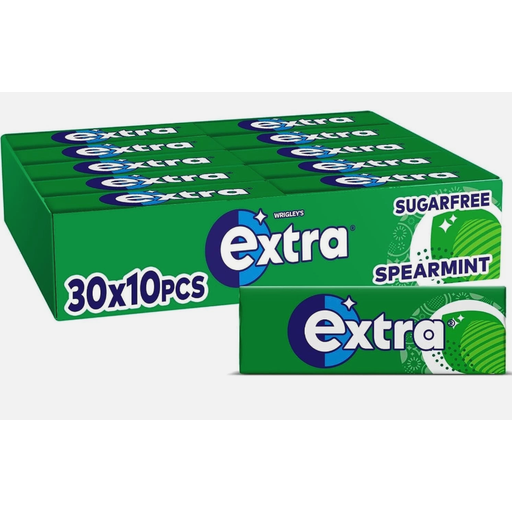
Wrigley Extra Sugar Free Spearmint, 10 pieces × 30 packs
Separate packs suit passengers who want their own gum or pieces for different travel days. The product title specifies 30 packs of 10 pieces; the listed ingredients include aspartame and soya lecithin. The NHS says aspartame is unsuitable for people with PKU. Check the current pack label before sharing with anyone who needs to avoid particular ingredients.
View at Joybuy
 No image available
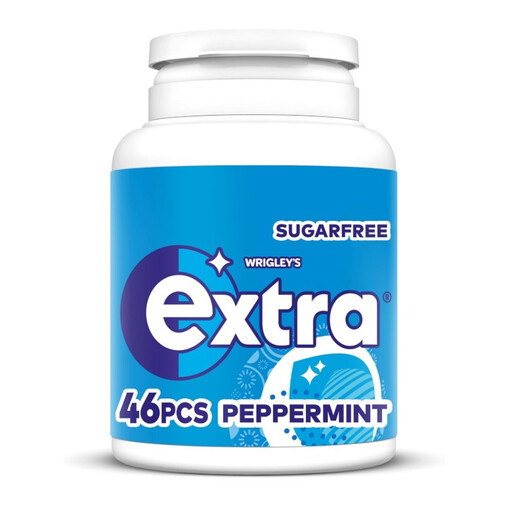
Extra Peppermint Sugar-Free Gum, 46-piece bottle
The bottle keeps 46 pieces together for passengers or for use at stops. Its listed ingredients include aspartame and soya lecithin, and the listing carries an excessive-consumption warning. Check the current label, particularly if PKU, soya or the pack warning affects your choice.
View at Joybuy
 No image available
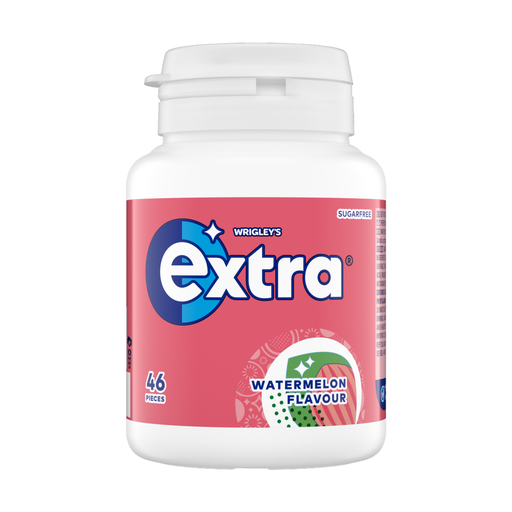
Extra Watermelon Sugarfree Gum, 46 pieces, 64 g
This 46-piece bottle is another one-container option if watermelon is the flavour you want. The listed ingredients include aspartame and soya lecithin, and the listing warns about excessive consumption. Read the current label for ingredient and warning details before packing it.
View at Joybuy
 No image available
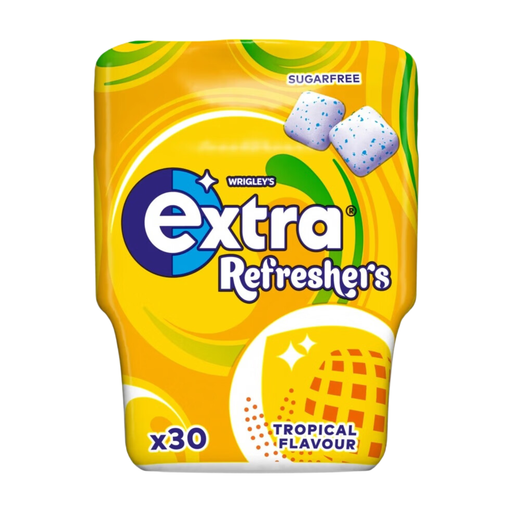
Extra Refreshers Tropical Sugarfree Gum, 30 pieces, 67 g
The 30-piece bottle offers fewer pieces than the 46-piece bottles shown here while still keeping them in one container. Its listed ingredients include aspartame and soya, and its description carries a phenylalanine statement and an excessive-consumption warning. Check the current label if any of these details affects your choice.
View at Joybuy
 No image available
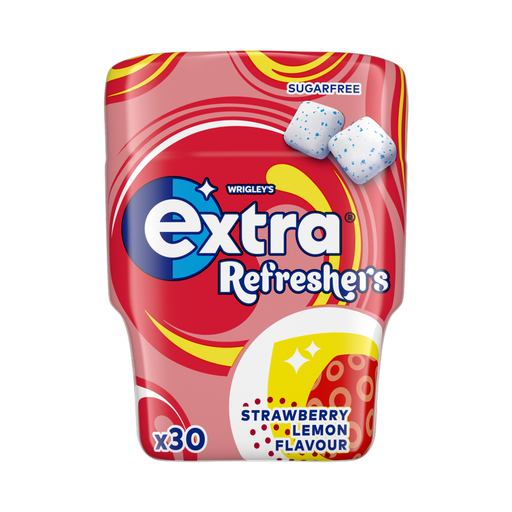
Wrigleys Extra Strawberry Lemon Refreshers, 30 pieces, 67 g
The listing describes 30 individually wrapped pieces, which may be easier to divide between passengers than gum in a shared bottle. Check the exact pack for sugar-free wording before choosing it for this purpose. Its listed ingredients include aspartame and soya lecithin, with a statement that it may contain traces of milk; its description also carries an excessive-consumption warning.
View at Joybuy
Common questions
Is every chewing gum in a familiar range sugar-free?
Check the sugar-free wording and nutrition panel on the exact pack. A brand name or flavour does not establish whether a particular gum meets your sugar-free requirement, and the ingredients can differ between variants.
What should I check if I have PKU?
Check each pack for aspartame or E951 and a phenylalanine statement. The NHS says aspartame is unsuitable for people with phenylketonuria (PKU); a Sainsbury’s Extra Refreshers Bubblemint listing is one example that names aspartame and states that it contains a source of phenylalanine.
What if my mouth feels dry on a journey?
The NHS lists regular sips of water and chewing sugar-free gum among self-care measures for dry mouth. Ask a pharmacist or clinician for advice if dryness persists or affects eating or speaking.
Should I chew gum if it hurts my jaw?
Stop chewing if it causes jaw pain or difficulty opening your mouth. Gloucestershire Hospitals NHS Foundation Trust advises that most jaw-joint problems are made worse by chewing; seek clinical advice if symptoms persist.
Where should used gum go during a road trip?
Keep it until you can put it in a bin, without dealing with disposal while driving. GOV.UK identifies littering, including chewing gum, as an environmental offence that can result in a penalty.


