Put sugar-free gum in a school packed lunch only if the school permits it and the child can chew safely. If both conditions are met, a parent can take a small pack from a multipack rather than send a whole bottle. Check the exact pack’s ingredients and warnings: sugar-free gum can still contain sweeteners, soya and a source of phenylalanine.
Who needs to check what?
School permission, safe chewing and the ingredients on the particular pack matter more than the sugar-free wording alone.
Parents packing a school lunch
Check the school’s current packed-lunch policy before buying gum for the lunchbox. If gum is permitted, choose how much the child will carry rather than sending a large pack by default. Food for Life’s packed-lunch policy template is designed for schools to tailor to their own needs.
Families considering gum for an older child
Consider gum only when the child can chew it safely. A Doncaster and Bassetlaw Teaching Hospitals NHS Foundation Trust leaflet uses a 7+ safe-chewing condition in its paediatric Type 1 diabetes advice; that condition is not a universal age rule for chewing gum.
Households checking soya or phenylalanine
Read the current label of the exact product. Tesco and Sainsbury’s listings for particular Extra and Airwaves gums identify soya and warnings about a source of phenylalanine; a brand name or sugar-free claim cannot answer that ingredient question for every variant.
What matters when choosing gum?
Start with permission and safe chewing, then compare pack format and the exact product label. A multipack offers a way to separate a parent-decided portion; a bottle can stay at home instead of going into the lunchbox.
| Priority |
What to check |
Your needs |
| School permission |
Read the school’s current packed-lunch policy or ask whether pupils may bring and chew gum. England’s school-food guidance concerns food and drink provided by state-funded schools; it does not settle an individual school’s packed-lunch policy. |
I do not want to pack something my child’s school will not allow, even if the packet says sugar-free. |
| Safe chewing |
Consider whether the child can chew gum safely in the setting where it would be used. Do not turn an age condition from advice for a particular group into a rule for every child. |
Before gum goes in the lunchbox, I need to be confident my child can handle it safely. |
| Ingredients and warnings |
Check the current ingredients, allergen statement and warnings on the exact pack. Tesco and Sainsbury’s listings for certain Extra and Airwaves products show sweeteners, soya and phenylalanine warnings; their labels also warn about excessive consumption. |
If soya or phenylalanine matters in our household, I need details for this variant, not an assumption based on the brand. |
| Pack format |
Compare a separate small pack with a bottle containing many pieces. For example, Sainsbury’s lists an Extra multipack as 5 × 10 pieces; check the count on the pack you choose. |
I would rather decide how much to send than put a whole bottle within easy reach at school. |
Common mistakes to avoid
-
Assuming sugar-free gum is allowed at school
England’s school-food regulations define chewing gum as confectionery, but the Department for Education’s school-food guidance addresses food and drink provided by state-funded schools. A child’s packed lunch also needs to meet that school’s own policy.
Read the current packed-lunch policy or ask the school before buying gum specifically to send in a lunchbox.
-
Checking only the sugar-free wording
Sugar-free does not mean free of sweeteners or other ingredients. Tesco and Sainsbury’s listings for particular Extra and Airwaves products identify soya, a source of phenylalanine and excessive-consumption warnings.
Check the full label of the exact pack, particularly when an ingredient or warning is relevant to the household.
-
Sending the whole bottle for convenience
A bottle puts more pieces in one container than a separate small pack. Labels on the cited Extra and Airwaves products warn that excessive consumption may produce laxative effects.
If the school permits gum, keep the larger pack at home and decide what portion, if any, to send.
-
Treating gum as a replacement for toothbrushing
NHS dry-mouth advice mentions sugar-free gum as one self-care measure and separately advises brushing teeth twice a day. That advice does not make gum a substitute for brushing.
Keep routine toothbrushing separate from the decision about whether gum belongs in a packed lunch.
Brand and range references
These examples show why flavour and format are only part of the choice: ingredients and warnings must be checked on the variant being bought.
Extra
UK retailer listings include sugar-free Extra gum in bottles and separate 5 × 10-piece multipacks. A small pack can be taken from a multipack if the school permits gum and a parent decides to send it.
- Tesco and Sainsbury’s list specific sugar-free variants in more than one pack format.
- The cited product labels include sweeteners, soya and warnings about phenylalanine and excessive consumption. Check the current label of the chosen variant.
Airwaves
Tesco lists an Airwaves sugar-free multipack with menthol and eucalyptus flavours, an option for those who prefer that flavour combination.
- The cited listing identifies a multipack rather than only a bottle.
- Its listed label identifies soya and carries phenylalanine and excessive-consumption warnings; flavour is not a reason to skip those checks.
Mentos
Tesco’s chewing-gum category lists Mentos Pure Fresh Mint in a 70 g format. Check the individual pack’s ingredients and warnings before considering it for a school lunch.
- The cited retailer category provides a named mint-gum option to compare by format.
- Suitability for a particular child cannot be decided from a category listing; read the exact pack label.
Joybuy gum options
These sugar-free gum options include separate packs that a parent could portion for a permitted school lunch and bottles that can be kept at home. School permission and safe chewing remain conditions for sending any gum.
 No image available
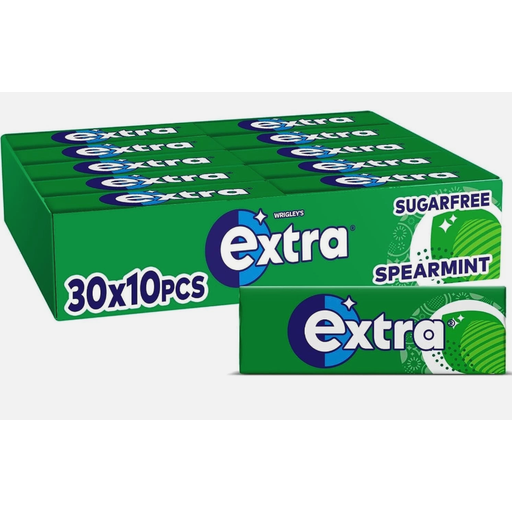
Wrigley Extra Sugar Free Spearmint Gum, 10 Pieces × 30
The separate 10-piece packs let a parent keep the outer pack at home and decide whether to send one to school. Check school permission and the current ingredients and warnings before packing it.
View on Joybuy
 No image available
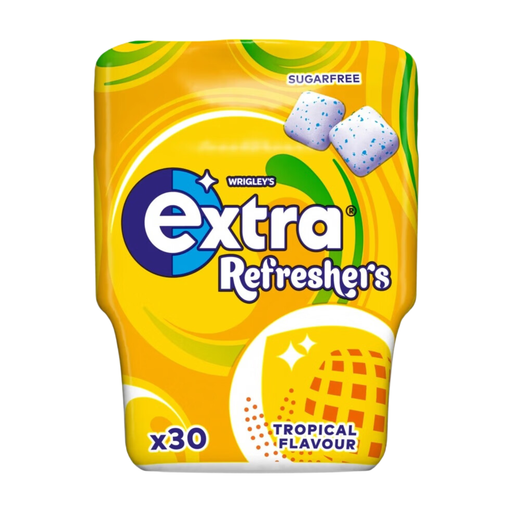
Extra Refreshers Tropical Sugarfree Gum, 30 Pieces, 67g
This bottle format can be kept at home if a parent wants to decide on a portion rather than put all 30 pieces in a lunchbox. Check the current pack label for ingredients and warnings.
View on Joybuy
 No image available
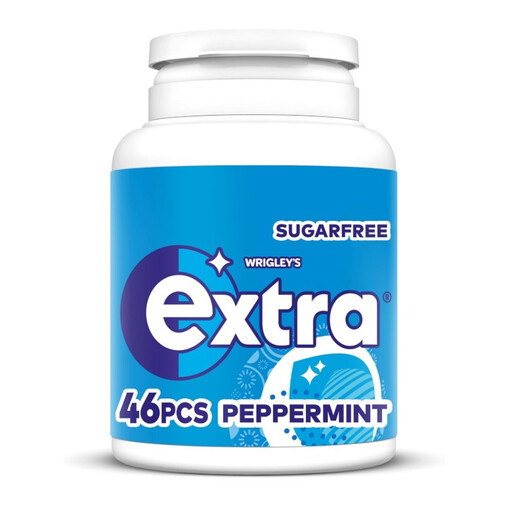
Extra Peppermint Sugar-Free Gum, 46-Piece Bottle
A 46-piece bottle is a format to keep at home rather than send whole in a school lunch. Read its current ingredients, allergen information and warnings before choosing a portion.
View on Joybuy
Questions about gum in packed lunches
Is sugar-free gum automatically allowed in a school packed lunch?
No. Check the child’s current school policy before sending it. The Department for Education’s school-food guidance concerns food and drink provided in England’s state-funded schools, while Food for Life’s packed-lunch policy template is intended for individual schools to tailor.
Does sugar-free gum contain no sweeteners?
No. Tesco and Sainsbury’s listings for particular sugar-free Extra and Airwaves gums include sweeteners in their ingredients. Read the current ingredient list for the exact variant rather than relying on the front-of-pack wording.
What should a household concerned about soya or phenylalanine check?
Check the exact pack’s ingredients, allergen statement and warnings before purchase. The cited Extra and Airwaves listings identify soya and a source of phenylalanine; the Food Standards Agency has also described aspartame, a source of phenylalanine, as a possible risk for people with phenylketonuria in a food alert.
Can sugar-free gum replace brushing teeth?
No. NHS dry-mouth advice mentions sugar-free gum as a self-care option and separately advises brushing teeth twice a day. Whether gum goes in a packed lunch is a separate question of school permission and safe chewing.


