Parents packing a school bag
Start with the individual school’s rule. If gum is allowed, check the exact packet’s ingredients and warnings before deciding whether its size makes sense for the bag.


Check the school’s chewing-gum rule before choosing a pack for a school bag. If gum is permitted, a small pack suits occasional carrying, while separate multipacks or larger packs may be more practical for use at home. Check the exact packet for its sugar-free label, ingredients, allergens and sweetener warnings; flavour and pack size do not establish suitability on their own.
The useful pack size depends on where the gum will be kept and whether it can be used at school.
Start with the individual school’s rule. If gum is allowed, check the exact packet’s ingredients and warnings before deciding whether its size makes sense for the bag.
A small, clearly labelled sugar-free pack is easier to carry for occasional use than a larger household container. Permission to chew it and a place to dispose of it still matter.
Separate packs can be put aside for later use; a larger pack keeps more pieces together. Compare the count and read the ingredient label for the particular flavour and variant you choose.
Decide first whether gum belongs in the school-day routine, then compare the exact label and the pack format. A sugar-free description does not tell you which sweeteners or allergens a particular variant contains.
| Priority | What to check | Your needs |
|---|---|---|
| School rules | Ask the school whether pupils may bring or chew gum, and when any permission applies. Plan how used gum will reach a bin. | If it cannot be chewed at school, I would choose any gum for use outside the school day rather than pack it for lessons. |
| Sugar-free label | Look for “sugar-free” or “no sugar” on the exact variant. Check its ingredients and nutrition information rather than relying on a mint flavour or the range name. | I want to identify a sugar-free option without assuming that every flavour from the same brand has the same formulation. |
| Ingredients and warnings | Check for aspartame or E951, a phenylalanine statement, declared allergens and an excessive-consumption warning. GOV.UK explains the labelling warnings associated with aspartame and foods containing more than 10% added polyols. | For someone with a relevant ingredient restriction, I need the details on the particular packet, not just its sugar-free description. |
| Pack format | Compare the piece count and whether the format is a small pack, separate multipacks or a larger container. Confirm whether a container reseals if that matters to you. | A pocket pack would suit occasional carrying; separate packs or a larger quantity may fit how gum is kept and used at home. |
| Use and disposal | Read any product-specific directions without extending them to other gums. Keep the wrapper or use a bin for the used piece. | I want a pack that is straightforward to carry and dispose of responsibly where chewing is permitted. |
Sugar-free gum can still contain sweeteners and allergens. Mentos Pure Fresh Fresh Mint retailer listings identify aspartame and soya and carry phenylalanine and excessive-consumption warnings.
Read the ingredients and warnings on the exact pack. The NHS says aspartame is not suitable for people with phenylketonuria (PKU).
A larger quantity may make sense at home without making gum suitable for the school day. Pack size does not override the school’s chewing-gum rule.
Check that rule first. If gum is permitted, choose a format that matches how it will be carried and used.
The NHS mentions sugar-free gum as an option after strong-smelling food and drinks. That use does not make gum a replacement for cleaning teeth.
Keep toothbrushing separate from the decision about whether to carry gum.
Discarded gum creates litter regardless of whether it contains sugar. Carrying a pack is less practical if there is no plan for the used piece.
Put used gum in a bin, wrapping it or keeping it in its wrapper until a bin is available.
These ranges illustrate different pack formats and label checks; a brand name alone cannot establish the ingredients of every variant.
Tesco Groceries lists Extra singles, multipacks and bottles, including Peppermint and Spearmint sugar-free multipacks of 5 × 10 pieces.
Tesco Groceries lists an Airwaves sugar-free five-pack multipack.
Retailer listings show Fresh Mint sugar-free gum in an 8-piece, 15.5 g pack and a larger 35-piece, 70 g format.
These Joybuy options include separate packs and larger quantities for different back-to-school household routines. Check the school’s rule before choosing any of them for a school bag; the pack descriptions do not establish permission to chew gum there.
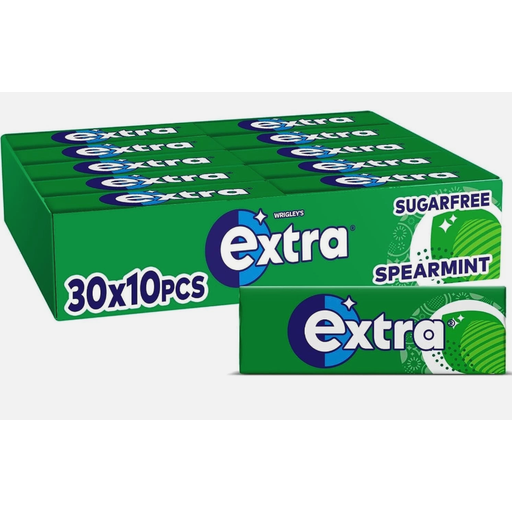 No image available
The separate 10-piece packs suit a household that wants to set aside smaller packs over time. This is a 30-pack quantity rather than a single small pack; check the exact packet’s ingredients and warnings before use.
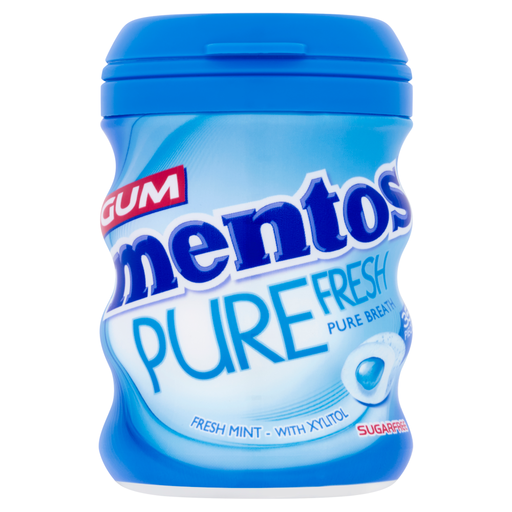 No image available
Consider this larger stated quantity for keeping gum outside school rather than choosing it as a compact pocket pack. The Fresh Mint 70 g retailer listing identifies it as sugar-free and carries ingredient warnings; check the exact pack, including its container format, before buying.
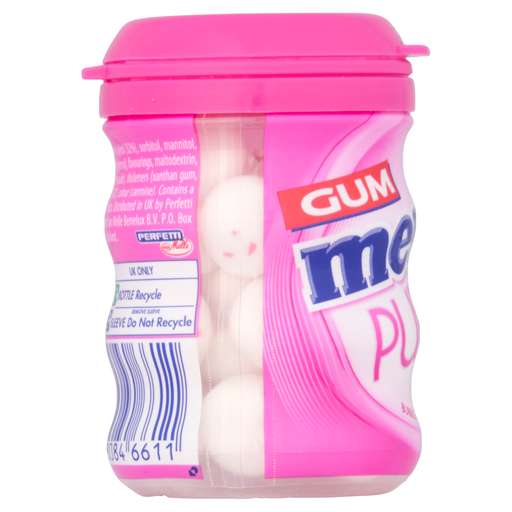 No image available
The 70 g size is an option to compare for keeping gum at home or in a bag outside lessons. Check the container, sugar-free statement, ingredients and warnings on this Bubblefresh variant rather than applying details from another Mentos flavour.
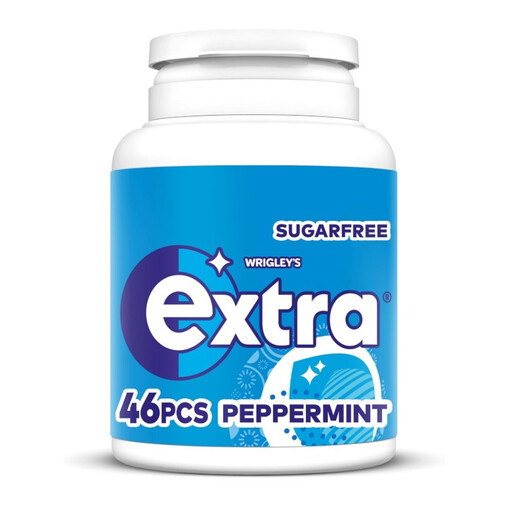 No image available
The 46-piece bottle is a larger alternative to separate small packs. Confirm the flavour on the packet before buying: this product’s title says Peppermint, while its description calls it Ice Mint. Check its ingredients and warnings as well.
 No image available
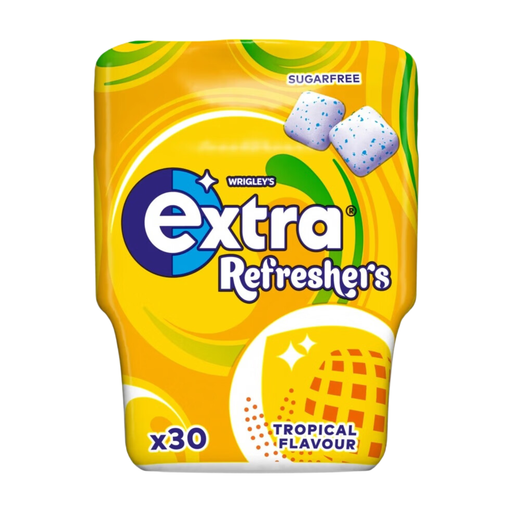
This tropical-flavoured bottle offers a 30-piece quantity for someone considering a larger pack rather than an individual pocket pack. Read this variant’s ingredients and warnings, and check school permission before putting gum in a school bag.
No. Choose gum for the circumstances in which you want to chew it, not as an alternative to cleaning teeth. The NHS mentions sugar-free gum after strong-smelling food and drinks; that advice does not turn gum into a substitute for toothbrushing.
Check the individual school’s current rule before packing it. A sugar-free label describes the product, not whether a pupil may bring or chew gum during the school day.
Check the ingredients for aspartame or E951 and read any phenylalanine statement. The NHS says aspartame is not suitable for people with phenylketonuria (PKU); do not assume that all sugar-free gums use the same sweeteners.
The warning can relate to polyols rather than sugar. GOV.UK’s food-labelling guidance specifies a laxative-effect warning for foods containing more than 10% added polyols. Read the exact packet’s ingredients and warning before use.
Put it in a bin; if one is not nearby, keep it in a wrapper until you reach one. Do not leave used gum on desks, school grounds or pavements.