A sugar-free ice lolly can be a cold treat before exercise, but the claim alone does not tell you how much carbohydrate a serving supplies. If you are training 60–90 minutes after going 2–3 hours without a meal, University College London Hospitals NHS Foundation Trust advises a snack containing carbohydrate and protein with minimal fat; do not assume a lolly replaces it.
Who is choosing a pre-workout snack?
People wanting a cold, lower-sugar option
A sugar-free ice lolly may suit someone who wants a frozen treat rather than a snack to supply carbohydrate. Check the carbohydrate per serving as well as the sugars claim if it needs to fit an exercise plan.
People training after a missed meal
If exercise is 60–90 minutes away and you have not eaten a meal for 2–3 hours, University College London Hospitals NHS Foundation Trust advises a snack with carbohydrate and protein and minimal fat. A standalone lolly should not be assumed to meet that need.
People managing blood glucose around exercise
For someone using insulin or another medicine that can lower blood glucose, a sugar-free label is not an exercise or hypo-management plan. Diabetes UK advises discussing individual exercise needs with a healthcare team.
What should you check before choosing?
Sugar-free ice lolly
Consider it when: You want a cold treat and are not relying on it to supply carbohydrate for training.
Keep in mind: A sugars claim does not establish the total carbohydrate per serving.
Standard ice lolly
Consider it when: Its stated carbohydrate per portion fits a plan you already follow.
Keep in mind: A carbohydrate-containing lolly is not automatically a complete pre-training snack.
Carbohydrate-and-protein snack
Consider it when: You are training 60–90 minutes after going 2–3 hours without a meal, the situation covered by University College London Hospitals NHS Foundation Trust’s snack guidance.
Keep in mind: Check the whole snack, including its fat content, rather than judging it by one nutrient.
| Priority |
What to check |
Your needs |
| Snack timing |
Consider when you last ate and when exercise starts. For training 60–90 minutes after going 2–3 hours without a meal, University College London Hospitals NHS Foundation Trust advises carbohydrate and protein with minimal fat. |
If I have missed a meal, I need more than a lolly unless the rest of my snack meets that carbohydrate-and-protein need. |
| Sugars claim |
The sugar-free claim definition published by legislation.gov.uk sets a limit of 0.5g sugars per 100g or 100ml. Check total carbohydrate per portion separately. |
I may want less sugar without expecting the words “sugar-free” to tell me how much carbohydrate I will eat. |
| Portion values |
Compare carbohydrate and sugars on the same per-serving basis, then check portion size and the other nutrients relevant to your snack. Retailer listings give 17g carbohydrate and 14g sugars for a Calippo Mini Cola serving, 18g and 14g for Twister Mini Tropical, and 5g and 4.2g for Mini Milk Vanilla. |
One lolly is the portion I would eat, so I want its figures rather than comparing pack descriptions or per-100ml values alone. |
| Ingredients and individual plans |
Read the current ingredients and allergen statement. If you use medication that can lower blood glucose, follow an exercise plan agreed with your healthcare team, as Diabetes UK advises. |
I need to know whether a product fits my allergen requirements or an existing blood-glucose plan before choosing it. |
Common mistakes to avoid
-
Assuming “sugar-free” means workout fuel
The claim concerns sugars per 100g or 100ml, not whether a serving supplies the carbohydrate or protein needed for a particular snack.
Check total carbohydrate per serving. If you are training 60–90 minutes after a missed meal, compare your whole snack with University College London Hospitals NHS Foundation Trust’s carbohydrate-and-protein guidance.
-
Comparing only front-of-pack descriptions
Carbohydrate and sugars differ across the Calippo Mini Cola, Twister Mini Tropical and Mini Milk Vanilla servings listed by Sainsbury’s, Asda and Tesco respectively. A flavour or calorie figure alone does not show those amounts.
Use the actual serving size to compare carbohydrate, sugars, protein and fat, and check how many servings you intend to have.
-
Overlooking allergen information
The checked Twister Mini Tropical listing states that it contains milk and may contain soya and almond; the checked Mini Milk Vanilla listing states that it contains milk and may contain peanuts, pistachio nuts and soya.
If an ingredient or precautionary warning matters to you, read the current pack rather than relying on the appearance of a frozen product.
-
Using a food label as a diabetes exercise plan
Whether a sugar-free lolly fits an exercise plan cannot be decided from its sugars claim alone. Diabetes UK advises discussing individual circumstances with a healthcare team.
Follow your agreed blood-glucose monitoring, food and medication plan when exercising, particularly if your activity changes.
Brand examples and their labels
These figures describe particular listed variants and servings, not every product sold under each brand.
Calippo
The checked Mini Cola is a water-ice option for someone considering a fruity or cola-style frozen snack rather than a dairy-based one.
- Sainsbury’s lists 17g carbohydrate and 14g sugars per Mini Cola serving, giving a portion-specific basis for comparison.
- This Mini Cola variant is not sugar-free. Its listing also says it may contain milk.
Twister
The checked Mini Tropical is a milk-and-fruit-ice option for shoppers comparing a small ice-cream lolly with water-ice products.
- Asda lists 18g carbohydrate and 14g sugars per Mini Tropical serving.
- This variant is not sugar-free. Its listing states that it contains milk and may contain soya and almond.
Mini Milk
The checked Vanilla 35ml product is a smaller, milk-based lolly to assess by its own serving values.
- Tesco lists 5g carbohydrate and 4.2g sugars per Vanilla 35ml portion.
- This variant is not sugar-free. Its listing states that it contains milk and may contain peanuts, pistachio nuts and soya.
Joybuy frozen snacks to compare
These two portioned frozen snacks have stated carbohydrate amounts for comparison. Neither is presented here as a confirmed sugar-free choice or as a complete pre-workout snack.
 No image available
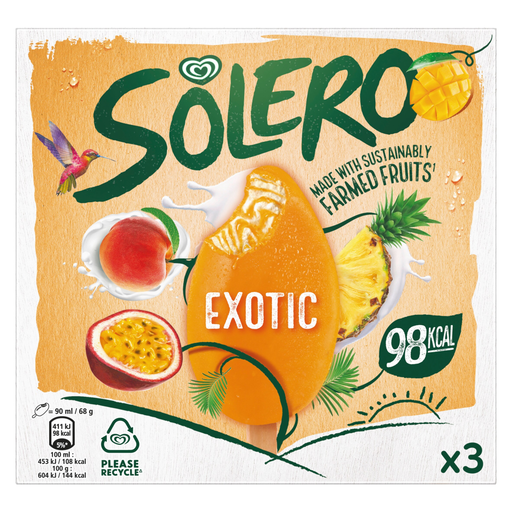
Solero Exotic Ice Cream Sticks 3 x 90ml
If you are comparing carbohydrate per lolly with an existing snack plan, the product description states 17g carbohydrate and 12g sugars per portion. This milk-containing ice-cream stick is not a sugar-free choice. Check the current pack before relying on its fat figure, and do not assume a stick alone meets the carbohydrate-and-protein guidance for training after a missed meal.
View on Joybuy
 No image available
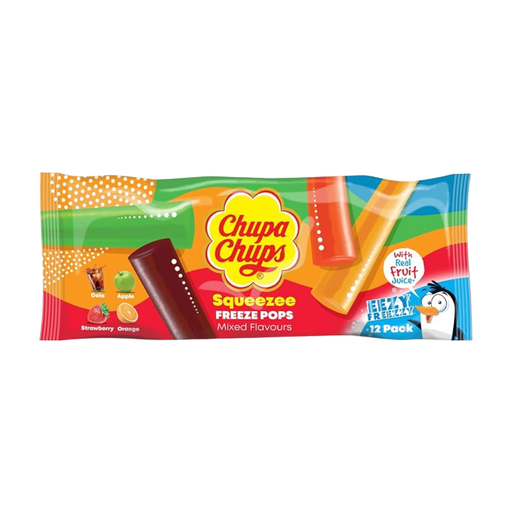
Chupa Chups Squeezee Freeze Pops Mixed Flavours 12 x 45ml
For a per-bar carbohydrate comparison, the product description states 18g carbohydrate, 0g fat and 0g protein per 45ml freeze pop. Check the current pack for its sugars figure rather than assuming a sugar-free claim. With 0g stated protein, a pop alone does not match the carbohydrate-and-protein snack described by University College London Hospitals NHS Foundation Trust for training after a missed meal.
View on Joybuy
Questions about ice lollies before exercise
What does “sugar-free” mean on an ice-lolly label?
The sugar-free claim definition published by legislation.gov.uk specifies no more than 0.5g sugars per 100g or 100ml. Check total carbohydrate per serving separately: the sugars claim does not tell you whether the lolly fits your exercise snack plan.
Can a sugar-free ice lolly be my whole pre-workout snack?
Do not assume it can if you are training 60–90 minutes after going 2–3 hours without a meal. University College London Hospitals NHS Foundation Trust advises a snack containing carbohydrate and protein with minimal fat for that situation; compare the whole snack with that guidance.
Does a standard ice lolly contain carbohydrate?
It can, but check the particular serving. Sainsbury’s lists 17g carbohydrate for a Calippo Mini Cola serving, while Asda lists 18g for Twister Mini Tropical. Neither of those variants is sugar-free, and a carbohydrate figure alone does not make either a complete pre-training snack.
Can a sugar-free lolly replace my hypo plan during exercise?
No: do not use a sugar-free claim as a substitute for an agreed hypo-treatment or exercise plan. Diabetes UK advises discussing how exercise affects your blood glucose with your healthcare team, particularly if you use insulin or another medicine that can lower it.


