For a shared book-club table, choose sugar-free fruit jellies if guests want sweets they can pick up during discussion; choose ready-to-eat jelly pots if separate portions and a spoonable dessert suit the meeting better. Check each pack’s sugar-free wording, gelling ingredients and sweetener warnings: some gummy jellies contain gelatine, and polyols can have a laxative effect in large amounts, as the NHS notes.
Who is each option for?
Hosts looking for sugar-free sweets
If sweets will sit on a shared table, check the exact pack’s sugar-free wording as well as whether guests can serve themselves comfortably. A jelly pot offers a different experience from a chewy sweet, even when both are described as sugar-free.
Hosts catering for guests who avoid gelatine
Check the gelling ingredient before choosing a single option for everyone. The Handy Candy fruit-jelly listing describes a vegan product made with agar-agar, while the De Bron Poker Fruits listing names gelatine.
Hosts concerned about sweetener tolerance
If guests may return to the sweet bowl throughout a long meeting, keep the pack available and put out modest amounts. The NHS says polyols can have a laxative effect when consumed in large amounts, and some gummy-jelly listings carry an excessive-consumption warning.
What should you check before buying?
Start with the serving format, then read the exact product label for its sugar wording, ingredients and warnings.
| Priority |
What to check |
Your needs |
| Sugar-free wording |
Look for a sugar-free claim on the exact pack and read its sugars figure per 100 g or 100 ml. Do not treat “no added sugar” or “reduced sugar” as the same wording. |
I want to put out a product labelled sugar-free, rather than rely on a familiar brand or a lighter-sounding description. |
| Dietary fit |
Check the vegan declaration and gelling agent. Handy Candy’s Sugar Jelly Fruits listing names agar-agar; the De Bron Poker Fruits listing names gelatine, and a ToffeeWorld assorted mix lists pork gelatine. |
Guests who avoid gelatine should be able to identify an option that suits them without guessing from its fruit flavour. |
| Sweeteners and portions |
Read the sweetener ingredients and any excessive-consumption warning. The NHS says polyols, including sorbitol and xylitol, can have a laxative effect in large amounts. |
I would rather set out a modest amount than leave an unrestricted bag on the table throughout the meeting. |
| Serving format |
Check whether the product is a chewy sweet, a ready-to-eat pot or a jelly that needs preparing. For pots, allow for spoons; for a shared bowl, retain the pack so guests can read it. |
During discussion, I need something guests can serve without interrupting the group. Separate pots could work if dessert is part of the break. |
What can catch a host out?
-
Assuming “sugar-free” answers every label question
A sugar-free claim does not tell you which sweeteners or gelling ingredients a product contains. Some gummy-jelly listings also warn about excessive consumption.
Read the sugars figure, ingredients and warnings separately before choosing what to serve.
-
Choosing by fruit flavour instead of gelling ingredient
Fruit-flavoured jellies can use agar-agar or gelatine. The reviewed De Bron listing names gelatine, while the Handy Candy fruit-jelly listing describes a vegan product made with agar-agar.
For guests who avoid gelatine, choose an item clearly labelled to suit them and keep its pack beside the serving dish.
-
Leaving a large gummy bag out for unrestricted sharing
According to the NHS, polyols can have a laxative effect in large amounts; the reviewed gummy-jelly listings also carry excessive-consumption warnings.
Put out a modest amount and retain the packaging. If separate servings matter more than chewy sweets, consider ready-to-eat jelly pots instead.
-
Assuming a familiar jelly sweet is sugar-free
HARIBO’s Fruitilicious nutrition panel lists 34 g sugars per 100 g, although its ingredients also include sorbitol syrup. That figure applies to Fruitilicious, not every HARIBO product.
Check the exact sweet’s claim and nutrition panel rather than using the brand name or the presence of a sweetener as a shortcut.
Which product lines offer useful comparisons?
These examples illustrate different formats and label checks; a brand name alone does not establish whether another product in its range is sugar-free.
Hartley’s
Ocado’s listing for Hartley’s 10Cal Raspberry Jelly describes a vegan, ready-to-eat four-pot jelly dessert and lists sugars below 0.5 g per 100 g and per pot.
- Separate pots give each guest a defined serving with nutrition information per pot.
- It is a spoonable dessert, not a chewy sweet for a shared bowl. Check the exact Hartley’s variant rather than applying this pot’s details to the whole range.
De Bron
The Amazon UK marketplace listing describes De Bron Poker Fruits as a 200 g gummy-jelly product with maltitol and isomalt among its sweeteners.
- Its bag format offers the chewy-sweet option for a group that wants to share gummies.
- The listing names gelatine and warns that excessive consumption may produce laxative effects. Check the delivered pack before serving.
HARIBO
HARIBO Fruitilicious is a useful reminder to check a familiar sweet’s exact nutrition panel: HARIBO lists 34 g sugars per 100 g for this product.
- The published Fruitilicious panel makes its sugars figure available for a product-specific check.
- Fruitilicious is not a substitute for a product labelled sugar-free. Its ingredients include sorbitol syrup as well as sugar and glucose syrup; this does not establish the composition of other HARIBO sweets.
Joybuy jelly option
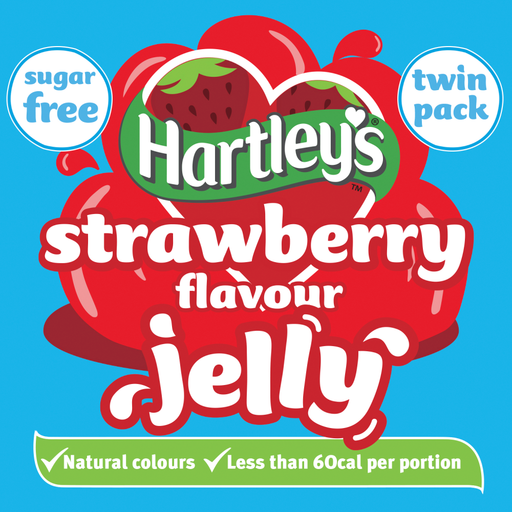
This Hartley’s option is a sugar-free strawberry jelly for a book club willing to prepare dessert before guests arrive, rather than put out ready-to-eat sweets or pots.
 No image available
Hartley’s Strawberry Jelly Sugar Free 23g
For a book-club dessert, allow time to prepare this jelly and let it set before serving. It contains pork gelatine and a source of phenylalanine, so check that its ingredients suit the guests and read the current pack before putting it out.
View on Joybuy
Questions about serving jelly sweets
How do I check whether a jelly sweet is sugar-free?
Read the exact pack’s sugar-free wording and its sugars figure per 100 g or 100 ml. “No added sugar” and “reduced sugar” are different descriptions, so do not use either as a substitute for checking the product you plan to serve.
Are sugar-free gummies suitable for an unrestricted sweet bowl?
A modest serving is the more cautious choice when gummies contain polyols. The NHS says polyols can have a laxative effect in large amounts, and the reviewed gummy-jelly listings carry excessive-consumption warnings; keep the pack available for guests to read.
Are sugar-free jelly sweets automatically vegan?
No. Handy Candy describes its Sugar Jelly Fruits as vegan and lists agar-agar, but the De Bron Poker Fruits listing names gelatine and a ToffeeWorld assorted mix lists pork gelatine. Check the exact pack’s ingredients and dietary declaration.
Should I serve jelly pots instead of chewy sweets?
Choose ready-to-eat pots if separate, spoonable servings fit the book-club break; choose chewy jellies if guests want sweets they can pick up from a shared table. Pots need spoons, while a shared gummy bag calls for ingredient and portion checks.


