After-supper dessert buyers
A chilled, spoonable jelly may suit someone seeking a sugar-free claim, provided there is time to prepare and set it.


If a sugar-free claim matters most, choose a product labelled sugar-free, but check its format: Hartley’s jelly crystals make a chilled dessert, not an instant chewy sweet. M&S lists reduced-sugar chewy sweets if texture and convenience matter more; reduced sugar is not the same claim as sugar-free, while HARIBO lists 34g sugars per 100g for its conventional Fruitilicious gums.
A chilled, spoonable jelly may suit someone seeking a sugar-free claim, provided there is time to prepare and set it.
Someone wanting a ready-to-eat gum or gummy needs to check the exact sugar claim: a reduced-sugar sweet is not necessarily sugar-free.
Gelatine sources, sweeteners and pack warnings matter when choosing a product that meets particular ingredient requirements.
Choose when: A chilled, spoonable dessert meets the need for an explicitly sugar-free product.
Bear in mind: The Hartley’s products listed by Tesco require preparation and refrigeration, rather than offering an immediate gummy snack.
Choose when: A ready-to-eat chew matters more than a sugar-free claim; M&S lists reduced-sugar wine gums and other chewy sweets.
Bear in mind: The reduced-sugar description does not establish that the chosen pack is sugar-free.
Choose when: A conventional ready-to-eat gum is the format you want, without requiring a sugar-free claim.
Bear in mind: HARIBO lists 34g sugars per 100g for Fruitilicious, so this product does not meet a sugar-free aim.
| Priority | What to check | Your needs |
|---|---|---|
| Sugar claim | Read the claim on the exact pack. Compare sugars per 100g or 100ml and per prepared serving where both are given; do not treat reduced sugar as sugar-free. | I want the product I buy to carry a sugar-free claim, rather than relying on a lighter-sounding range name. |
| Portion | Check whether nutrition figures refer to dry crystals, prepared jelly or ready-to-eat sweets, and compare them with the amount you intend to serve. | For an after-supper portion, I want figures that describe the food as I will eat it. |
| Format | Look for preparation and setting instructions. Tesco’s Hartley’s jelly crystals need refrigeration; ready-to-eat chewy sweets do not require making up as jelly. | If I want something straight after supper, preparing a jelly in advance may not suit me. |
| Ingredients | Read the gelatine source, sweeteners and pack warnings. Tesco lists pork gelatine and aspartame for Hartley’s Sugar Free Blackcurrant Jelly Crystals. | I need to check ingredients and warnings on the particular pack before choosing it. |
| Current pack | Confirm the retailer’s current listing and read the pack for its present ingredients, nutrition and preparation instructions. | I want the details for the product I can actually buy, not an older listing. |
M&S lists reduced-sugar chewy sweets, but that range description does not establish a sugar-free claim for an individual pack.
If sugar-free is your requirement, check that exact wording and the nutrition panel on the sweet you choose.
Tesco’s Hartley’s jelly-crystal listings call for preparation and refrigeration, so they will not provide a ready-to-eat chewy sweet after supper.
Prepare the jelly ahead of time if its dessert format suits you, or check the claim on a ready-to-eat alternative.
Tesco lists pork gelatine and aspartame in Hartley’s Sugar Free Blackcurrant Jelly Crystals. Its listing also carries a phenylalanine warning.
Check the chosen pack’s ingredients and warnings if gelatine source or sweetener type affects your choice.
Stock and pack details can change between viewing a listing and buying the product.
Check current availability, then use the pack you receive for ingredients, nutrition and instructions.
Tesco lists Hartley’s sugar-free jelly crystals for a prepared dessert rather than a bag of chewy sweets.
M&S lists ready-to-eat reduced-sugar options within its chewy-sweets range.
HARIBO Fruitilicious provides a conventional fruit-gum comparison, not a sugar-free substitute.
This strawberry jelly is an option to consider when a sugar-free jelly dessert suits your after-supper plans rather than a ready-to-eat chewy sweet.
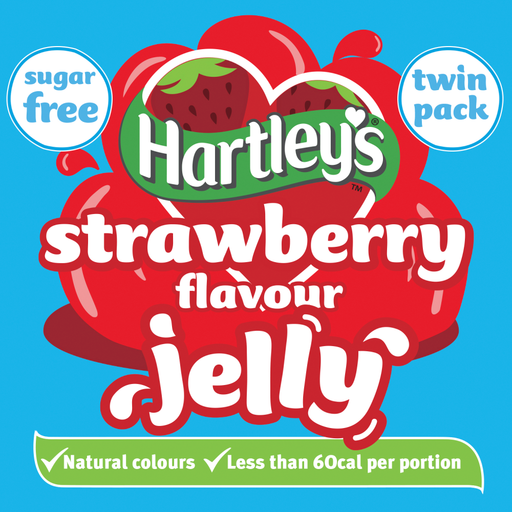 No image available
Consider this for a prepared jelly dessert rather than an immediate chewy snack. Check the current pack for preparation instructions, ingredients and warnings before making it up.
No. Tesco describes the cited Hartley’s jelly crystals as sugar-free, while M&S lists chewy sweets as reduced sugar. Check the exact pack’s claim and sugars per 100g or 100ml before deciding whether it meets your aim.
They can provide a jelly dessert, but not the same ready-to-eat chew. Tesco’s Hartley’s jelly-crystal listings require preparation and refrigeration to set, so make them ahead of time if you want them after supper.
Read the ingredients and warnings on the exact pack. Tesco lists pork gelatine and aspartame in Hartley’s Sugar Free Blackcurrant Jelly Crystals and shows a phenylalanine warning for that product.
Yes, if the selected sweet contains polyols, read its pack warnings rather than assuming all sugar-free sweets use the same ingredients. GOV.UK’s food-labelling guidance identifies an excessive-consumption laxative-effect warning for foods containing more than 10% added polyols.