Hosts open to a jelly dessert
A prepared jelly or individual pot can sit alongside a cream tea when a spoonable extra will do instead of chewy sweets.


For a cream tea, choose sugar-free jelly crystals if you can make a separate, spoonable dessert ahead of time; choose a ready-to-eat no-added-sugar pot if individual servings matter more. Neither has the chewy texture of bagged jelly sweets, and “no added sugar” is not the same claim as “sugar free”. If sweets are essential, check the exact pack rather than relying on its jelly-sweet name.
A prepared jelly or individual pot can sit alongside a cream tea when a spoonable extra will do instead of chewy sweets.
A ready-to-eat pot avoids making and setting jelly before guests arrive, while still giving each person an individual serving.
The choice changes if guests avoid pork gelatine or need to check particular sweeteners and phenylalanine labelling. Read the ingredients for the exact flavour and format.
Decide whether the cream tea needs chewy sweets or a spoonable dessert first. Then compare the exact sugar claim, ingredients and preparation instructions.
| Priority | What to check | Your needs |
|---|---|---|
| Serving format | Check whether the product is a bagged sweet, a ready-to-eat pot or crystals that make a set jelly. Crystals need preparation and time to set. | I want sweets for a sharing bowl, not a dessert that needs a spoon. If a separate jelly course works, I can choose between making it ahead and serving individual pots. |
| Sugar claim | Read the claim and sugars figure on the exact pack. Hartley’s labels its strawberry pot “no added sugar” and lists less than 0.1g sugars per pot; HARIBO lists 66g sugars per 100g for its Jelly Beans. Those figures use different serving bases. | I’m looking for a sugar-free product, so I won’t treat “no added sugar” or a fruit-flavoured jelly sweet as an equivalent claim. |
| Sweeteners | Check the ingredient list and warnings. Hartley’s strawberry crystals contain aspartame and acesulfame K, while its no-added-sugar strawberry pot contains sucralose and acesulfame K. | Particular sweeteners matter for the people I’m serving, so I need to check the chosen flavour rather than assume all jellies use the same recipe. |
| Ingredients and setting | Hartley’s strawberry crystals contain pork gelatine; its no-added-sugar strawberry pot is labelled suitable for vegetarians. Check preparation instructions before adding fresh fruit to a set jelly. | I’m serving a vegetarian guest, or I need a jelly that will set as planned. The pot and crystals call for different ingredient and preparation checks. |
Texture and fruit flavour do not establish a sugar-free claim. HARIBO lists 66g sugars per 100g for its Jelly Beans.
Check the claim, ingredients and nutrition panel on the exact sweet. Choose crystals or a pot instead only if a spoonable dessert suits the cream tea.
Jelly crystals must be prepared and left to set; they cannot be served straight from the sachet.
Make the jelly ahead if you choose crystals. For an individual serving without that preparation, consider a ready-to-eat pot.
Hartley’s sugar-free strawberry crystals contain pork gelatine and aspartame. Its no-added-sugar strawberry pot is labelled vegetarian but also contains sweeteners.
Read the ingredients for each flavour and format. A sugar claim alone does not tell you whether a product meets a guest’s ingredient requirements.
Hartley’s preparation guidance for the reviewed crystals warns that fresh pineapple, kiwi and papaya can prevent the jelly from setting.
Keep those fresh fruits out of the jelly mixture when a firm set matters, and check the instructions before planning a fruit topping.
These examples distinguish jelly desserts from conventional sweets; a brand name alone does not establish the claim or ingredients of every product it makes.
Its strawberry jelly crystals and no-added-sugar strawberry pot offer two different spoonable formats for a cream tea.
HARIBO Jelly Beans are an example of bagged confectionery for hosts who want sweets rather than a jelly dessert.
Sainsbury’s lists Rowntree’s Jelly Tots, Fruit Gums and Fruit Pastilles among its sweets, making the brand relevant when comparing bagged confectionery with jelly desserts.
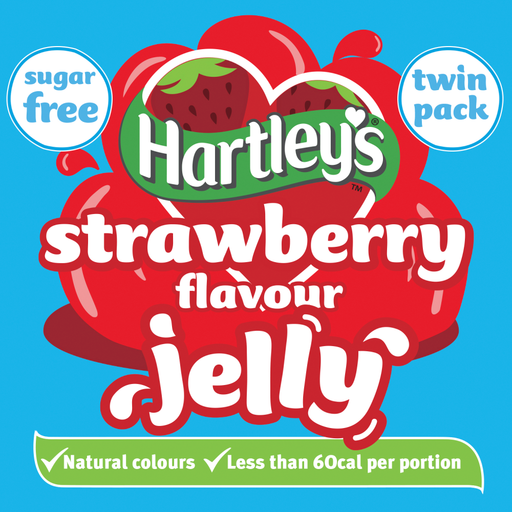
This strawberry jelly is an option when a prepared, spoonable dessert suits the cream tea instead of chewy sweets.
 No image available
Choose this for a jelly dessert you can prepare and set before the cream tea, not for ready-to-eat chewy sweets. It contains pork gelatine, aspartame and acesulfame K, and carries a notice that it contains a source of phenylalanine. Check the current pack’s prepared-serving sugars figure before buying.
No. Hartley’s sugar-free strawberry crystals make a spoonable jelly dessert, not a bagged, chewy sweet. If the cream tea calls for sweets in a sharing bowl, check that the exact confectionery product is labelled sugar free.
Yes. Hartley’s describes its no-added-sugar jelly pots as ready-to-eat individual snacks. Check the chosen pot’s ingredients and claim before serving, particularly if guests have ingredient requirements.
No. Hartley’s labels its No Added Sugar Strawberry Jelly Pot as containing naturally occurring sugars and lists less than 0.1g sugars per pot. Read the exact claim and nutrition panel rather than treating “no added sugar” as “sugar free”.
No. Hartley’s lists pork gelatine in its sugar-free strawberry crystals. Its No Added Sugar Strawberry Jelly Pot is labelled suitable for vegetarians, so check the particular format and flavour before serving it to a vegetarian guest.
Read the warnings on the exact pack. GOV.UK’s UK food-labelling guidance specifies phenylalanine wording for foods containing aspartame and a laxative-effect warning when polyols exceed the relevant 10% threshold. Hartley’s sugar-free strawberry crystals contain aspartame and carry a notice that they contain a source of phenylalanine.