Families making jelly cubes together
Sugar-free jelly crystals provide a base for moulded treats. Tesco Real Food’s recipe combines them with fruit and uses boiling water, which an adult should handle.


For moulded jelly treats made with children, choose sugar-free jelly crystals rather than ready-to-eat jelly sweets: Tesco Real Food’s jelly-cube recipe uses the crystals with fruit, boiling water and moulds. Check the exact pack before use, because sugar-free does not tell you whether it contains gelatine or aspartame; an adult should handle the boiling water.
Sugar-free jelly crystals provide a base for moulded treats. Tesco Real Food’s recipe combines them with fruit and uses boiling water, which an adult should handle.
A ready-to-eat sweet is not necessarily sugar-free. The checked Haribo Jelly Babies and Rowntree’s Jelly Tots contain sugar, as does the checked M&S Percy Pig Sugar Reduced product.
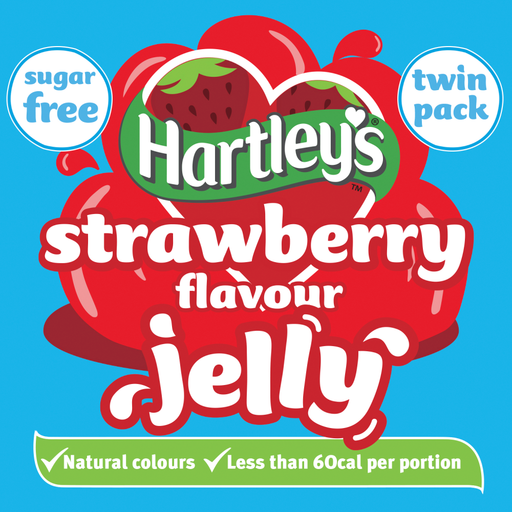
Hartley’s Strawberry Jelly Sugar Free 23g lists pork gelatine and aspartame. Check those ingredients against the needs of anyone who will eat the jelly, particularly where vegan suitability or phenylketonuria (PKU) matters.
Start with the activity: jelly crystals can be dissolved and set in moulds, while the checked ready-to-eat sweets serve a different purpose. Then compare the sugar declaration, ingredients and warnings on the exact pack.
| Priority | What to check | Your needs |
|---|---|---|
| Sugar-free requirement | Look for a sugar-free declaration, then read the ingredients and sugars figure on the nutrition panel. HARIBO UK lists 55g sugars per 100g for Jelly Babies; Nestlé Confectionery lists 59g per 100g for Rowntree’s Jelly Tots. Ocado lists 37.5g per 100g for M&S Percy Pig Sugar Reduced. | I want the finished activity to start with a sugar-free-labelled base, rather than assuming fruit flavour, vegan status or a reduced-sugar name means sugar-free. |
| Setting in moulds | Choose crystals intended to dissolve and set. Tesco Real Food’s jelly-cube recipe uses 23g sugar-free jelly crystals, boiling water, fruit, moulds and chilling; it says kiwi and pineapple can prevent the jelly from setting. | We want to pour jelly into shapes together, not just decorate with sweets that are already made. An adult can take charge of the boiling water. |
| Sweeteners | Read the ingredient list and phenylalanine statement. Hartley’s Strawberry Jelly Sugar Free 23g lists aspartame and acesulfame K; the NHS says aspartame is not suitable for people with PKU. | If someone eating the jelly has PKU, I need to avoid a product containing aspartame, even when its label says sugar-free. |
| Gelatine and age warnings | Check the gelatine source and any warning on the chosen product. The Hartley’s strawberry crystals list pork gelatine; Ocado’s M&S Percy Pig Sugar Reduced listing warns that those gummies are not suitable for children under 36 months because of a potential choking hazard. | Our household may need a product without animal gelatine, or an age-appropriate alternative to a gummy sweet for a younger child. |
Those descriptions answer different questions. Nestlé Confectionery describes its core Rowntree’s Jelly Tots range as vegan but lists 59g sugars per 100g for the checked product; Ocado lists 37.5g sugars per 100g for M&S Percy Pig Sugar Reduced.
If sugar-free is required, check the sugar declaration, ingredients and nutrition panel on the particular pack.
Tesco Real Food’s jelly cubes depend on dissolving sugar-free jelly crystals in boiling water before pouring and chilling the mixture. A bag of ready-to-eat sweets does not provide that preparation method.
Buy jelly crystals for cubes or other set shapes. Use conventional sweets as decoration only if a sugar-free result is not required.
Hartley’s Strawberry Jelly Sugar Free 23g lists pork gelatine and aspartame. Pork gelatine rules it out for a vegan household, and the NHS says aspartame is not suitable for someone with PKU.
Check the current ingredient list and phenylalanine statement before preparing jelly for anyone with those requirements.
Ocado’s listing for M&S Percy Pig Sugar Reduced says the product is not suitable for children under 36 months because of a potential choking hazard.
Follow the warning on the exact pack rather than judging suitability from its soft appearance.
These references cover different kinds of jelly product and a recipe source; a brand’s inclusion does not mean all its products have the same ingredients.
The Strawberry Jelly Sugar Free 23g crystals are a sugar-free-labelled base for chilled, moulded jelly.
The checked Jelly Babies are ready-to-eat sweets, not a sugar-free jelly-making base.
Jelly Tots offer a ready-to-eat option where the manufacturer’s vegan designation matters, but they are not sugar-free.
Percy Pig Sugar Reduced is a ready-to-eat gummy product, rather than crystals for setting in moulds.
Tesco Real Food provides a recipe route for making jelly cubes with sugar-free crystals and fruit.
This option is for making chilled jelly shapes with sugar-free-labelled crystals. Check its ingredients against your household’s needs before choosing it.
 No image available
These sugar-free-labelled crystals suit a chilled, moulded jelly activity; Tesco Real Food’s jelly-cube recipe uses sugar-free Hartley’s crystals with fruit and boiling water.
The Joybuy product information lists 0.5g sugars per 100g as prepared, plus pork gelatine, aspartame and acesulfame K. The gelatine makes this product unsuitable for vegans; the NHS says aspartame is unsuitable for people with PKU. Check the current pack, and have an adult handle the boiling water.
No. HARIBO UK reports 55g sugars per 100g for the checked Jelly Babies, while Nestlé Confectionery reports 59g per 100g for the checked Jelly Tots. Neither is a sugar-free substitute for jelly crystals.
Tesco Real Food’s recipe uses 23g sugar-free jelly crystals with boiling water and fruit, poured into moulds and chilled until set. An adult should handle the boiling water; Tesco also advises against kiwi and pineapple because they can prevent the jelly from setting.
Not if that product contains aspartame: the NHS says aspartame is unsuitable for people with PKU. Hartley’s Strawberry Jelly Sugar Free 23g lists aspartame and states that it contains a source of phenylalanine, so check the exact product’s ingredients and warning rather than relying on “sugar-free”.
No. Ocado lists 37.5g sugars per 100g for the checked M&S Percy Pig Sugar Reduced product. It is also a ready-to-eat gummy, not jelly crystals for dissolving and setting in moulds.
No. The checked Hartley’s Strawberry Jelly Sugar Free 23g product lists pork gelatine. Nestlé Confectionery describes its core Rowntree’s Jelly Tots range as vegan, but the checked Jelly Tots contain sugar and are not a sugar-free jelly-making base.