Who is choosing?
The serving format and the guest list determine which label details matter most.
Garden-party hosts reducing sugar
Decide whether guests need a sweet they can take from a bowl or whether you have space and time to serve a chilled jelly dessert. For a dessert made from crystals, check what must be added to retain its sugar-free claim.
Hosts catering for vegan or gelatine-avoiding guests
Check the exact flavour and pack rather than treating “sugar-free” as a dietary-suitability claim. Tesco lists pork gelatine in Hartley’s Sugar Free Create Your Own Jelly Crystals, while Sainsbury’s describes Simply Delish Zero Raspberry Jelly as gelatine-free.
School-event organisers in England
Check whether the event’s food is covered by England’s school-food requirements before choosing confectionery. The Requirements for School Food Regulations 2014 define non-chocolate confectionery as confectionery whether or not it contains sugar; confirm the applicable serving rules with the school.
What should you check?
Settle the serving format first, then read the label and, for crystals, the preparation instructions for the product you will serve.
Ready-to-eat sweets
Choose when: Guests need a handheld sweet rather than a dessert served in bowls.
Allow for: Planet of Sweets describes its Neo Botanica 0% Sugar sweets as maltitol-sweetened; read the pack warning before setting out a shared bowl.
Jelly dessert
Choose when: You can prepare and serve chilled portions, or a ready-prepared pot suits the table.
Allow for: Crystals need preparation, and the ingredients differ between products: the cited Hartley’s crystals contain pork gelatine, whereas Sainsbury’s lists Simply Delish Zero Raspberry Jelly as gelatine-free.
| Priority | What to check | Your needs |
|---|
| Serving format |
Check whether the product is a ready-to-eat sweet, a prepared pot or crystals that need making and chilling. Plan how guests will take and eat it. |
I need sweets guests can pick up, or I have the fridge space, bowls and serving time for a dessert. |
| Sugar claim |
Read the exact product claim and nutrition panel; “sugar-free” and “no added sugar” are not interchangeable descriptions. Tesco says Hartley’s Create Your Own crystals need a sugar-free drink to keep the prepared jelly sugar-free. |
If I make jelly, I want the finished recipe—not just the crystals—to meet the claim I plan to give guests. |
| Guest suitability |
Check the gelatine source, ingredients and highlighted allergens on the pack. The cited Hartley’s Create Your Own crystals contain pork gelatine; Sainsbury’s lists Simply Delish Zero Raspberry Jelly as gelatine-free and suitable for vegetarians. |
Some guests avoid animal gelatine or particular ingredients, so I need to know what is in the flavour I actually serve. |
| Sweeteners and warnings |
Read the warnings on each pack. GOV.UK says foods with more than 10% polyols require an excessive-consumption laxative-effect warning; it also sets warning requirements for aspartame and the colour E122 where present. |
For a shared bowl or a children’s table, I want guests to be able to see the relevant label information before taking a portion. |
| School setting |
For food provided in an English school, check the applicable school-food rules and the school’s arrangements. The Requirements for School Food Regulations 2014 include non-chocolate confectionery in their definition whether or not it contains sugar. |
If this garden party is a school event in England, I cannot use the words “sugar-free” alone to decide whether the sweets fit the serving rules. |
Relevant brand references
These examples cover different products and formats; a brand name alone does not establish the ingredients of another flavour or pack.
Neo Botanica
Planet of Sweets lists Neo Botanica 0% Sugar as ready-to-eat jelly sweets rather than a jelly dessert.
- The retailer describes the listed sweets as vegan, gluten-free and sweetened with maltitol.
- Check the delivered pack’s ingredients and polyol warning before putting the sweets in a shared bowl.
Hartley’s
Retailer listings include sugar-free jelly crystals and prepared jelly products, so check which dessert format you are choosing.
- Tesco’s Hartley’s Sugar Free Create Your Own crystals can be used for a dessert made to the pack instructions with a sugar-free drink.
- That cited crystals product contains pork gelatine and needs preparation; it is not a loose, ready-to-eat sweet.
Simply Delish
Sainsbury’s lists Simply Delish Zero Raspberry Jelly as a sugar-free, gelatine-free jelly dessert.
- The cited Raspberry product is listed as suitable for vegetarians and halal.
- Its listed ingredients include aspartame and E122. Read the pack’s phenylalanine and colour warnings before serving it.
HARIBO
HARIBO Jelly Beans illustrate why a familiar jelly sweet should not be assumed to meet a sugar-free requirement.
- HARIBO UK describes its Jelly Beans as suitable for vegans.
- HARIBO UK lists sugar and glucose syrup in the ingredients and 66 g sugars per 100 g; these Jelly Beans are not a sugar-free substitute.
Joybuy product options
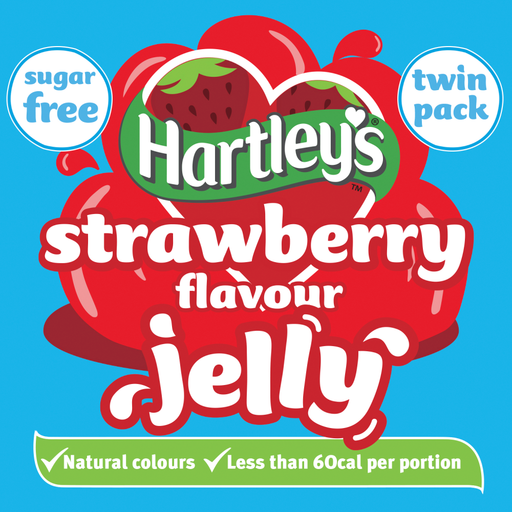
This Hartley’s option is for making a sugar-free strawberry jelly dessert when serving chilled portions works for your garden party. It is not a ready-to-eat jelly sweet.
 No image available
Hartley’s Strawberry Jelly Sugar Free 23g
Choose this make-your-own jelly when a served dessert suits the party better than sweets guests can pick up. This product contains pork gelatine and aspartame; check the phenylalanine warning, full allergen information and setting instructions on the pack before preparing it for guests.
View on Joybuy
Questions about serving jelly
Does “sugar-free” mean the same as “no added sugar”?
No—check the claim and nutrition information on the exact product rather than substituting one description for the other. If you make Hartley’s Create Your Own Jelly Crystals, Tesco says to use a sugar-free drink to keep the prepared jelly sugar-free.
Can I assume sugar-free jelly is vegan?
No. Tesco lists pork gelatine in Hartley’s Sugar Free Create Your Own Jelly Crystals, while Sainsbury’s describes Simply Delish Zero Raspberry Jelly as gelatine-free and suitable for vegetarians. Read the ingredients and dietary statement for the precise pack and flavour you buy.
Why check for maltitol before filling a party bowl?
Maltitol is a polyol sweetener used in the Neo Botanica sweets described by Planet of Sweets. GOV.UK says foods containing more than 10% polyols must carry a warning that excessive consumption may cause a laxative effect, so read the particular pack and keep its warning available to guests.
Can sugar-free jelly sweets be served at an English school event?
Do not decide on the sugar-free claim alone. The Requirements for School Food Regulations 2014 define non-chocolate confectionery as confectionery whether or not it contains sugar; ask the school which food-provision rules apply to the event and whether the proposed sweets fit them. Requirements elsewhere in the UK need a separate check.
Does sugar-free mean a jelly sweet is not HFSS?
No: a sugar-free claim does not, by itself, determine how a product is classified under rules concerning foods high in fat, salt or sugar. The Department of Health and Social Care’s guidance concerns specified products and regulatory criteria, so check the applicable product information rather than treating the front-of-pack sugar claim as an HFSS assessment.


